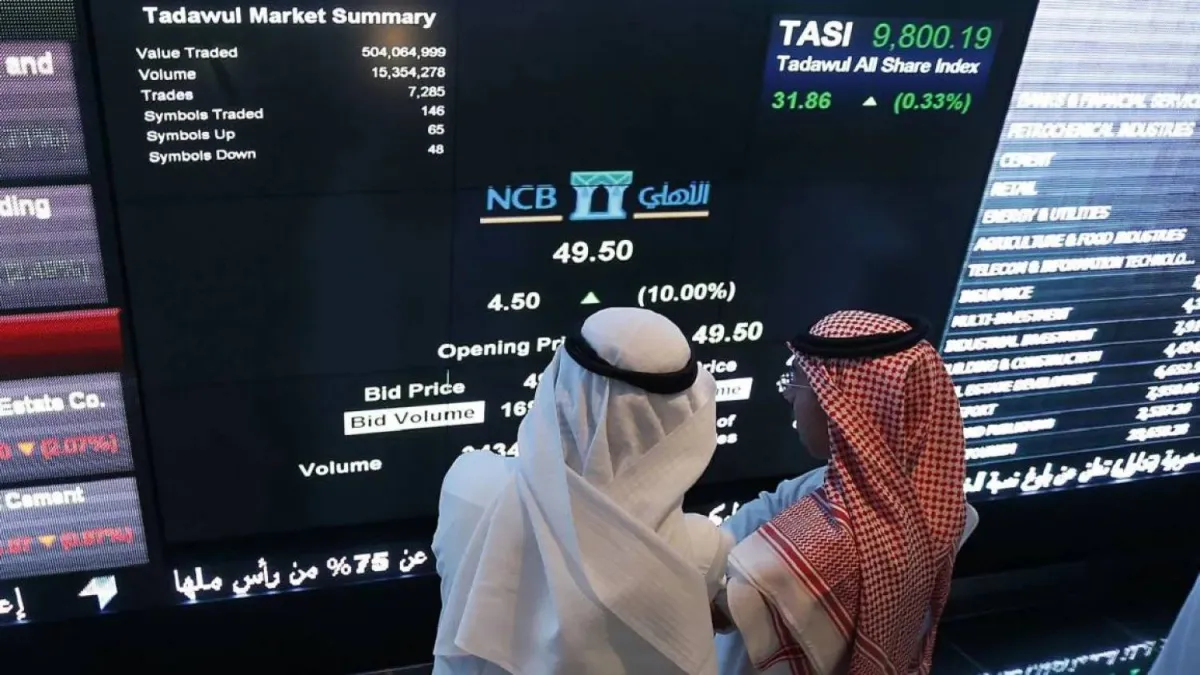
The main index of the Saudi stock market, 'TASI', closed on Thursday with a slight decline of 0.1%, reaching 11268 points, with trading valued at 5.7 billion Saudi riyals (approximately 1.5 billion USD). The session witnessed a drop in the prices of several stocks, including 'Arabian Drilling' and 'Bahri', which fell by 1% to 80.9 and 32.1 riyals respectively.
Additionally, 'Flynas' shares decreased by 1% to 49.46 riyals. The shares of 'Riyadh Bank' recorded a 1% decline to 29.22 riyals, while 'Alawwal Bank' saw a 0.6% drop, reaching 36.82 riyals.
Market Details and Trends
Despite the overall decline, some stocks experienced notable increases, with 'Saudi Aramco', the heaviest weighted stock in the index, rising by 0.15% to 27.6 riyals. 'Saudi Pipes' led the gainers with a 10% increase, reaching 48.64 riyals.
These market changes come at a time when the Saudi economy is undergoing significant transformations, as the Kingdom seeks to diversify its income sources away from oil through its Vision 2030 initiative. However, global market fluctuations have a direct impact on the performance of local stocks.
Background & Context
The Saudi stock market is considered one of the largest financial markets in the region, playing a crucial role in attracting both foreign and local investments. In recent years, the market has experienced volatility due to economic and political changes at both regional and international levels.
Amid global economic challenges, such as rising interest rates and inflation, financial markets are significantly affected. Geopolitical events, such as conflicts in the Middle East, also shape investor sentiment and market trends.
Impact & Consequences
The market decline affects investor confidence, potentially leading to a reduction in new investments. Additionally, falling stock prices may impact listed companies, which could reflect on their financial performance in the future.
On the other hand, these declines may present opportunities for investors to purchase stocks at lower prices, potentially leading to a market recovery in the near future. Investors should closely monitor economic and political developments to make informed investment decisions.
Regional Significance
The Saudi stock market serves as an important indicator of the health of the Arab economy, influencing financial markets in other Gulf countries. With increasing Arab investments in the Saudi market, any fluctuations could impact regional investments.
Moreover, the market's success in attracting foreign investments reflects confidence in the Saudi economy, which may contribute to enhancing economic stability in the region.
In conclusion, investors need to keep a close watch on the market, as rapid changes may open new avenues for investment or present new challenges requiring different strategies.