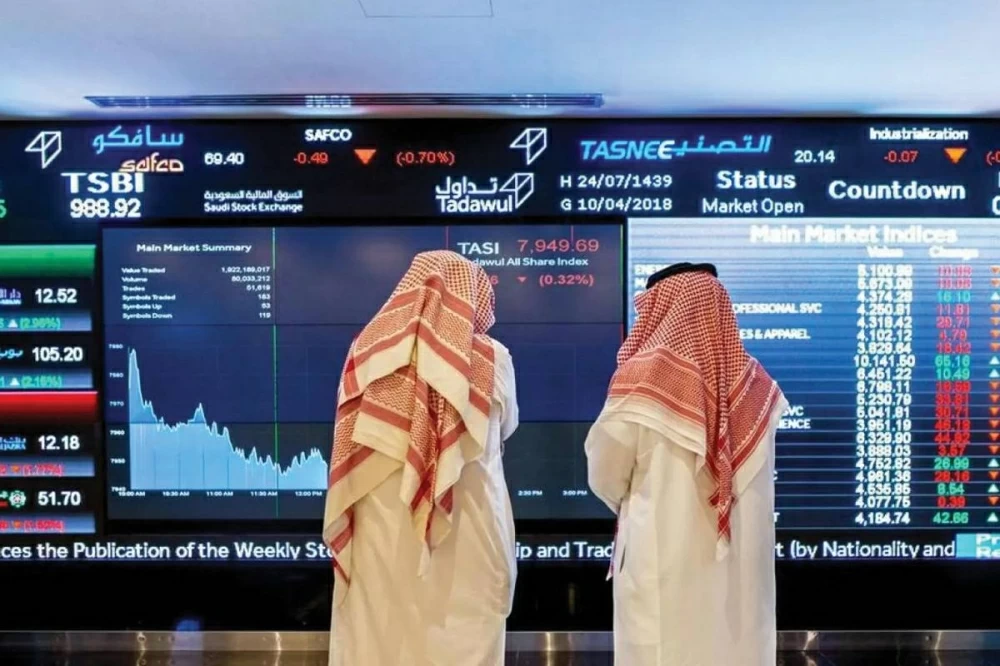
The main index of the Saudi stock market experienced a significant jump at the beginning of today's trading, rising by 2%, reflecting investor optimism following U.S. President Donald Trump's announcement of a two-week ceasefire with Iran, contingent on the immediate reopening of the Strait of Hormuz. The index climbed by 213 points to reach 11,301 points.
Trading values recorded approximately 1.23 billion riyals, while the traded volume reached 58.6 million shares. Prices of 258 stocks increased, while only 8 stocks saw a decline, indicating a vibrant market activity.
Details of the Event
Leading the list of the highest rising stocks was Chubb with an increase of 7.76%, followed by Research and Media at 7.63%, then Flynas at 7.08%, Al-Fakharah at 6.2%, and finally Tabuk Agricultural at 5.8%. Conversely, stocks such as Petro Rabigh, Yansab, Aramco, Al-Aziziyah REIT, and Cisco Holdings topped the list of declining stocks, with decreases ranging from 3.75% to 0.77%.
This market rise comes at a sensitive time, as investors seek to assess the impact of global political events on financial markets. Positive news regarding the ceasefire has contributed to boosting market confidence.
Background & Context
The Saudi stock market is considered one of the largest financial markets in the region and has experienced significant fluctuations in recent years due to political and economic events. In this context, any positive developments in international relations, such as the ceasefire between the U.S. and Iran, directly affect market performance.
Historically, relations between the U.S. and Iran have been tense, impacting the stability of markets in the region. Therefore, any steps towards de-escalation can enhance the stability of the Saudi market and increase its attractiveness to investors.
Impact & Consequences
The rise in the Saudi market index is an indicator of the restoration of confidence in the local economy, which may attract more foreign investments. Additionally, this increase could contribute to boosting economic growth in the Kingdom, especially under Vision 2030, which aims to diversify the economy and reduce dependence on oil.
On the other hand, this development may increase pressure on companies that have not been able to achieve positive results, which could negatively affect their future performance. Therefore, investors should closely monitor developments.
Regional Significance
The Saudi market represents a fundamental pillar in the Arab economy, and any positive changes within it affect the financial markets in other Gulf countries. Furthermore, the stability of the Saudi market could enhance opportunities for economic cooperation among Arab countries.
Ultimately, the question remains about the sustainability of this rise in the Saudi market, especially in light of global economic challenges. However, hope remains pinned on the continuity of de-escalation in international relations and its positive impact on the local economy.