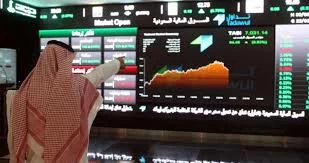
The main market index in Saudi Arabia recorded a significant increase of 2.3%, closing at 11,339 points, which is an increase of 251 points. This closing is the highest in over two months, with trading values reaching approximately 8.4 billion Saudi Riyals. This rise came after the United States and Iran reached an agreement for a two-week ceasefire, conditional on the full and immediate opening of the Strait of Hormuz.
Today, the market index recorded its highest level at 11,339 points, while its lowest level was 11,215 points. The session witnessed active trading, with around 6 million shares exchanged.
Event Details
Shares of Al Rajhi Bank, the largest by weight in the market, topped the list of gainers with an increase of 3%, bringing the share price to 107.70 Riyals. Additionally, shares of Aqua and Ma'aden rose by 8%, with the former reaching 173.50 Riyals and the latter 70 Riyals.
Shares of NCB, Suleiman Al Habib, Alinma Bank, STC, Etihad Etisalat, Al-Awwal, and Al-Bilad also saw increases ranging from 1% to 4%. Meanwhile, the share of Extra closed at 82.40 Riyals with a 3% increase, and the share of Taseel closed at 126.50 Riyals, up by 2%, following the announcement of financial results for the first quarter of 2026.
Background & Context
This rise in the Saudi market comes at a sensitive time, reflecting positive investor responses to political developments in the region. The agreement between the United States and Iran may help ease tensions, thereby increasing confidence in financial markets.
Historically, Saudi financial markets have experienced significant fluctuations due to political and economic events in the region, making this rise a sign of relative stability that could attract more investments.
Impact & Consequences
The rise of the Saudi market index is a positive indicator of the health of the local economy, reflecting an increase in investor confidence. This increase may lead to attracting more foreign and local investments, contributing to economic growth.
At the same time, investors should monitor political developments in the region, as any changes could directly impact financial markets.
Regional Significance
The Saudi market is one of the largest financial markets in the region, and any movements within it affect neighboring markets. The rise of the Saudi market could encourage other markets to achieve similar gains, enhancing economic stability in the region.
In conclusion, investors remain on alert for future developments, as market stability depends on the political and economic conditions in the region.