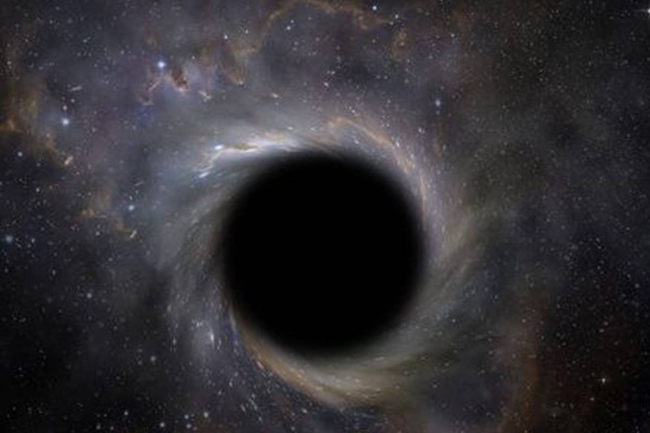
Scientists in the field of physics have revealed a new theory indicating that primitive black holes, which formed after the Big Bang, may have a critical role in the survival of the universe from annihilation. A study proposed that these black holes consumed vast amounts of antimatter, resulting in an imbalance favoring ordinary matter, which contributed to the formation of galaxies and the rapid growth of black holes.
During the Big Bang, it was expected that equal amounts of matter and antimatter would be produced, a counterpart to the ordinary matter we observe today. However, the presence of primitive black holes may have altered this expected outcome. By consuming antimatter, these black holes could have reduced the amount of antimatter in the universe, allowing ordinary matter to dominate.
Understanding Primitive Black Holes
Primitive black holes are theorized to have formed in the early universe, potentially within the first few moments after the Big Bang. Unlike the black holes that form from the collapse of massive stars, these primordial entities could have originated from density fluctuations in the early universe. Their existence suggests a different mechanism of black hole formation, one that could provide insights into the conditions of the universe shortly after its inception.
The study of these black holes is crucial as it may help explain the observed asymmetry between matter and antimatter. If primitive black holes indeed played a role in consuming antimatter, they could be a key factor in why our universe is predominantly composed of ordinary matter, which is essential for the formation of stars, planets, and ultimately, life.
Background & Context
The concept of black holes has fascinated scientists for decades, but primitive black holes introduce a new layer of complexity to our understanding of cosmic evolution. Previous theories focused primarily on stellar black holes, which are formed from the remnants of massive stars. However, the existence of primitive black holes opens up questions about the early universe's dynamics and the fundamental laws of physics that governed it.
Research into primitive black holes also intersects with studies on dark matter and dark energy, two of the universe's most enigmatic components. Understanding how these black holes interacted with antimatter could provide clues about the nature of dark matter, which remains one of the biggest mysteries in astrophysics.
Impact & Consequences
The implications of this research are profound. If primitive black holes significantly influenced the balance of matter and antimatter, it could reshape our understanding of the universe's evolution. This shift in perspective may lead to new theories regarding the formation of galaxies and the large-scale structure of the universe.
Moreover, the existence of primitive black holes may also impact our understanding of cosmic inflation, the rapid expansion of the universe that occurred after the Big Bang. By studying these black holes, scientists may uncover new insights into the forces that shaped the early universe and the conditions that led to the cosmos we observe today.
Regional Significance
This research is not only significant on a cosmic scale but also has implications for our understanding of the universe from a regional perspective. Different regions of the universe may have experienced varying amounts of black hole formation, influencing the distribution of galaxies and cosmic structures we see today.
Furthermore, as scientists continue to explore the role of primitive black holes, it may lead to collaborative efforts across international scientific communities, fostering advancements in technology and methodologies used in astrophysics.
In conclusion, the discovery of the potential role of primitive black holes in the universe's survival highlights the intricate balance of forces at play in the cosmos. As research continues, it may unveil further mysteries of our universe, deepening our understanding of the fundamental principles that govern existence.