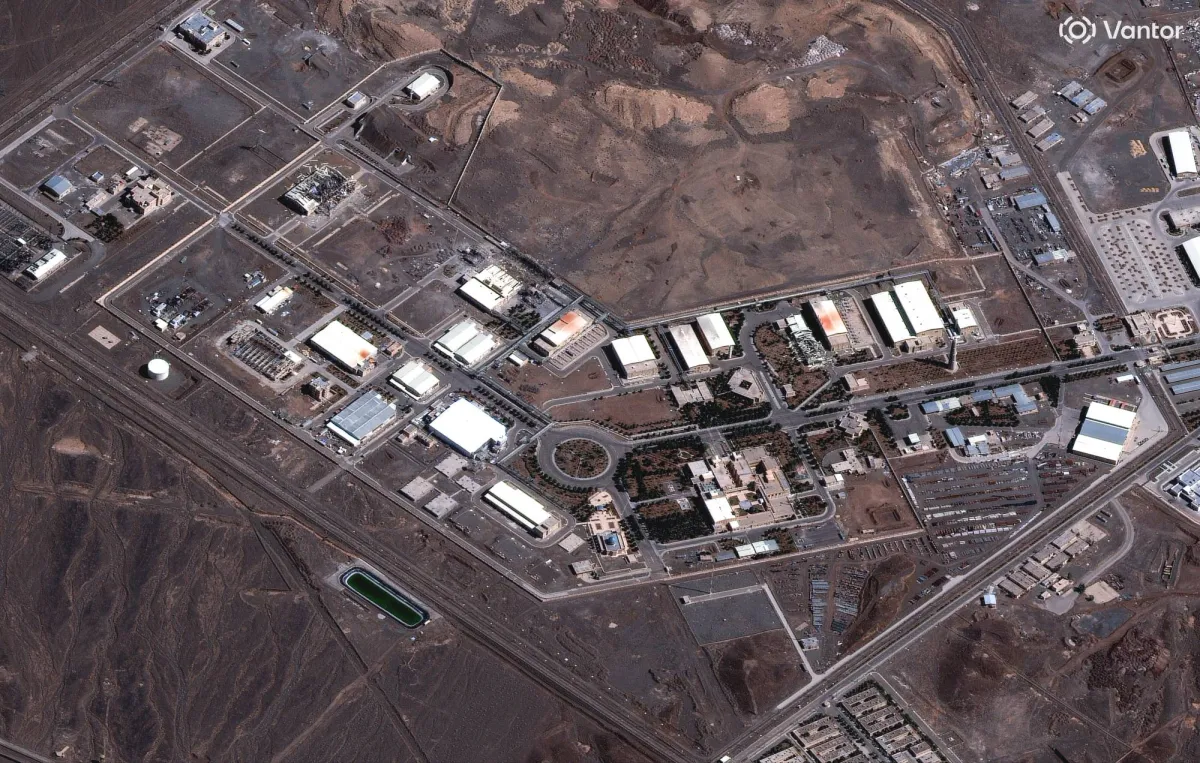
As tensions escalate regarding Iran's nuclear program, a sensitive question arises about the options available to the United States to ensure that this program does not take a military path. While the option of using force to secure enriched uranium stocks is being considered, experts and former officials warn that such a step would be extremely complex, fraught with military, technical, and environmental risks, and could take a long time to implement.
According to a report by the Washington Post, sending U.S. military forces to secure this stockpile would require a long-term operation, fraught with radiological and chemical risks, as well as field challenges in a war environment. President Donald Trump provided several justifications for war with Iran, but he repeatedly emphasized that the primary goal is to prevent Tehran from acquiring nuclear weapons. However, the extent of his willingness to resort to forcibly seizing nuclear materials remains unclear.
Details of the Event
Given the risks associated with sending up to 1,000 specially trained soldiers to a conflict area, an alternative option emerges: reaching a negotiated agreement with Iran that allows for the transfer and securing of these materials without resorting to military action. According to the International Atomic Energy Agency (IAEA), Iran possesses approximately 440.9 kilograms of uranium enriched to 60 percent, a level technically close to the enrichment required to produce nuclear weapons, which is 90 percent.
The IAEA Director General, Rafael Grossi, stated to the Associated Press last year that this stockpile could theoretically enable Iran to produce up to 10 nuclear bombs if it decided to arm its program, while also emphasizing that this does not necessarily mean it possesses an actual nuclear weapon. Despite Iran's constant assertions of the peaceful nature of its nuclear program, the IAEA and Western countries believe that Tehran had an organized nuclear weapons program until 2003.
Background & Context
It is believed that these materials are stored in underground tunnels at hard-to-reach locations. Inspectors from the agency have been unable to verify the locations of semi-enriched uranium since June 2025, after Israeli and American strikes weakened Iran's air defenses and nuclear program, making it more difficult to accurately pinpoint storage locations. Grossi indicated that about 200 kilograms of highly enriched uranium may be stored in tunnels near the Isfahan nuclear complex, while additional quantities are believed to be at the Natanz site, and possibly smaller amounts at the Fordow facility.
For her part, U.S. National Intelligence Director Tulsi Gabbard confirmed during a House hearing on March 19 that the U.S. intelligence community has a "high level of confidence" in identifying the locations of these stockpiles. Highly enriched uranium is stored in containers weighing about 50 kilograms when full, and is in the form of uranium hexafluoride gas. Estimates suggest there are between 26 containers to nearly double that number, depending on their fill level.
Impact & Consequences
David Albright, a former nuclear weapons inspector and founder of the Institute for Science and International Security, explained that these containers are designed to be durable and secure for transport and storage. However, he warned that any damage to them, such as from airstrikes, could lead to the release of hazardous materials. If moisture enters these containers, fluorine, a highly toxic element that can cause serious harm to skin, eyes, and lungs, may form. Therefore, any team entering these tunnels would need to wear special protective suits against hazardous materials.
Kristine E. Wormuth, former U.S. Secretary of the Army under Joe Biden, believes that securing Iranian nuclear materials using ground forces would be "an extremely complex and high-risk military operation." She noted, as the chair and CEO of the Nuclear Threat Initiative, that the multiplicity of potential storage sites complicates the mission, adding that the operation would likely result in human casualties.
Regional Significance
In contrast, Scott Roker, former director of the Office of Nuclear Material Removal at the National Nuclear Security Administration, believes the best solution is to "reach an agreement with the Iranian government to completely remove these materials." Roker cites a successful past experience when the United States, in cooperation with Kazakhstan in 1994, transported about 600 kilograms of uranium used in nuclear weapons from the territory of the former Soviet republic, in a covert operation known as "Project Sapphire"; these materials were remnants of the Soviet nuclear program.
Ultimately, the options available to the United States remain complex, as each requires careful consideration of the potential risks and consequences. Reaching a negotiated agreement may be the safest option, but current tensions could make achieving that difficult.