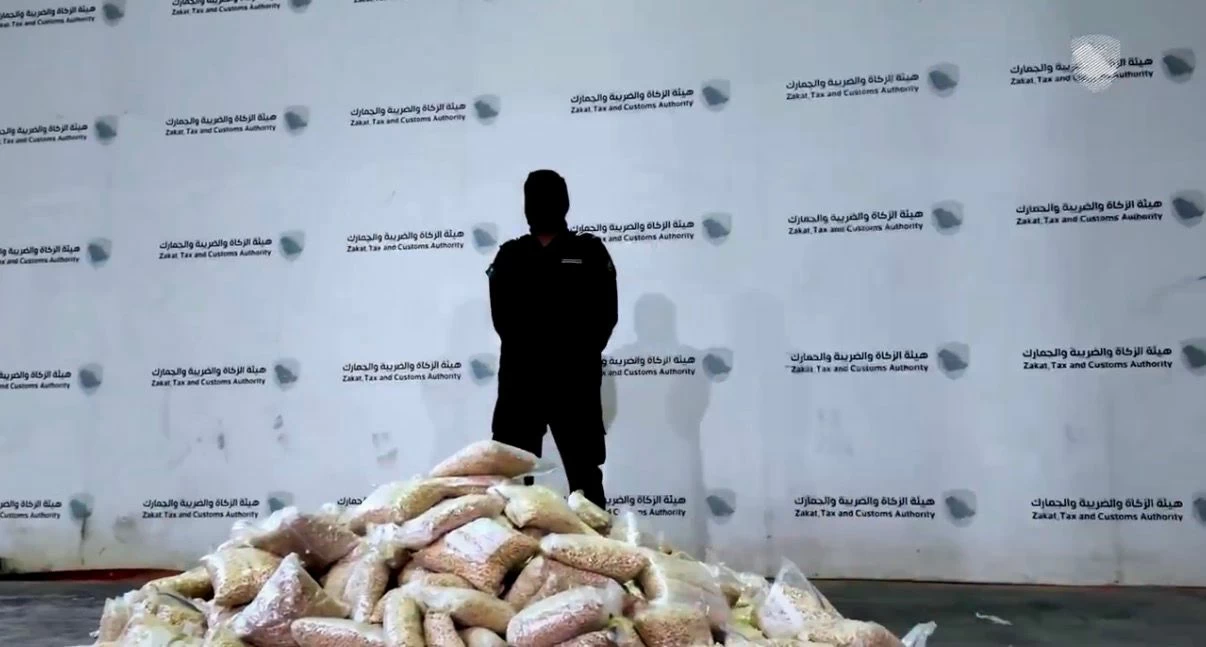
The Zakat, Tax and Customs Authority, known as ZATCA, at Jeddah Islamic Port managed to thwart a massive smuggling attempt, seizing 2,916,180 pills of the narcotic substance known as amphetamine, or captagon. This large quantity of drugs was carefully concealed within a shipment arriving in the Kingdom.
The official spokesperson for the authority, Hamoud Al-Harbi, explained that the seized shipment contained sheabutter, and during the customs inspection using security technologies and live detection methods, the large quantity of narcotic pills was discovered.
Details of the Operation
Following the seizure operation, coordination was established with the General Directorate for Drug Control to ensure the apprehension of the recipients of this quantity within the Kingdom. The efforts resulted in the arrest of two individuals involved in this operation, reflecting the effectiveness of cooperation among security agencies in the Kingdom.
Al-Harbi confirmed that the authority is committed to enhancing customs oversight on all imports and exports, emphasizing the importance of combating smuggling attempts that threaten community security. He also noted that the authority adopts effective strategies to mitigate these issues as part of its efforts to protect society.
Background & Context
The Kingdom of Saudi Arabia faces significant challenges in combating drugs, as traffickers seek to exploit various means to introduce these substances into the country. In recent years, attempts to smuggle drugs through customs outlets have increased, necessitating the enhancement of security and technical measures.
These measures include the use of advanced technologies for drug detection, in addition to cooperation with various security agencies. The authority is also working to raise awareness among citizens about the dangers of drugs and the importance of reporting any smuggling attempts.
Impact & Consequences
This operation is considered a major success in drug control efforts, contributing to the protection of society from the negative effects of drug use. It also reflects the authority's ability to effectively address security threats, thereby enhancing trust in the measures being implemented.
The arrest of those involved in this operation is an important step towards achieving justice and reaffirms the Kingdom's commitment to combating drugs and protecting youth and society in general. These operations also highlight the importance of cooperation between government agencies and citizens in confronting this phenomenon.
Regional Significance
The drug problem transcends the borders of the Kingdom, as many Arab countries suffer from the spread of this phenomenon. The success of the Kingdom in thwarting smuggling attempts can serve as a model for the region, reflecting the importance of regional cooperation in combating drugs.
Many Arab countries are seeking to enhance their drug control strategies, which requires the exchange of expertise and technologies among nations. Addressing this phenomenon demands collective efforts, as drugs pose a threat to security and stability throughout the region.
In conclusion, the Kingdom's efforts in combating drugs remain a model to be emulated, reflecting its commitment to protecting society and enhancing security. Cooperation between government agencies and citizens is a fundamental element in achieving success in this battle.