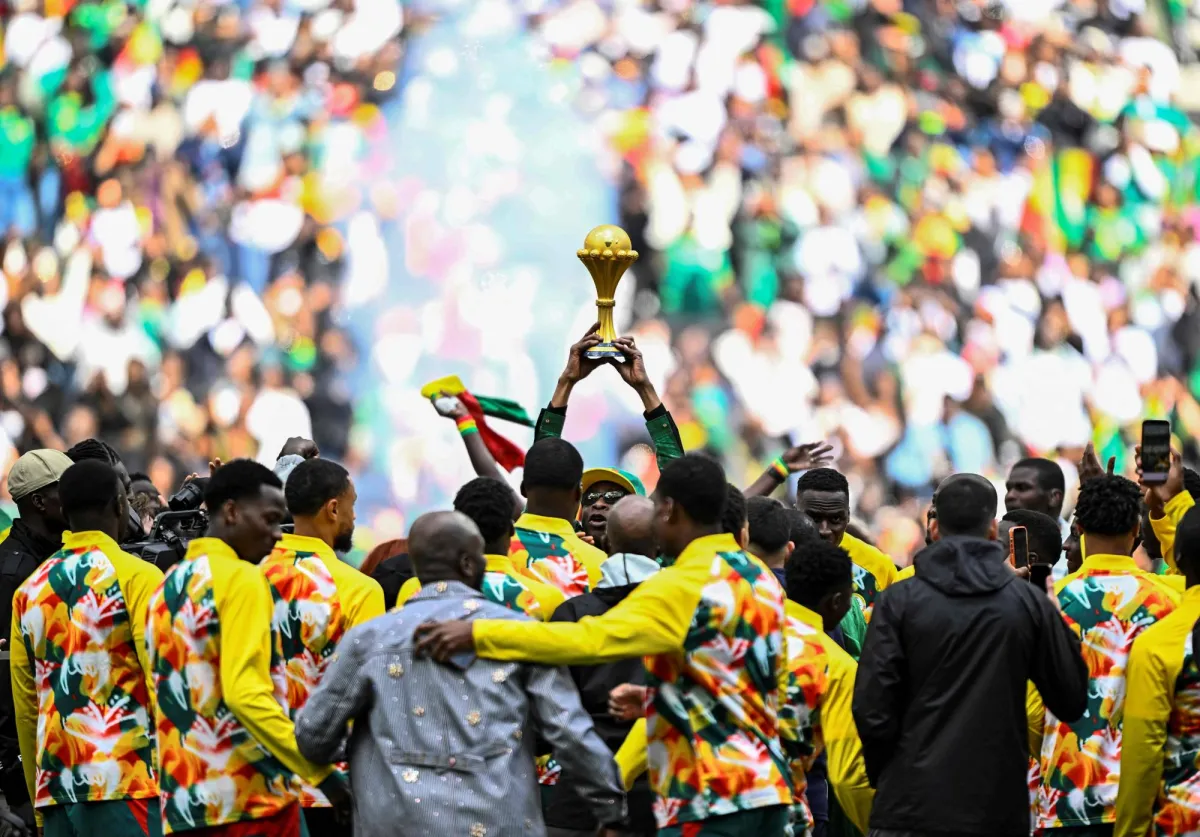
Senegal has sparked widespread controversy after confirming that the Confederation of African Football (CAF) decision to withdraw the AFCON 2025 title was premeditated. The Secretary-General of the Senegalese Football Federation, Abdullah Sow, described this decision as "the biggest administrative theft in the history of sports," reflecting the depth of the crisis the country is experiencing in this context.
The roots of this crisis trace back to the CAF Appeals Committee's decision, which relied on articles 82 and 84 of its regulations, considering that the Senegalese team "withdrew from the pitch" before the end of the match, leading to their classification as losers and the title being awarded to Morocco. Although the Senegalese federation acknowledged some disciplinary violations, it vehemently rejects classifying the incident as a "withdrawal."
Details of the Incident
In an interview with the "Afo Media" platform, Abdullah Sow explained that the session held via video communication on March 17 witnessed sudden changes in its timing, where the Senegalese side was not given sufficient opportunity to defend its position before the platform was abruptly closed. This raised questions about the integrity of the procedures followed.
Sow also pointed out that there is significant ambiguity surrounding the final decision, as Morocco's request to consider Senegal as the loser was accepted, while other requests related to withdrawing the cup and financial rewards were rejected. In this context, the Senegalese federation has officially resorted to the Court of Arbitration for Sport (CAS) to reclaim the title, amidst allegations of deliberate attempts to manipulate legal procedures.
Background & Context
The events of this crisis date back to the AFCON final held in January last year, where the Senegalese team achieved victory over Morocco. However, following CAF's decision, the title is now in Morocco's possession, causing significant discontent within Senegalese sports circles.
Historically, African football has witnessed numerous similar crises, where titles have been withdrawn or results altered on previous occasions, raising questions about the integrity of sports bodies on the continent. These events reflect ongoing tensions between national federations and continental bodies.
Impact & Consequences
The repercussions of this decision extend beyond football, as the struggle for titles and financial rewards reflects the political and social tensions in the region. This decision could also impact CAF's reputation as a regulatory body and increase doubts about the integrity of its decisions.
This issue is expected to continue affecting relations between national federations and may lead to calls for reforms within CAF to ensure transparency and integrity in decision-making. Additionally, resorting to the international court may open the door for further scrutiny of CAF's decisions.
Regional Significance
This issue is significant not only for Senegal but also for the Arab region, as football is one of the most popular sports in the Arab world. Similar crises could affect how tournaments are managed and titles distributed, which in turn reflects on the reputation of Arab federations.
In light of these developments, football fans in the Arab world are looking forward to the outcomes of this case, as legal disputes may impact upcoming tournaments and the distribution of titles in the region.