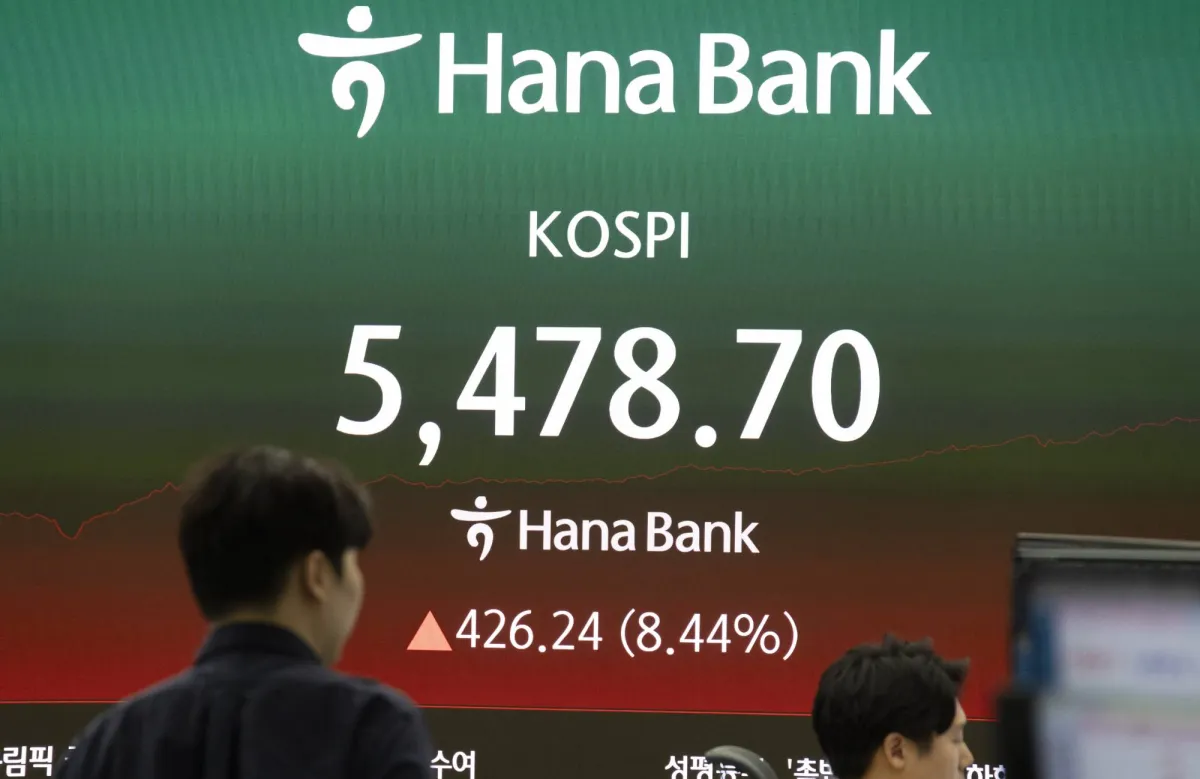
The Seoul Stock Exchange experienced a sharp decline on Thursday, with the main index, the KOSPI, losing over 188 points, closing at 5290.36 and marking a drop exceeding 3.4%. This decline came after a speech by U.S. President Donald Trump that dashed investors' hopes for an imminent resolution to the conflict with Iran, as he confirmed the continuation of military operations for the coming weeks, prompting foreign institutions to execute intensive sell-offs in the market.
The semiconductor sector led the wave of decline, with shares of Samsung Electronics dropping by 5.17%, while SK Hynix lost 4.82% of its value. This downturn comes amid fears of the impact of escalating conflict on supply chains and rising production costs.
Details of the Event
This market bleed coincided with increasing inflationary pressures in South Korea, where economists warned that risks remain tilted towards the upside as oil prices surpassed $100 per barrel. This rise could complicate local monetary policy calculations, despite government attempts to curb fuel prices.
In an attempt to absorb the shock, South Korean Finance Minister Ko Yoon-chul announced massive foreign inflows into the local bond market, amounting to 4.4 trillion won (approximately $2.91 billion) in recent days, led by investors from Japan. He explained that this foreign interest is driven by the inclusion of Korean bonds in a major global index, noting that these inflows will play a vital role in providing necessary liquidity and stabilizing bond yields.
Background & Context
The U.S. dollar regained upward momentum against major currencies during trading on Thursday, ending two days of decline. This rise followed Trump's speech, which dashed investors' hopes for an imminent 'ceasefire' policy in the Middle East conflict. The uncertainty left by the speech regarding the timeline for military operations redirected capital flows towards the greenback as the preferred safe haven during geopolitical crises.
The dollar index, which measures the performance of the U.S. currency against a basket of six major currencies, rose to 99.925 points immediately after the speech. This movement occurred as analysts and experts began to grasp the reality that the conflict may escalate before it starts to recede, especially with Trump's confirmation of continued military strikes on Iranian targets over the next three weeks.
Impact & Consequences
Mainland Chinese stocks and the Hong Kong Stock Exchange saw significant declines, with a prevailing sense of pessimism among investors following Trump's speech. The absence of a 'clear timeline' for ending military operations in Iran weakened market sentiment, dispelling hopes for a near resolution to the conflict that has overshadowed global supply chains.
By mid-trading, the Shanghai Composite Index recorded a decline of 0.53%, while the CSI 300 index of leading stocks lost 0.74% of its value. In Hong Kong, the decline was sharper, with the Hang Seng Index dropping by 1.1%, while the technology sector led the bleed with a significant loss of 2.2%.
Regional Significance
The Arab markets are directly affected by developments in South Korea, as these markets are closely linked to global markets. Rising oil prices due to geopolitical tensions may impact the economies of Arab countries that rely on oil as a primary source of revenue. Additionally, the ongoing conflict in the Middle East could increase pressures on Arab financial markets, necessitating greater caution from investors.
In conclusion, a state of caution prevails in global markets, with ongoing geopolitical pressures affecting the stability of financial markets. Investors must closely monitor developments, as any changes in the current situation could impact their investment strategies.