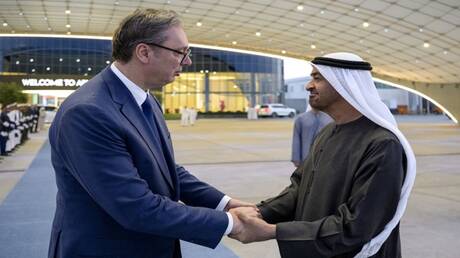
In a surprising move, Serbian President Aleksandar Vučić conducted an unannounced visit to the United Arab Emirates on Sunday. During the visit, he met with UAE President Sheikh Mohammed bin Zayed Al Nahyan, where regional and international issues were discussed, including the recent attacks on the UAE.
President Vučić clearly condemned the attacks that targeted the UAE, expressing his country's solidarity with the leadership and people of the UAE. This visit comes at a time of regional tensions, reflecting Serbia's desire to strengthen its relations with Gulf countries amid a changing geopolitical landscape.
Details of the Event
The visit, conducted without prior announcement, included professional meetings between senior officials from both sides, where both parties discussed ways to enhance bilateral cooperation in various fields, including trade, security, and tourism. The meeting emphasized the importance of coordination among countries to face regional threats, especially given the unstable security conditions affecting some neighboring countries.
Official sources revealed that Vučić and the Crown Prince of Abu Dhabi agreed to enhance dialogue and exchange visits, which could lead to potential strategic partnerships. However, there remains international opposition to such visits, especially in the context of ongoing crises in several countries of the region, as concerns grow regarding the implications of conflicts in the Middle East.
Background & Context
The UAE is one of the most stable countries in the Gulf region and has faced several threats in recent years, whether from armed groups or escalating situations in some neighboring countries. Thus, the visit of the Serbian president embodies Serbia's desire to actively participate in regional solutions.
In recent years, many European leaders have turned their attention to the Middle East, attempting to bolster economic and political relations. Serbia seeks to strengthen its position within international relations, especially amid the challenges it faces on the European continent.
Impact & Consequences
This visit may open new horizons for cooperation between Serbia and the UAE, as mutual support among nations during crises is vital. It could also positively affect tourism and trade between the two countries if joint agreements in this regard are executed.
On another note, this visit may raise questions about the awakening of regional influences between European and Gulf countries. These dynamics will undoubtedly impact the political landscape in the region and might drive some actors to seek new alliances.
Regional Significance
President Vučić's visit could renew ties between Arab countries and the Balkans, thus increasing economic and cultural interactions among them. It may also contribute to stabilizing the situation in the region and could serve as a model for international cooperation in security and development.
In a intertwined context, this cooperation could act as an incentive for other Arab countries to explore new partnerships with non-traditional nations seeking to achieve common interests. The visit lasted for several hours, with both officials emphasizing the importance of cooperation and the continuation of dialogue between the two sides.