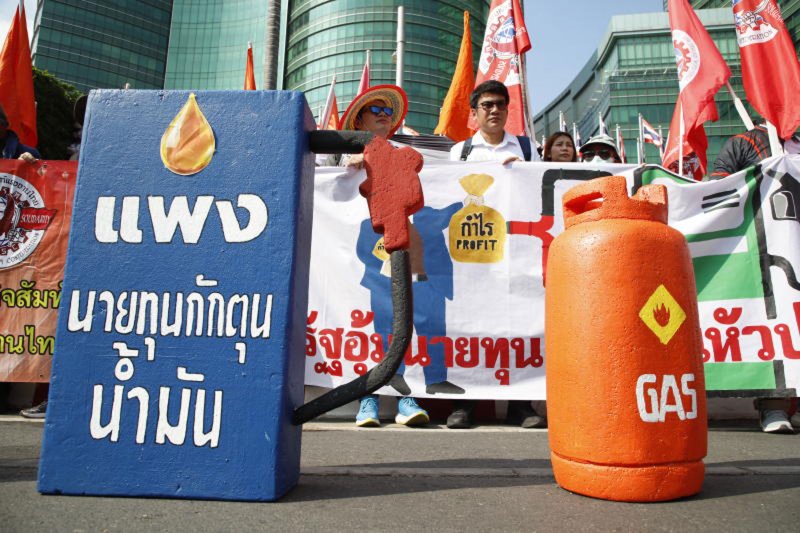
Thai Energy Minister, Akanat Promphan, announced plans to set oil refining margins at 3-4 baht per liter in an attempt to limit rising fuel costs without depending on government subsidies. This move comes at a time when the country is experiencing sharp fluctuations in fuel prices, impacting the local economy.
Promphan confirmed in his statements on Thursday that he will convene a meeting of the Energy Policy Administration Committee (Epac) to discuss urgent measures related to fuel and electricity prices following the new government's swearing-in and its political statement to parliament.
Details of the Announcement
The minister explained that current fuel prices are entirely dependent on the Singapore market, leading to excessive fluctuations in local prices. Refining margins have sharply increased from an average of 2-3 baht per liter to around 7 baht in March, and recently surged to nearly 14 baht per liter, indicating that conflicts in the Middle East have contributed to these abnormal increases.
Promphan also noted that the ministry will utilize powers available under an executive decree from 1973 regarding fuel shortages to review the pricing formula and consider crude oil prices in Dubai. He stated, "We are looking at setting refining margins at 3-4 baht per liter, which could drive prices at gas stations down without relying on the fuel fund. This must be done before the Songkran celebrations."
Background & Context
Historically, Thailand has experienced fluctuations in fuel prices due to various factors, including geopolitical crises and changes in global oil markets. The Thai economy heavily relies on oil imports, making it vulnerable to fluctuations in global prices. In recent years, the country has witnessed significant increases in energy costs, affecting the cost of living and economic growth.
This step is part of the new government's efforts to control prices and alleviate pressure on citizens, especially amid the challenging economic conditions the country is facing. Transparency in the oil trading system is also a priority, as the minister emphasized the need to improve data related to oil inventories.
Impact & Consequences
These measures are considered an important step towards stabilizing fuel prices and may help alleviate financial burdens on citizens. However, these are short-term measures, and the government may need to consider long-term solutions to address structural issues in the energy sector.
Among the options being considered are deferring debt repayments and adjusting investment budgets to help reduce costs in the upcoming billing cycle. Long-term solutions could also include implementing a direct power purchase agreement and enhancing the use of solar energy.
Regional Significance
Arab countries are also affected by fluctuations in oil prices, as many of these nations are major oil producers. Increases in fuel prices in Thailand may have indirect effects on Arab markets, especially amid the tense geopolitical conditions in the region.
Ultimately, there remains an urgent need to adopt effective strategies to ensure energy price stability, which requires international cooperation and coordination among producing and consuming countries.