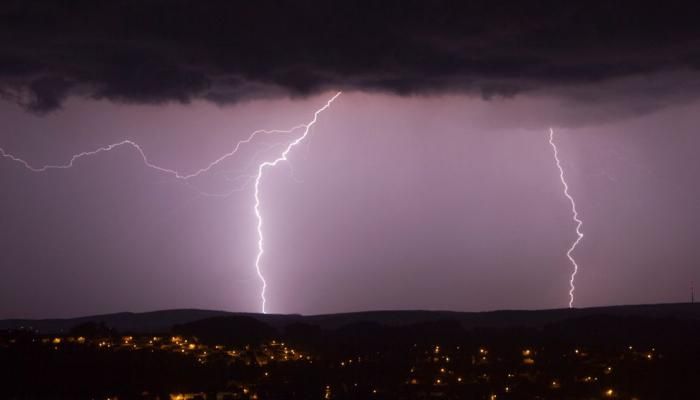
Starting Wednesday, the Middle East is set to experience unusual weather conditions, with forecasts predicting thunderstorms accompanied by heavy rainfall, resembling a 'late winter.' This weather pattern is expected to last for two days, raising concerns among the region's residents.
Dr. Manar Ghanem, a member of the media office at the Egyptian Meteorological Authority, states that this weather condition is not new in itself, but the timing of its occurrence is what raises eyebrows. Typically, March marks a transition from winter to spring, with a gradual rise in temperatures and limited rainfall.
Details of the Event
The meteorological authorities expect thunderstorms accompanied by active winds and heavy rainfall in various regions of the Middle East. Ghanem explains that this severe weather condition results from the passage of a very cold air mass in the upper atmosphere, associated with a deep low-pressure system. This coincides with the influx of humid subtropical air currents coming from the south.
This interaction between different air masses, characterized by sharp thermal contrasts, leads to unstable weather conditions manifesting in heavy rainfall, thunderstorms, hail showers, and active winds that may stir up dust storms in some areas.
Background & Context
The overlap between seasons is one of the most prominent features of climate changes observed worldwide, as rising ocean and atmospheric temperatures alter the movement of cold and warm air. Numerous scientific studies, such as those published in the journal 'Nature Communications,' confirm that the Middle East is experiencing significant climate changes, increasing the risk of thunderstorms and heavy rainfall.
Another study published in the journal 'Scientific Reports' describes the southeastern Mediterranean region as a hotspot for climate change, where the likelihood of severe weather fluctuations is increasing. Studies also indicate that greenhouse gas emissions in the region are rising rapidly, exacerbating negative climate impacts.
Impact & Consequences
Forecasts suggest that this weather condition may lead to waves of heavy rainfall that could cause flash floods, posing a threat to water security and infrastructure in the region. Additionally, increasing climate changes may worsen humanitarian crises in some countries suffering from resource shortages.
Studies indicate that the Eastern Mediterranean and the Middle East are among the most significant global hotspots for climate change, facing increasing changes in the hydrological cycle, with temperatures rising at an average rate of about 0.45 degrees Celsius per decade over recent decades.
Regional Significance
The Gulf Arab states are also affected by this weather condition, as cold air masses from the Mediterranean can meet with humid subtropical air, causing severe weather fluctuations. This situation requires Arab countries to take precautionary measures to address these increasing climate changes.
In conclusion, these increasing climate phenomena reflect the urgent need for effective actions to tackle climate changes and develop strategies to adapt to the changing weather conditions in the region.