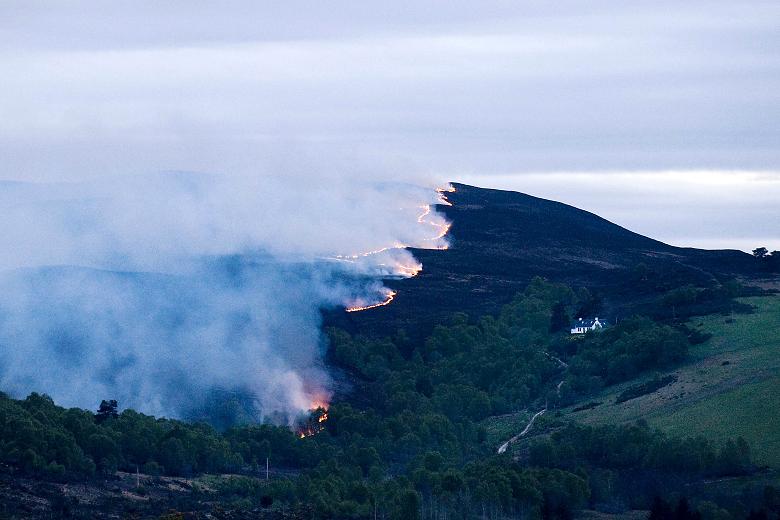
The Scottish Fire and Rescue Service (SFRS) has issued severe warnings about wildfires in western Scotland, where several fires erupted over the weekend. The blaze that spread in the Loch Lomond area and the Isle of Skye, along with other fires in the Highlands, has raised concerns among local authorities. No injuries have been reported as a result of these incidents, but warnings about the fire risk remain in effect.
Grass fires ignited in the Loch Lomond area on Saturday afternoon, with fire crews receiving reports of a large fire behind the village. Firefighting efforts lasted for nine hours, with four teams called out alongside a specialized fire-fighting unit. Another fire was reported near Loch Fyne, where fire crews utilized special equipment to combat the flames.
Details of the Incident
In Aberdeenshire, a fire on Peterhead beach was treated as an arson case, prompting police to send teams to investigate the incident. The fire, which broke out late in the evening, was extinguished by 11:00 PM. Additional small fires were reported on the Isle of Skye, where fire crews managed to bring them under control quickly.
These incidents come after previous warnings from the Scottish Fire and Rescue Service, which confirmed that Scotland faces an increasing threat from wildfires. Kenny Barbour, head of the prevention department at SFRS, stated that residents must be extremely cautious under these conditions, emphasizing that a single spark can lead to significant damage.
Background & Context
Historically, Scotland has seen an increase in the number of wildfires during the spring months, with the period from March to May accounting for over 80% of the large fires recorded since 2010. This is attributed to the presence of dry vegetation left over from winter, along with rising temperatures and increased outdoor activities. Additionally, the impacts of climate change, such as rising temperatures and summer droughts, play a significant role in elevating fire risks.
In 2025, the highest number of wildfires in history was recorded, totaling 239 fires, making it one of the largest threats facing rural communities in Scotland. The fire service has responded by implementing new strategies, including investment in modern equipment and expanding cooperation with local communities to combat fires.
Impact & Consequences
Reports indicate that wildfires significantly impact the environment and local economy, leading to the destruction of natural habitats and threatening wildlife. Major fires also incur hefty costs in firefighting and rehabilitation efforts, affecting local budgets.
These events highlight the urgent need for increased public awareness regarding fire risks and the community's role in prevention. Cooperation between local authorities and citizens is vital in addressing these challenges.
Regional Significance
Many Arab countries are also experiencing wildfires due to climate change, underscoring the importance of sharing expertise and techniques among nations. Arab countries can benefit from Scottish experiences in wildfire management, especially amid increasing environmental challenges.
In conclusion, wildfires remain a serious threat that requires effective responses from all stakeholders, both in Scotland and in Arab countries. We must work together to develop effective strategies to mitigate these risks and protect the environment.