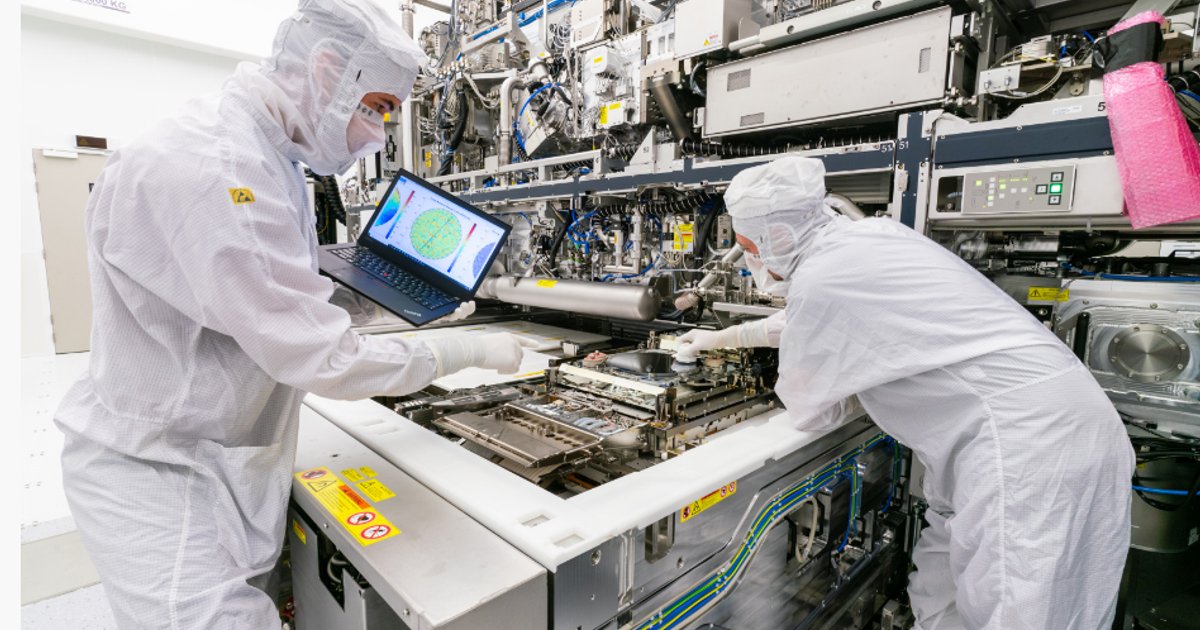
Shares of ASML, a leader in photolithography equipment manufacturing, dropped by 2.6% on Tuesday morning following a proposal from US lawmakers to impose new restrictions on exporting chip manufacturing tools to China. This proposal comes at a sensitive time for the company, which is already facing challenges in its sales to the Chinese market.
Last week, a bipartisan group of US lawmakers introduced a bill named Multilateral Technology Control Coordination Act (MATCH), aimed at cutting off China from targeted chip manufacturing tools, including the photolithography machines produced by ASML. The office of Representative Michael Pompeo, who is leading this initiative, stated that while the US has imposed broad restrictions on technology exports to China, its allies have not fully taken similar steps, allowing China to exploit remaining loopholes.
Details of the Proposal
ASML is one of the leading companies in the field of photolithography equipment, producing extreme ultraviolet (EUV) lithography machines used in manufacturing the world's most advanced chips. However, the company also manufactures deep ultraviolet (DUV) lithography machines, which are used in producing other types of chips such as memory chips. Some DUV machines have been subject to Dutch export licensing, meaning that China has been able to access them until now.
If the MATCH Act is passed, it would also ban DUV machines, significantly impacting the largest chip manufacturers in China that rely on these machines. Last January, ASML predicted that China would account for about 20% of its total sales this year, down from 33% in 2025, prior to the proposal of new restrictions.
Background & Context
Over the past few years, the United States has imposed a series of restrictions on technology exports to China, particularly in the semiconductor sector. These restrictions have contributed to bolstering China's domestic chip industry, with many companies achieving record revenues. However, major Chinese firms like Semiconductor Manufacturing International Corporation (SMIC) and Huahong still rely on DUV tools from ASML to manufacture less advanced chips.
These restrictions are part of a broader strategy aimed at reducing dependence on foreign technology and enhancing China's competitiveness in the semiconductor field. However, the lack of local alternatives for EUV tools puts China in a difficult position if these restrictions are strictly enforced.
Impact & Consequences
If a comprehensive ban on DUV machines is implemented, it could lead to significant fluctuations in ASML's financial results. Stefan Hory, head of research at ODDO BHF, noted that this ban could increase demand for certain machines before the restrictions are implemented, but it would negatively impact results in the medium term. Ben Barringer, head of technical research at Quilter Cheviot, pointed out that proposals from the US Congress could significantly affect ASML, as older versions of photolithography tools account for about 10%-15% of the company's total sales, with China relying on about 50% of these sales.
The negative reactions in the stock market indicate that these proposals could significantly impact ASML's future in the Chinese market, potentially leading to further declines in its sales.
Regional Significance
These developments affect the global semiconductor market, which may reflect on Arab countries that rely on imported technology. Additionally, the strengthening of China's domestic chip industry could open up new opportunities for Arab countries to collaborate with Chinese companies in this field. As reliance on technology increases across all sectors, any changes in the global market could directly impact Arab nations' investments in this sector.
In conclusion, developments in the semiconductor field remain a vital topic requiring close monitoring, as any changes in US policies could affect global economic balances.