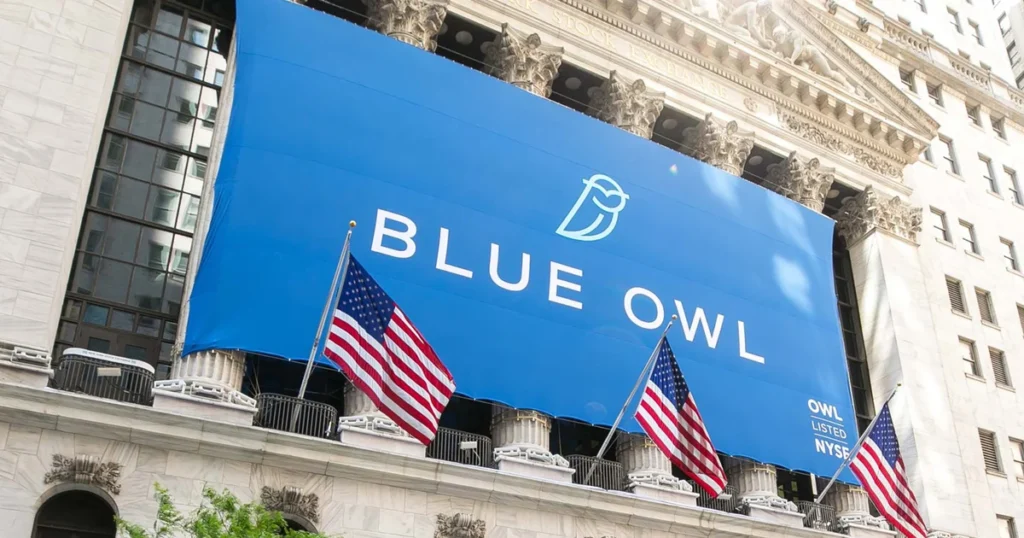
Blue Owl, a company specializing in private credit services, is facing major challenges in the market after announcing that it has capped withdrawals from its credit fund at 23% of total requests submitted. This decision has led to a noticeable decline in the company's shares, raising investor concerns about the fund's stability and its ability to meet client needs.
According to reports, Blue Owl has experienced an increase in withdrawal requests, but it chose to limit the withdrawals at this low level, meaning that many investors will not be able to recover their funds in full. This decision comes at a sensitive time as investors seek to secure their funds amid unstable economic conditions.
Details of the Event
Blue Owl is considered one of the leading companies in the private credit sector and has seen significant growth in recent years. However, the decision to limit withdrawals to only 23% of submitted requests has raised questions about the company's strategies and its ability to manage risks. Many analysts believe that this decision may be a result of financial pressures or the company's inability to meet increasing demands.
It is worth noting that Blue Owl is not the only company facing these challenges, as many firms in this sector have encountered similar difficulties in recent years. However, the market's reaction to this decision could have long-term effects on the company's reputation and investor confidence.
Background & Context
Founded in 2020, Blue Owl achieved rapid success in the private credit field, making it one of the leading companies in this sector. However, the financial market has experienced significant fluctuations in recent years, affecting many companies. Under these circumstances, risk management has become vital for companies operating in this field.
Historically, financial markets have witnessed numerous crises that led to a decline in investor confidence. For example, the global financial crisis in 2008 was a result of the inability to manage risks effectively. This historical context highlights the importance of making wise financial decisions amid changing economic conditions.
Impact & Consequences
This decision could have negative impacts on Blue Owl's reputation in the market, as investors may lose confidence in its ability to manage their funds. Additionally, this decision may lead to a decline in demand for the company's services, affecting its revenues and future profits.
Moreover, the decline in the company's shares may impact other firms in the same sector, as investors may hesitate to invest in private credit companies due to concerns over the inability to withdraw funds. This could lead to a general downturn in the market and increase pressures on companies operating in this field.
Regional Significance
As companies in global financial markets face challenges, the impact of these events can extend to the Arab region. Many Arab investors may have investments in companies like Blue Owl, and thus any decline in the performance of these companies could affect their investment portfolios.
Furthermore, these events may impact investor confidence in Arab financial markets, potentially leading to a decline in both foreign and domestic investments. Under these circumstances, it becomes essential for Arab companies to adopt effective risk management strategies and enhance confidence in the markets.