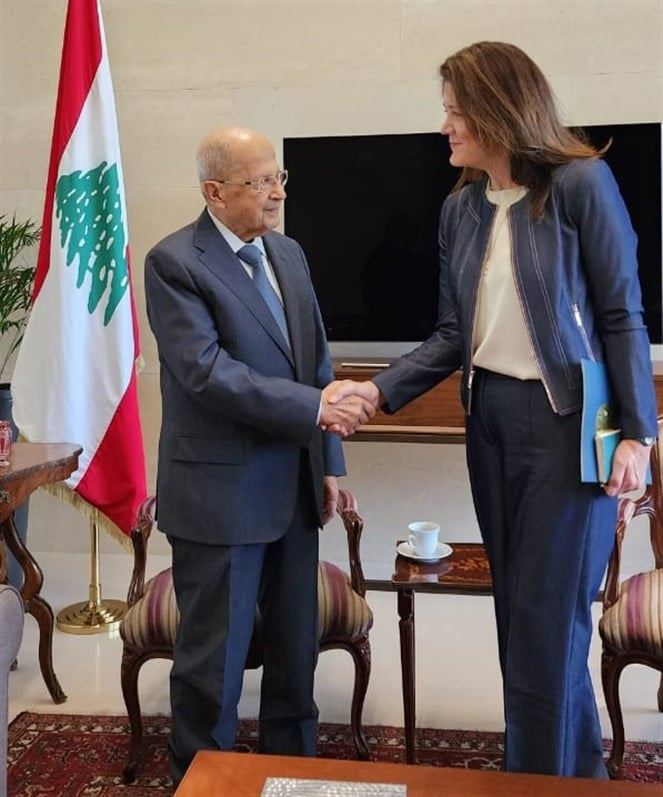
Recent statements by Lebanese President Joseph Aoun and Hezbollah Secretary-General Naeem Qassem reveal a stark contrast in their approaches to arms, negotiations, and war, highlighting the deep political divide in Lebanon.
President Aoun emphasized the necessity of controlling arms and limiting them to the state's authority, stressing the importance of dialogue as a means to resolve internal crises. In contrast, Qassem indicated that arms are a strategic choice for Hezbollah, affirming the right of resistance to defend Lebanon against any external threats.
Details of the Event
These statements came during a joint press conference, where Aoun addressed the importance of enhancing the sovereignty of the Lebanese state, warning that the continued presence of arms outside the state's framework could exacerbate crises. He clarified that dialogue is the only way to resolve disputes, urging all parties to adhere to international resolutions.
On the other hand, Qassem responded to Aoun's remarks, emphasizing that Hezbollah views arms as part of the deterrence equation against the Israeli enemy. He argued that any discussion about disarmament must be accompanied by international guarantees to protect Lebanon from external threats.
Background & Context
These statements come at a time when Lebanon is experiencing multiple crises, ranging from economic and political turmoil to security tensions. Since the end of the Lebanese Civil War in the 1990s, the issue of arms outside state control has been a contentious topic, with Hezbollah considering itself part of the resistance against Israeli occupation.
Historically, arms in Lebanon have been linked to numerous internal and external conflicts, making it difficult to achieve political stability. The increasing influence of Hezbollah has led to tensions with other political forces, which view the existence of arms outside the state as a threat to their sovereignty.
Impact & Consequences
The repercussions of this political divide extend beyond Lebanon's borders, potentially affecting regional stability. The tensions between Hezbollah and the Lebanese state could lead to security escalations, which may negatively impact the country's deteriorating economic situation.
Moreover, the continuation of this divide could complicate international efforts to support Lebanon in facing its crises. Without internal consensus, it will be challenging to make any progress in negotiations with international donor entities.
Regional Significance
These developments are particularly significant for the Arab region, as Lebanon's stability directly impacts regional security. The presence of Hezbollah as an armed force outside the state's framework may encourage other groups in the region to adopt a similar approach, further complicating the security landscape.
Additionally, the divide among Lebanese political forces may open the door for external interventions, threatening national sovereignty and intensifying conflicts in the region.
In conclusion, the contrasting statements between Aoun and Qassem reflect the depth of the political divide in Lebanon, underscoring the necessity for dialogue and understanding among all parties to ensure the country's stability and security.