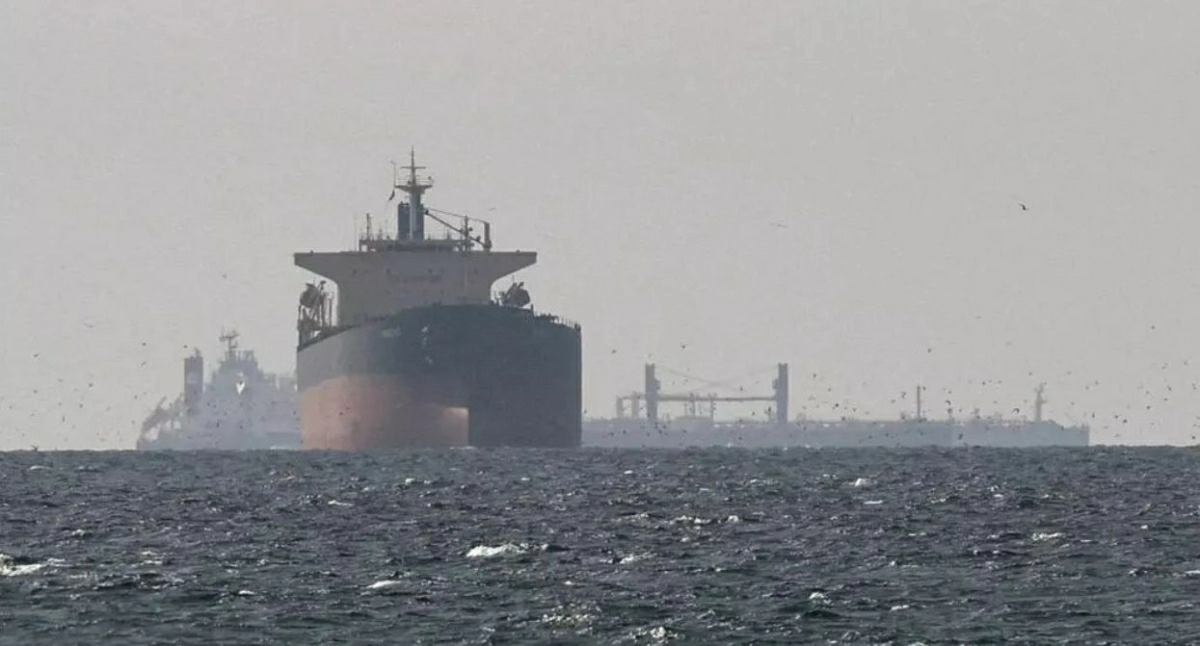
The first ships crossed the Strait of Hormuz on Wednesday, following a ceasefire agreement reached between the United States and Iran, aimed at reopening this crucial maritime corridor. According to maritime traffic monitors, hundreds of vessels remain stranded in the area, including 426 tankers, 34 gas carriers, and 19 liquefied natural gas carriers.
The commercial vessel NJ Earth, owned by a Greek company, crossed the strait at 08:44 GMT, while the ship Daytona Beach, registered under the Liberian flag, crossed earlier at 06:59 GMT after departing from the Iranian port of Bandar Abbas.
Details of the Event
Despite the two-week ceasefire, the security situation in the Gulf remains unclear, as the Norwegian Shipowners' Association reported that companies are still seeking more information before resuming their voyages through the strait. The association's CEO, Knut Arild Dahr, noted that the situation is still unstable and unpredictable.
He added that shipowners are assessing the situation and will not resume operations until real guarantees for safe passage are provided. The Danish shipping company Maersk stated that the ceasefire announcement has not yet provided enough certainty to resume normal operations in the region.
Background & Context
The Strait of Hormuz is one of the most important maritime passages in the world, through which approximately 20% of the world's total oil passes. The region has witnessed increasing tensions in recent years, particularly between the United States and Iran, significantly impacting maritime navigation and global trade.
Historically, the strait has seen numerous crises and conflicts, making it essential to keep these passages open to ensure the stability of global markets. Previous agreements between the United States and Iran have not led to tangible results, increasing the significance of the current ceasefire.
Impact & Consequences
The impact of this agreement on global trade could be substantial, as the resumption of navigation in the Strait of Hormuz may help alleviate pressures on oil prices and financial markets. However, concerns remain about the possibility of renewed tensions at any moment.
Major countries, including the European Union, are seeking to support this agreement and transform it into a permanent accord. The EU spokesperson, Anwar Al-Aouni, stated that the strait must remain open to all as it is a global public interest.
Regional Significance
For Arab countries, the stability of navigation in the Strait of Hormuz is vital, as many Gulf states rely on this corridor to export their oil. Any disruptions in this passage could directly affect the Arab economy.
Arab nations are looking to support international efforts to ensure stability in the region, as any new escalation could negatively impact security and stability across the entire area.