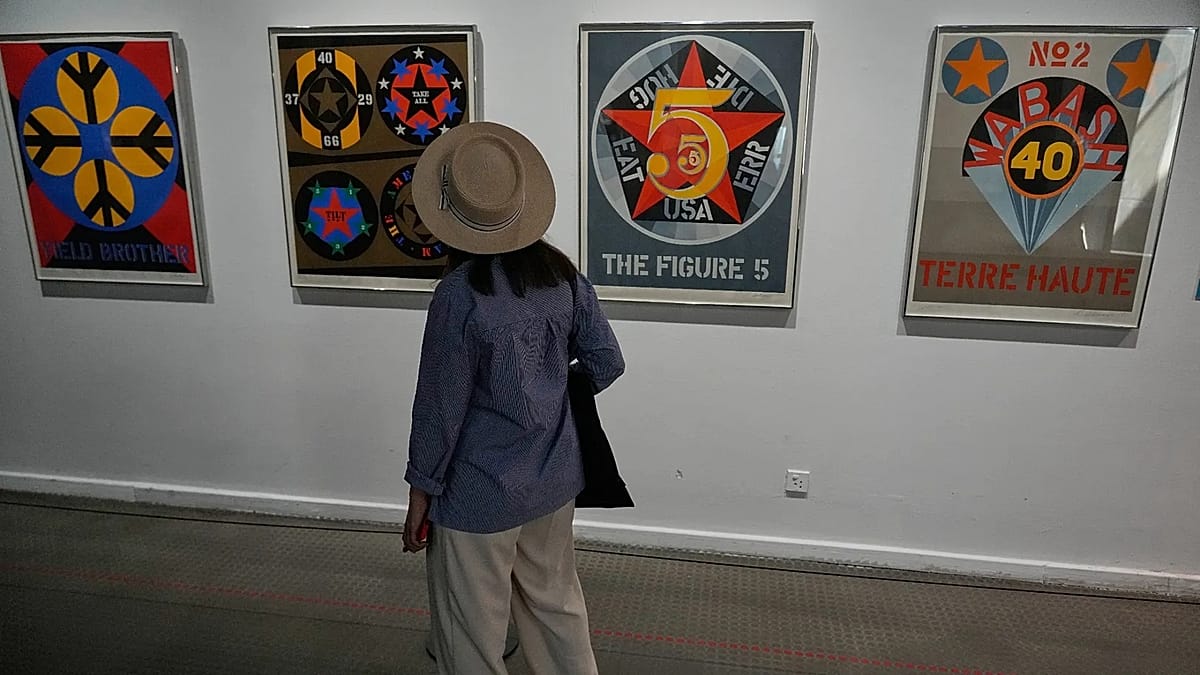
An art exhibition titled 'Art and War' has opened in Tehran, showcasing a collection of artworks that reflect anti-war themes through the works of renowned American artists. This exhibition comes at a time when tensions are escalating in the Middle East, embodying the spirit of resistance and challenge in the face of conflicts.
The exhibition features works by artists such as Roy Lichtenstein, Robert Indiana, and James Rosenquist, with these pieces carefully selected to address themes of war and peace. These artworks have been gathered from a major art museum established in the 1970s by Farah Pahlavi, the wife of the former Iranian Shah, which remained out of sight for decades following the Iranian revolution.
Exhibition Highlights
The streets of Tehran are adorned with anti-American banners, yet this has not deterred Iranians from visiting the art exhibition, which aims to shed light on the impact of war. Among the displayed works, Rosenquist's piece F-111 stands out, critiquing the American military-industrial complex through imagery that conveys the essence of war.
Additionally, Lichtenstein's work Brattata features a pilot battling in the skies, adding a distinctive artistic dimension to the exhibition. Visitors have expressed their admiration for the timing of the exhibition, viewing art as a means of escape from the daily pressures faced by people under current circumstances.
Background & Context
The museum housing these works was established in the 1970s during a period of oil prosperity when Iran was considered America's closest ally in the region. A selection of artworks was curated by Farah Pahlavi, who aimed to promote culture and art in the country. However, following the Islamic Revolution in 1979, the museum was closed for an extended period, with these works hidden away to avoid offending Islamic values.
Although the museum reopened after a period of closure, the number of exhibited works remains limited, as many pieces are kept in the museum's vaults in anticipation of any potential escalation in conflict.
Impact & Consequences
The exhibition demonstrates how art can serve as a medium for expressing resistance and protest during wartime. Reza Dabiri Najad, the museum director, emphasized that the displayed works were chosen as a reaction to current events, reflecting the ongoing struggle between art and politics.
This event represents an opportunity to enhance cultural and artistic dialogue in Iran, as Iranian artists show significant interest in American art, reflecting a diverse cultural interaction amid complex political conditions.
Regional Significance
The exhibition underscores the role of art in articulating social and political issues, mirroring the current tensions in the region. It highlights the potential for art to bridge cultural divides and foster understanding between disparate communities.
In conclusion, the exhibition not only showcases significant artistic contributions but also serves as a reminder of the power of art in times of conflict, encouraging dialogue and reflection on the human condition.