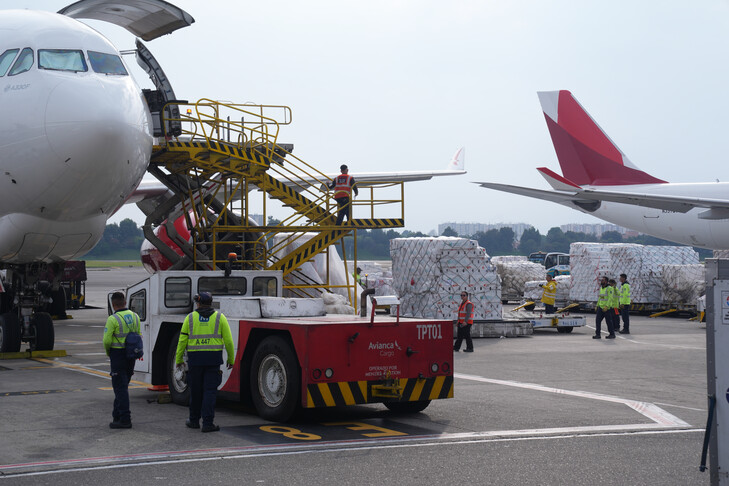
The Middle East has experienced a notable decline in air freight demand during March, with a decrease of 54.3%, making it the weakest performing region worldwide. This downturn occurs at a time when the region is grappling with increasing political and economic tensions, directly impacting trade and shipping activities.
According to reports, this decline is the most severe in a long time, as air freight traffic has significantly decreased compared to the same period last year. Experts attribute this downturn to several factors, including ongoing political crises, rising shipping costs, and changes in global supply chains.
Details of the Decline
Data shows that air freight demand in the Middle East has seen a substantial drop, with the decline percentage being much higher than the global average. This indicates that businesses in the region are facing greater challenges compared to their counterparts in other areas. Furthermore, this downturn may affect various sectors, including international trade and tourism.
At the same time, reports suggest an urgent need to improve air freight infrastructure in the region, as many airports still suffer from a lack of services and facilities necessary to accommodate the increasing demand. These combined factors contribute to exacerbating the current situation.
Background & Context
Over the years, the Middle East has witnessed numerous political and economic crises that have impacted trade movements. From armed conflicts to economic downturns, these factors have played a significant role in reducing air freight demand. Historically, the region has been considered a vital hub for air freight, but current tensions threaten this status.
Moreover, the COVID-19 pandemic has added an additional layer of complexity, leading to border closures and travel restrictions, negatively affecting shipping movements. With rising tensions in the region, it appears that the situation will not improve anytime soon.
Impact & Consequences
The repercussions of this decline in air freight demand could be far-reaching. Companies relying on air freight for product distribution may struggle to meet orders, potentially leading to price increases and delivery delays. This situation could also impact the local economy, as many businesses depend on air freight movements to expand their operations.
Socially, this downturn may result in the loss of numerous jobs in the shipping and logistics sector, increasing economic pressures on families in the region. Under these circumstances, governments need to take urgent steps to support the sector and stimulate growth.
Regional Significance
Considering the situation in the Arab region, the decline in air freight demand could significantly affect trade between Arab countries. Many nations rely on air freight for transporting goods, and thus any downturn in this sector could negatively impact local economies.
This decline may also affect tourism, as many tourists depend on flights to reach their destinations. Amid rising tensions, tourists may hesitate to visit the region, further increasing pressures on the tourism sector.
In conclusion, the current situation in the Middle East requires a swift and effective response from governments and businesses to enhance air freight movements and improve infrastructure. Urgent steps must be taken to ensure the stability of this vital sector.