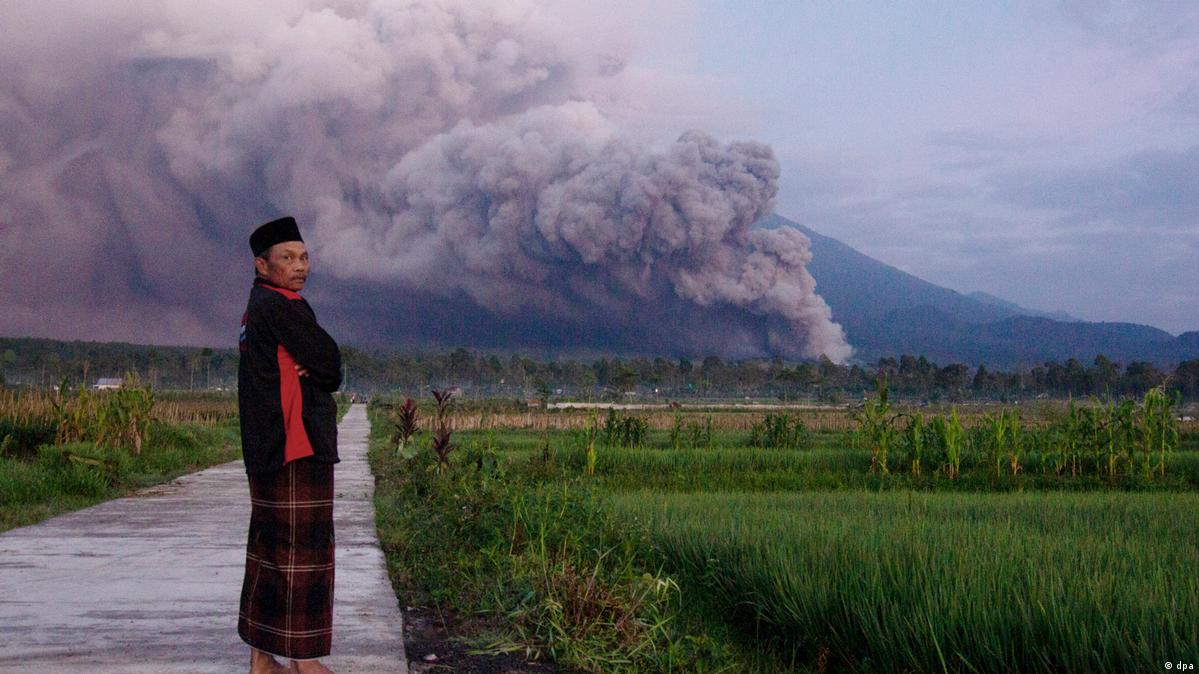
The Simero Volcano, located on the border between Lumajang and Malang regencies in Indonesia, erupted again on Monday evening, releasing a cloud of volcanic ash that reached 600 meters high. This eruption, which occurred at 21:06 local time, is part of a series of eruptions that the volcano has experienced since the morning of the same day.
According to reports from the volcanic monitoring center, 10 eruptions were recorded throughout the day, with the first eruption occurring at 00:44, although it was not visually observed. However, volcanic activity continued at the time of this report.
Details of the Eruption
Seismic instruments recorded an increase in the volcanic ash cloud, which reached 600 meters above the summit of the volcano, indicating significant volcanic activity. The ash cloud was noted to be a dense gray color, drifting towards the south. The eruption was also recorded on seismographs, with a peak vibration of 22 mm lasting for 158 seconds.
In light of these conditions, the alert level has been raised to level three (Siaga), meaning that residents in the surrounding areas must remain vigilant. Recommendations have been issued to refrain from any activities in the southeastern sector within 13 kilometers of the volcano's summit.
Background & Context
The Simero Volcano is one of the most active volcanoes in Indonesia, having experienced numerous eruptions in recent years. Its volcanic activity is attributed to the geological nature of the region, as Indonesia lies on the Pacific Ring of Fire, an area known for seismic and volcanic activity. Historically, the volcano has seen significant eruptions, leading to evacuations and destruction of surrounding lands.
Indonesia is one of the countries that frequently experiences earthquakes and volcanic eruptions, making it essential to have effective emergency plans in place to protect the population. Monitoring systems have been enhanced in recent years, aiding in a quicker response to eruptions.
Impact & Consequences
Volcanic eruptions can have significant effects on the environment and local populations. The ash clouds can impact air quality, posing health risks to residents. Additionally, the flow of lava and ash can lead to the destruction of crops and property, increasing the suffering of local communities.
Furthermore, volcanic eruptions may affect tourism in the area, as tourists may be hesitant to visit regions near the volcano. This can lead to negative economic impacts on communities that rely on tourism as a primary source of income.
Regional Significance
While volcanic events in Indonesia may seem distant from the Arab region, there are lessons to be learned. Experiences in managing natural disasters and how to handle crises can be beneficial for Arab countries facing similar challenges, such as earthquakes or floods.
Moreover, international cooperation in geological research and studies can contribute to improving preparedness for natural disasters worldwide, including in Arab nations.