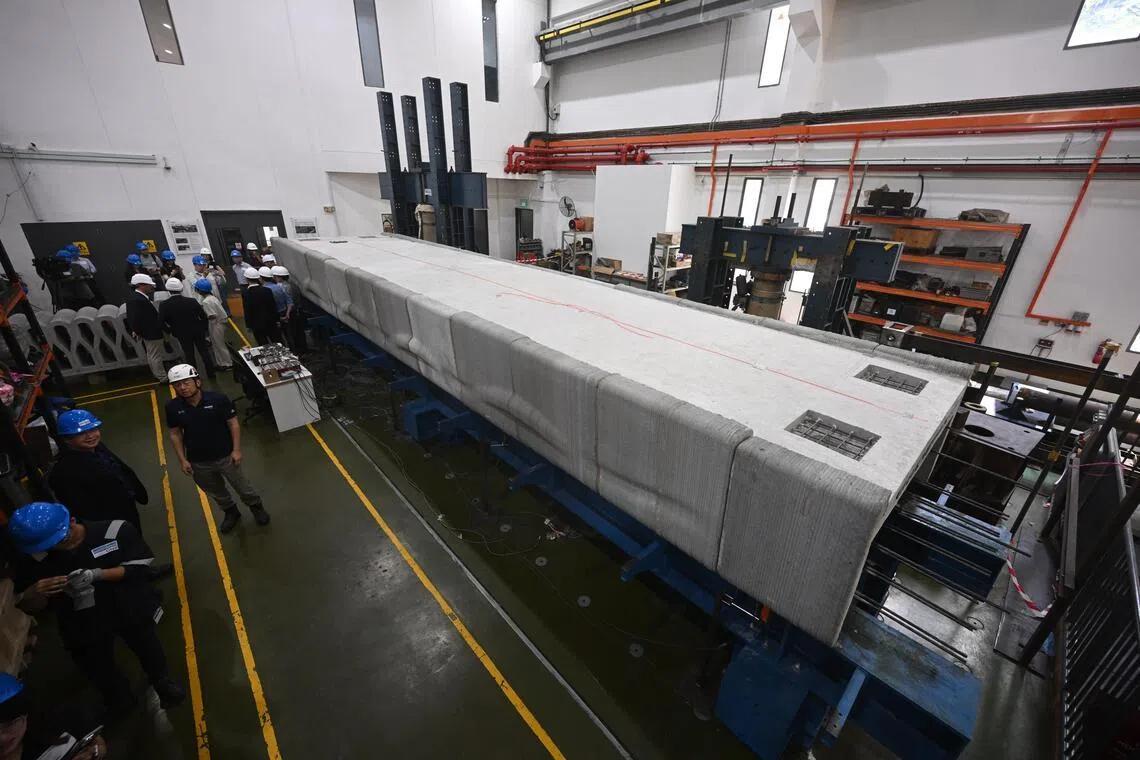
Singapore is preparing to complete its first 3D printed pedestrian bridge in the Jurong West area by 2028. This project is part of the Land Transport Authority's efforts to improve construction productivity amidst labor constraints. The bridge represents an innovative step towards utilizing modern technology in construction, contributing to faster building processes and reduced costs.
The new bridge will rely on 3D printing technologies, allowing for more precise and efficient design. While this technology is not entirely new, it signifies a qualitative leap in how public structures are built. This method will help minimize material waste and save time, making it an ideal choice given the challenges faced by the construction sector.
Project Details
The planned bridge in Jurong West will be part of Singapore's public transportation network, aiming to enhance pedestrian movement and safety. Its design features modern architectural details, making it not just a means of transport but also an architectural landmark that adds aesthetic value to the area.
It is expected that thousands of citizens will use the bridge daily, contributing to sustainable mobility. Additionally, the use of 3D printing will allow for easier future modifications, ensuring it meets the evolving needs of the community.
Background & Context
Singapore is considered a leader in adopting modern technology across various fields, including construction. Over the years, the country has faced challenges in the construction sector due to labor shortages, prompting the government to seek innovative solutions. In this context, 3D printing technology represents a promising solution that could revolutionize how urban projects are executed.
Historically, Singapore has heavily relied on foreign labor in the construction sector, but recent economic and political changes have led to a reduction in this workforce. Therefore, technological innovations like 3D printing have become an urgent necessity to ensure the sustainability of the sector.
Impact & Consequences
The implementation of the 3D printed bridge project could open doors for similar projects in other countries, promoting the use of this technology in construction. This could lead to improved construction efficiency in areas facing labor shortages and enhance the competitiveness of countries that rely on technological innovation.
Moreover, this project may encourage both local and international companies to invest in modern construction technologies, contributing to the creation of new job opportunities in technology and engineering fields.
Regional Significance
Although this project is located in Singapore, the lessons learned can be highly valuable for Arab countries. Many Arab nations face similar challenges in the construction sector, struggling with labor and resource shortages. 3D printing technology could be an effective solution to these challenges, helping to improve efficiency and reduce costs.
Thus, Arab countries can benefit from Singapore's experiences in this field, enhancing their ability to implement sustainable and efficient infrastructure projects.