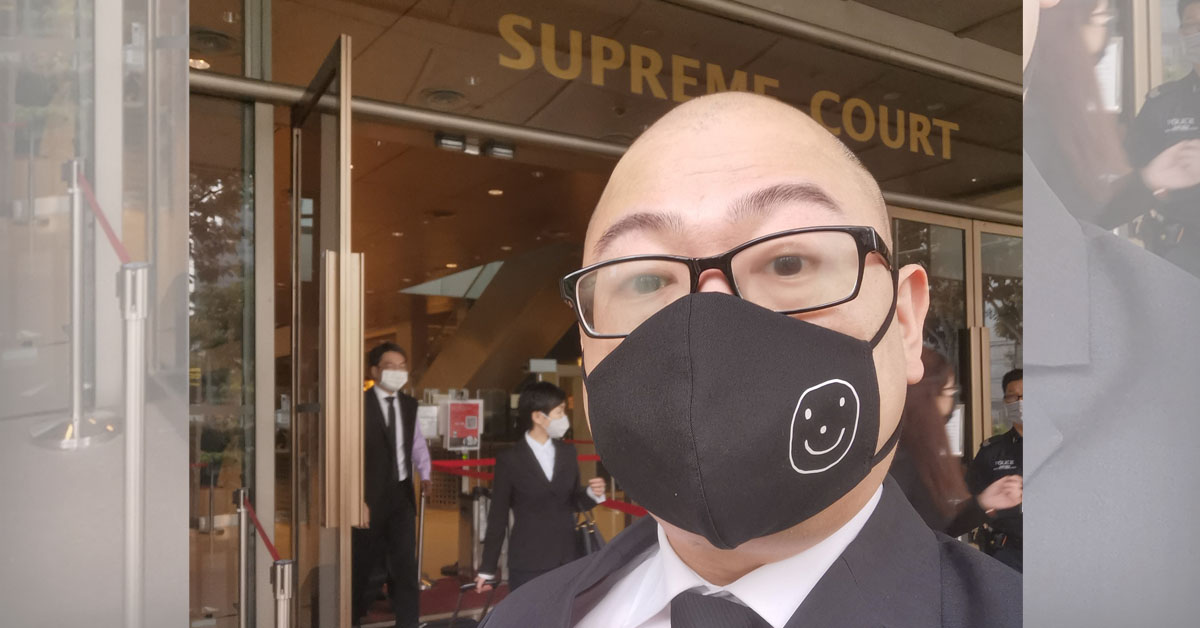
A Singapore court ruled on Tuesday that Terry Shiu, the editor of 'The Online Citizen' (TOC), must pay $420,000 Singapore dollars (equivalent to $325,400 US dollars) to Minister of Home Affairs K. Shanmugam and Minister of Manpower Tan See Leng due to the publication of defamatory information related to real estate transactions.
The ruling came after an article published in December 2024 titled "Bloomberg: Nearly Half of 2024 GCB Transactions Lack Public Record, Raising Transparency Concerns." The article was based on another Bloomberg report discussing real estate deals in Singapore.
Details of the Ruling
In the judgment delivered by Judge Audrey Lim, it was found that Shiu published the defamatory information recklessly, without considering whether the information was true or not. The ruling noted that Shiu refused to apologize or retract the article despite being given the opportunity to do so, indicating bad faith.
Judge Lim described the allegations made in the article as "very serious," attacking the reputation of the two ministers, and pointed out that these allegations portrayed them as individuals part of a non-transparent system that avoids transparency requirements.
Background & Context
Defamation cases in Singapore are considered sensitive, as the government is keen on protecting the reputation of public officials. In recent years, there has been a rise in defamation cases, particularly with the increasing use of social media and websites to disseminate information.
In this context, 'The Online Citizen' is regarded as a controversial platform in Singapore, often accused of publishing inaccurate or misleading information. This case reflects the tension between freedom of expression and the responsibility of disseminating information.
Impact & Consequences
The ruling against Shiu may raise concerns among journalists and bloggers in Singapore, as it could impact freedom of expression and increase fears of censorship. Additionally, this ruling may pave the way for more legal cases against media outlets accused of publishing defamatory information.
Furthermore, this ruling could strengthen the government's position in defamation cases, potentially limiting journalists' ability to investigate corruption or mismanagement issues.
Regional Significance
This case highlights the importance of transparency and accountability in governments, which is a vital issue in many Arab countries. Amid the political and economic crises facing some Arab nations, the need for free and independent media capable of investigating corruption issues becomes evident.
This case also underscores the challenges faced by media worldwide, as legal and political pressures on journalists continue to rise. It is crucial for Arab journalists to learn from this experience to enhance their professional standards and protect their rights.