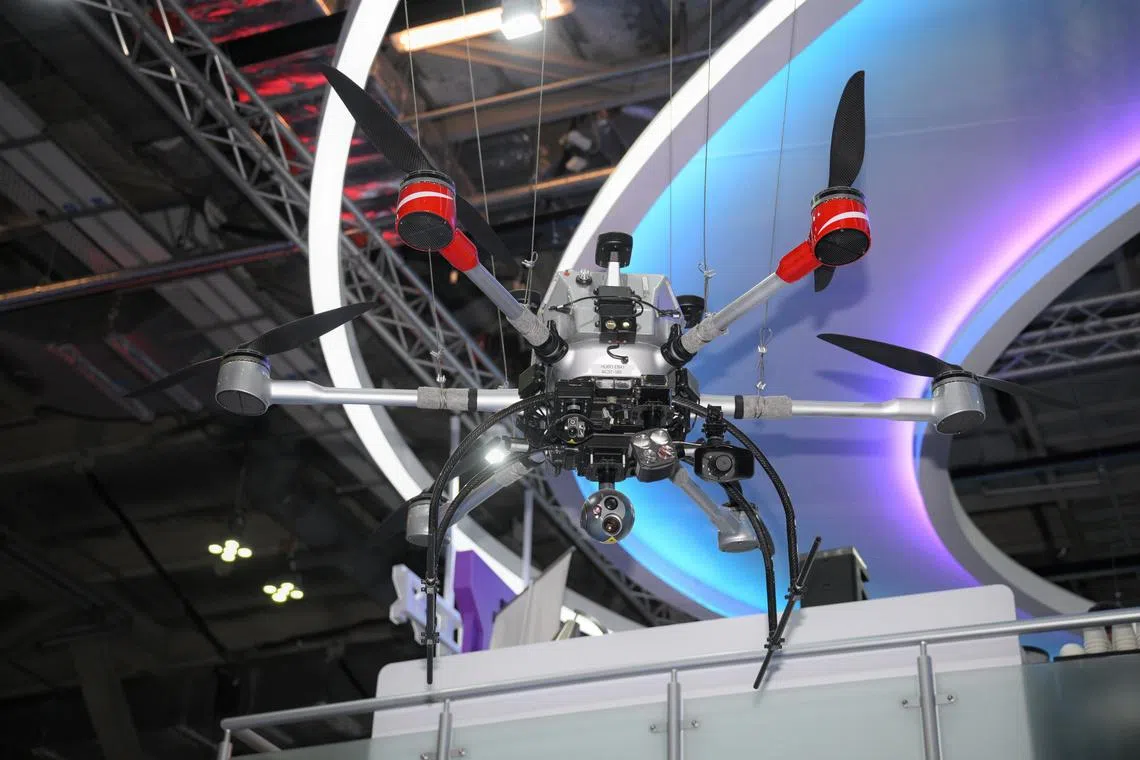
Singapore has announced an ambitious project to develop new drones during the Milipol TechX Summit 2026, where a range of advanced technologies tailored for local security teams was showcased. This project aims to enhance public safety by employing modern technology across various aspects of daily life.
The innovations presented at the summit include drones capable of performing multiple tasks, including surveillance and rapid incident response. Additionally, robots and satellites designed to support security and safety efforts in Singapore were displayed, reflecting the government's commitment to enhancing the use of technology for community service.
Details of the Project
The Milipol TechX Summit 2026 serves as an important platform for exchanging ideas and modern technologies in the field of security and safety. The summit witnessed participation from several global and local companies showcasing their latest technological advancements, highlighting the growing trend towards utilizing technology to bolster security. The focus was on how drones can be used to monitor urban areas and provide support during emergencies.
Through this project, Singapore aims to improve its crisis response by utilizing drones that can operate in complex urban environments. The importance of collaboration between the public and private sectors for the effective development and application of these technologies was also emphasized.
Background & Context
Singapore is recognized as a leading nation in leveraging technology to enhance security and public safety. In recent years, the country has seen an increase in the use of drones for various purposes, including environmental monitoring and infrastructure inspections. This trend aligns with the government's efforts to improve safety levels in the country and provide better services to citizens.
Historically, Singapore relied on traditional security technologies, but with advancements in technology, the government has begun exploring the use of drones as a means to enhance the effectiveness of security operations. This shift reflects the government's vision for a safer and more innovative future.
Impact & Consequences
The development of the drone project is expected to have a significant impact on the level of security and safety in Singapore. These drones will contribute to improving emergency response teams' capabilities and providing accurate real-time information, enhancing the ability to manage incidents more effectively. Furthermore, the use of modern technology could reduce operational costs and increase the efficiency of security operations.
Moreover, this project may encourage other countries in the region to adopt similar technologies, leading to improved security levels across Asia. Innovations in drone technology could open new avenues for cooperation among countries in the field of security and safety.
Regional Significance
The implications of Singapore's drone project extend beyond its borders, potentially influencing regional security dynamics. As neighboring countries observe Singapore's advancements, they may be inspired to implement similar technologies to enhance their own security measures.
In conclusion, Singapore's initiative to develop drones for public safety not only aims to improve local security but also sets a precedent for regional collaboration and technological adoption in security practices.