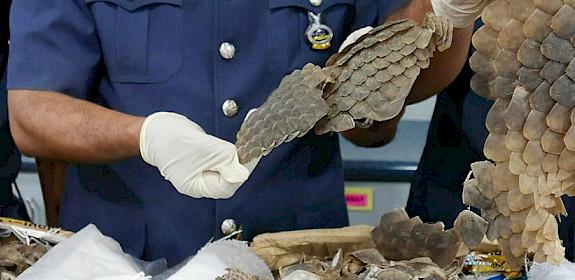
Singapore authorities have announced the seizure of over 830 kilograms of Asian pangolin scales, marking the largest operation of its kind in the country. The scales were discovered in 30 bags concealed within a shipment falsely declared as 'dried fish skin'. This operation took place on December 29, 2025, after officers from the Immigration and Checkpoints Authority of Singapore inspected a truck arriving from abroad.
According to a statement from the National Parks Board of Singapore, the operation was conducted in collaboration with the Immigration and Checkpoints Authority, as anomalies were detected in the scanned images of the truck, prompting a thorough inspection. Preliminary investigations revealed that the shipment was en route from Indonesia to Cambodia.
Details of the Operation
Genetic analyses conducted by the National Parks Board indicated that the seized scales belong to the Sunda pangolin, a critically endangered species found in Southeast Asia, including Singapore. The board confirmed that this operation represents the largest seizure of Asian pangolin scales in Singapore's history, and investigations are ongoing.
Singapore is known for its strict policies against illegal trade in endangered species, adhering to the Convention on International Trade in Endangered Species of Wild Fauna and Flora (CITES). The National Parks Board emphasized that those convicted of trading protected species without legal permits may face fines of up to 200,000 Singapore dollars (approximately 155,200 US dollars) per specimen, in addition to prison sentences of up to eight years.
Background & Context
Pangolin scales are used in traditional medicine in some cultures, making them a prime target for illegal trade. With the rising demand for these scales, smuggling operations have become more common, threatening the survival of this species. Reports indicate that the Sunda pangolin is among the most endangered species, with its population significantly declining due to poaching and habitat loss.
It is noteworthy that Singapore, as an international trade hub, plays a vital role in combating wildlife trafficking. Recently, the board launched a new guide aimed at assisting the shipping industry in detecting wildlife trafficking, in collaboration with organizations such as TRAFFIC and the World Wildlife Fund (WWF).
Impact & Consequences
This operation highlights the importance of international cooperation in combating wildlife trafficking, as this issue requires coordinated efforts among nations and local communities. The seizure of large quantities of pangolin scales reflects the challenges authorities face in tackling this illegal trade and underscores the need for enhanced laws and border controls.
Moreover, this case emphasizes the significance of public awareness regarding the trade in endangered species, encouraging the public to refrain from purchasing products containing parts of protected animals and plants. Raising awareness can help reduce demand for these products and thus protect endangered species.
Regional Significance
The trade in endangered species is a global issue affecting all countries, including Arab nations. Some Arab countries also experience smuggling of endangered species, necessitating stringent measures to combat this phenomenon. Cooperation between Arab countries and others in wildlife trafficking prevention can contribute to protecting biodiversity in the region.
In conclusion, this operation in Singapore serves as evidence of the ongoing challenges faced in wildlife protection efforts and underscores the importance of international collaboration and community engagement in combating this issue.