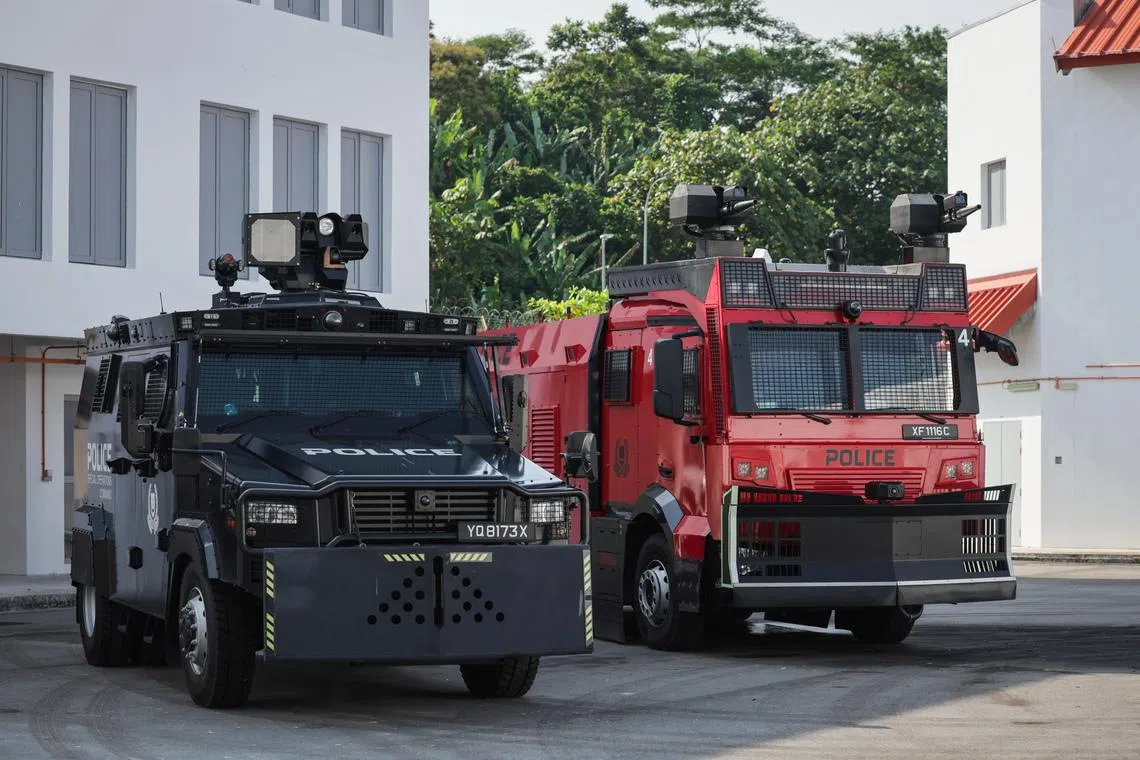
Singapore has announced an upgrade to its riot control vehicles, which are used to disperse crowds during unrest. This update, featuring advanced targeting cameras and sensors, comes after two decades of service, reflecting the growing need for more effective crisis management technologies. This step is part of the government's efforts to enhance public safety and ensure security during large events.
Riot control vehicles are a crucial component of the police strategy in Singapore, having been deployed on several occasions to disperse crowds and prevent outbreaks of violence. The new upgrades aim to improve the accuracy of these vehicles in identifying targets, making it easier for security forces to make quick and effective decisions in critical situations.
Details of the Upgrade
The new vehicles come equipped with advanced technology, including high-definition targeting cameras and sensors capable of analyzing situations in real-time. These features will help reduce the risks associated with crowd dispersal, as security forces can now better assess the situation before taking any action.
This move is part of a broader trend in many countries towards utilizing modern technology in crisis management. In recent years, Singapore has seen an increase in the number of public events, necessitating a more sophisticated and effective security response.
Background & Context
Historically, Singapore has experienced several incidents of riots and protests, prompting the government to enhance the capabilities of its security forces. Since its establishment, Singapore has been known for its strict law enforcement, but with a growing and diverse population, it has become essential to develop new strategies for crisis management.
Over the years, the government has invested in developing the police force and equipping it with modern technology. The riot control vehicles were first used in 2003, and since then, they have been deployed on several occasions, including protests and major sporting events.
Impact & Consequences
The upgrade of riot control vehicles in Singapore reflects a global trend towards using technology in crisis management. With rising social tensions in many countries, this step could serve as a model for other nations seeking to enhance their security capabilities.
These updates also indicate how public safety strategies are evolving, with a greater emphasis on using technology to improve efficiency and reduce risks. In this context, these developments could influence how governments handle protests and demonstrations in the future.
Regional Significance
In the Arab region, where many countries frequently experience protests and demonstrations, Singapore's experience in upgrading riot control vehicles could serve as an important lesson. Many Arab nations face similar challenges in crisis management and could benefit from adopting new technologies to improve their responses to significant events.
Moreover, these developments may lead to discussions about human rights and freedom of expression, as governments must balance public safety with individual rights. The use of technology in riot control may raise concerns about privacy and human rights, requiring governments to take steps to ensure transparency and accountability.
In conclusion, the upgrade of riot control vehicles in Singapore represents a significant step towards enhancing public safety, but it also raises questions about how to use this technology responsibly. In a rapidly changing world, the greatest challenge remains achieving a balance between security and individual rights.