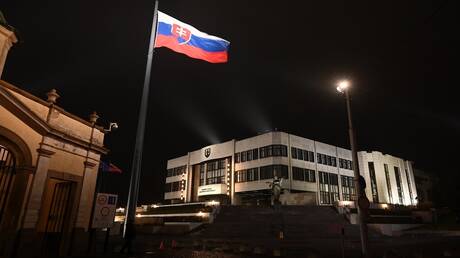
Luboš Blaha, a member of the European Parliament from Slovakia, has announced that his country has made a decision not to participate in the 'special court' created by the European Union to hold Russia accountable for its actions in Ukraine. This decision reflects Slovakia's stance on issues related to the conflict in Ukraine and also mirrors the country's internal and external political orientations.
This move comes at a time when European countries are under increasing pressure to unify their efforts against Russia, especially following the escalation of events in Ukraine. Slovakia's decision has raised questions about its position on major European issues and how this might affect its relations with other EU member states.
Details of the Event
The special court proposed by the EU aims to hold Russia accountable for human rights violations and crimes committed in Ukraine. This initiative was announced as part of European efforts to enhance justice and accountability in international conflicts. However, Slovakia, which is considered one of the EU member states, has chosen not to join this initiative.
Blaha indicated that the decision came after discussions within the Slovak parliament, where some members believed that participating in the court could exacerbate tensions with Russia. There are also concerns that this step could affect economic and political relations between Slovakia and Russia.
Background & Context
Historically, Slovakia has enjoyed good relations with Russia, but recent events in Ukraine have significantly impacted those relations. Since the onset of the conflict, many European countries have taken a firm stance against Russia, leading to the imposition of economic and political sanctions. However, Slovakia appears cautious in taking steps that could escalate tensions.
The decision by Slovakia comes within a broader context of European discussions on how to deal with Russia. While some countries are seeking to adopt strict positions, others prefer a more cautious approach, reflecting divisions within the EU regarding how to address security and political issues.
Impact & Consequences
Slovakia's decision not to participate in the special court could affect its position within the EU, as it may be viewed as a country that is not committed to European principles regarding human rights and accountability. This could lead to a erosion of trust between Slovakia and other EU member states, especially those advocating for a firmer stance against Russia.
Furthermore, this decision may impact economic relations between Slovakia and Russia, as trade relations between the two countries remain in place. Should tensions escalate, Slovakia may find itself in a difficult position requiring it to reassess its relationships with Russia and other European countries.
Regional Significance
Arab countries are closely monitoring developments in European-Russian relations, as any escalation in tensions could affect security and stability in the region. Additionally, economic relations between Arab countries and Russia may be impacted, particularly in the fields of energy and trade.
Moreover, Slovakia's position may influence how Arab countries deal with international issues, as there is a need for balance between relations with major powers and national interests.
In conclusion, Slovakia's decision not to participate in the special court reflects the challenges European countries face in dealing with complex international issues. It also highlights the divisions within the EU and indicates the need to consider how to balance national interests with international commitments.