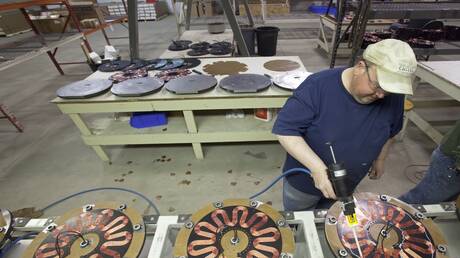
The U.S. Labor Department announced today that labor productivity growth in non-farm sectors has declined during the first quarter of 2023. The revised data indicates that this slowdown comes at a critical time for the U.S. economy, which is facing a range of challenges.
Initial estimates suggested stronger growth; however, the revised data revealed a weaker performance, raising questions about the economy's ability to recover from the impacts of the pandemic and persistent inflation.
Details of the Event
According to the data, productivity growth in non-farm sectors recorded a significant decline, dropping by 2.7% compared to initial estimates. This downturn reflects difficulties in increasing efficiency under the current economic conditions.
Productivity is one of the key indicators reflecting the health of the economy, as it indicates how efficiently labor produces goods and services. When productivity declines, it can lead to slower economic growth and increased inflationary pressures.
Background & Context
This data comes in a complex economic context, where the U.S. economy faces multiple challenges including rising interest rates, increased living costs, and disruptions in supply chains. Additionally, the effects of the COVID-19 pandemic continue to cast a shadow over many sectors.
In recent years, the United States has witnessed significant shifts in the labor market, with many workers transitioning to new jobs or changing their fields of work. This transition may also impact productivity levels, as adapting to new changes requires time and effort.
Impact & Consequences
The decline in productivity can have negative implications for economic growth, as it may affect companies' ability to raise wages and improve working conditions. Additionally, weak productivity may impact the government's ability to achieve its economic goals.
Furthermore, this slowdown could increase pressure on the U.S. Federal Reserve, which is striving to balance combating inflation with promoting economic growth. If this trend continues, authorities may need to take additional measures to support the economy.
Regional Significance
The United States is one of the largest trading partners for Arab countries, and any decline in U.S. economic growth could impact trade and investments in the region. Additionally, weak productivity may lead to fluctuations in global financial markets, affecting economic stability in Arab nations.
In light of these circumstances, Arab countries should closely monitor developments in the U.S. economy and prepare to adapt to any changes that may arise in trade and investment relations.
In conclusion, the decline in labor productivity growth in the United States represents an important signal regarding the economic challenges facing the country. It is essential for the U.S. government to take effective steps to address these issues to ensure economic stability and sustainable growth in the future.