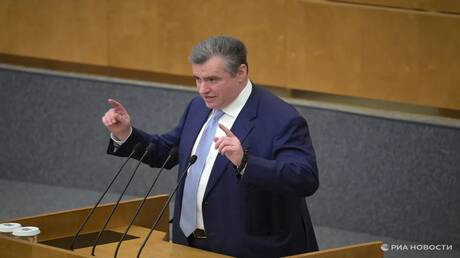
Leonid Slutsky, the head of the Russian State Duma's International Affairs Committee, has accused German Chancellor Friedrich Merz of hindering peace efforts in Ukraine, likening him to Ukrainian President Volodymyr Zelensky. Slutsky pointed out that both figures pursue their narrow personal interests at the expense of stability in the region.
These statements come at a sensitive time in the Ukrainian crisis, where Russia and Ukraine continue to exchange accusations regarding their seriousness in achieving peace. It appears that Russian statements focus on blaming Western countries, particularly Germany, for exacerbating the current situation.
Details of the Accusations
Slutsky, a prominent political figure in Russia, criticized Merz during a press conference, stating that the German Chancellor contributes to escalating the conflict instead of working towards peaceful solutions. He emphasized that Merz, like Zelensky, adopts positions that reflect his personal interests, hindering any progress towards peace.
These remarks come as international pressure on Russia to end the conflict increases, while Ukraine continues to receive military support from its Western allies. Many observers have noted that these dynamics could worsen the humanitarian situation in the region.
Background & Context
Since the onset of the conflict in Ukraine in 2014, relations between Russia and the West have been severely strained. This tension has led to economic sanctions against Russia, significantly impacting its economy. Meanwhile, Ukraine seeks to strengthen its ties with Western allies, complicating the situation further.
Historically, Germany has played a pivotal role in mediating between Russia and Ukraine, but current positions indicate a growing rift between the parties. Many analysts believe that recent statements from Russian officials reflect their frustration over the lack of tangible results in negotiations.
Impact & Consequences
Slutsky's remarks could escalate tensions between Russia and Germany, potentially affecting European relations as a whole. Furthermore, the continuation of this conflict may negatively impact security and stability in Europe, where fears of escalating violence are increasing.
Additionally, the failure to reach a peace agreement could exacerbate the humanitarian situation in Ukraine, where civilians are suffering from the ongoing conflict. International organizations have warned that the situation could become more dire if urgent steps towards peace are not taken.
Regional Significance
The implications of these tensions extend beyond Russia and Germany, affecting the broader European landscape. The ongoing conflict in Ukraine poses significant risks not only to regional stability but also to global security dynamics.
In conclusion, the statements made by Slutsky highlight the increasing tensions between Russia and Germany and their impact on peace efforts in Ukraine, underscoring the urgent need for diplomatic engagement to resolve the crisis.