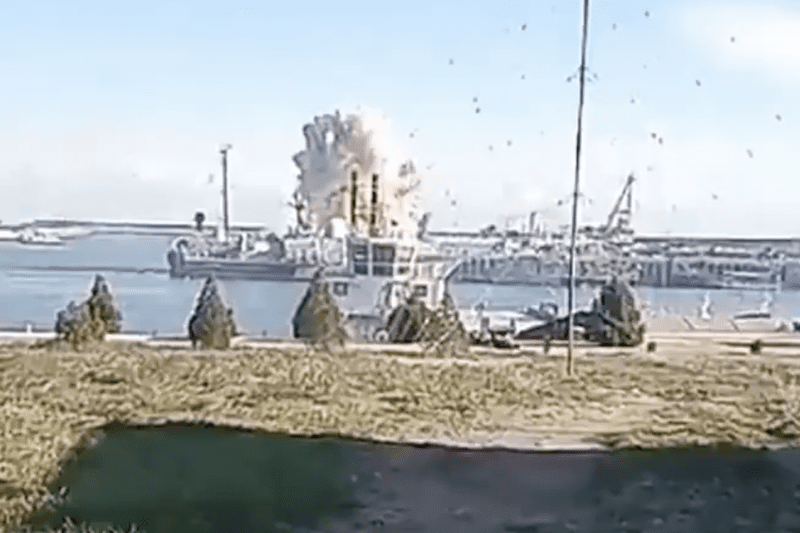
Satellite images taken by the European satellite "Sentinel 2" on Thursday, April 2, show thick columns of smoke rising from Qeshm Island's port, located near the Strait of Hormuz, following an attack targeting the site.
The images reveal dark spots and smoke extending over the port area, indicating damage to infrastructure or fires breaking out within its vicinity. Qeshm port is considered a vital site linked to commercial and maritime activity in the region due to its proximity to one of the world's most important shipping lanes.
Details of the Incident
Iranian media reported that the United States and Israel targeted a commercial port and a fishing dock on Qeshm Island as part of a military escalation that has been ongoing since late February 2026. These developments occur within the context of the US-Israeli war on Iran, which has expanded to include targeting sensitive infrastructure, including ports, energy-related facilities, and supply chains.
In recent weeks, there have been indicators of targeting or threats against Iranian ports located along shipping routes in the Gulf, in an attempt to pressure Tehran's logistical capabilities and disrupt shipping traffic through the Strait of Hormuz. These attacks come at a sensitive time as fears of escalating tensions in the region are increasing.
Background & Context
Historically, the Arabian Gulf region has witnessed recurring tensions due to geopolitical conflicts, with Iran being one of the main regional powers. Since the United States withdrew from the Iranian nuclear deal in 2018, tensions between Tehran and Washington have escalated, leading to a series of attacks and military responses.
Iranian ports, including Qeshm port, are considered strategic points in global trade movement, through which a significant portion of oil and gas supplies pass. Attacks on these ports aim to undermine Iran's ability to export its natural resources, complicating the economic and political situation in the country.
Impact & Consequences
Reports indicate that these attacks could lead to heightened tensions in the region, negatively impacting maritime navigation. Additionally, targeting the ports may affect global oil prices, as the Strait of Hormuz is a vital transit point for oil transportation.
Furthermore, these events may lead to greater military escalation, as Iran may feel pressured to respond to these attacks, increasing the likelihood of armed conflict in the region. These developments could also impact relations between major countries in the region, including Arab states and Gulf countries.
Regional Significance
The recent events at Qeshm port are indicative of rising tensions in the Gulf region, which could affect security and stability in neighboring Arab countries. Under these circumstances, concerns about maritime security in the region are increasing, which could lead to negative impacts on the Arab economy.
Moreover, the escalation of conflict in the Gulf may place Arab countries in a difficult position, as they must balance their economic and security interests. It is crucial for these countries to remain vigilant and work to enhance their national security amid these rising tensions.
In conclusion, developments at Qeshm port remain under scrutiny, as they indicate a potential escalation in regional conflict, necessitating a response from the international community to ensure stability in the region.