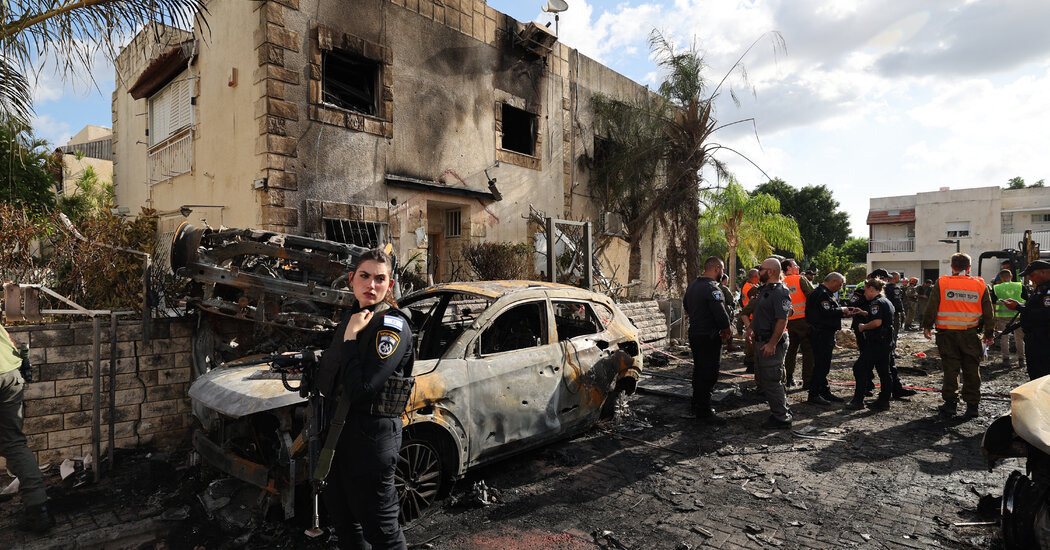
Alarms rang out four times across different Israeli regions on Monday night due to missile attacks from Iran and Hezbollah. The Israeli military acknowledged the deaths of four of its soldiers and injuries to three others during confrontations in southern Lebanon.
At 05:33 local time (02:33 GMT), the Israeli military announced in an official statement that it had detected the launch of missile barrages from Lebanese territory, prompting the activation of the early warning system in several areas. This system was activated as a precautionary measure to protect civilians and vital facilities.
Details of the Incident
The attacks on Israel come at a sensitive time, as tensions in the region escalate due to ongoing conflicts between Israel and Hezbollah. The Israeli army indicated that the attacks were coordinated, reflecting a level of cooperation between Iran and Hezbollah in conducting military operations against Israel.
These events follow a series of hostile statements from Iranian officials, who have reaffirmed their support for Hezbollah in confronting Israeli occupation. Furthermore, these attacks are part of a continuous escalation that has persisted for several months, with repeated clashes observed along the Lebanese-Israeli border.
Background & Context
Historically, the Lebanese-Israeli border has witnessed increasing tensions since the 2006 war, with Hezbollah still considering Israel its primary enemy. Military activities in the region have significantly increased, especially with Iran's growing support for the party, complicating the situation further.
The recent military maneuvers are part of Iran's strategy to enhance its influence in the region, as it seeks to use Hezbollah as a tool to pressure Israel. This escalation also reflects the challenges Israel faces in maintaining its national security amid rising threats from multiple fronts.
Impact & Consequences
The deaths of Israeli soldiers may lead to military reactions from the Israeli army, potentially escalating tensions in the region. Additionally, these events could affect Israel's relations with other countries, particularly those seeking to achieve peace in the area.
Analysts expect Israel to respond forcefully to these attacks, which could lead to greater military escalation in Lebanon. Moreover, these events may complicate ongoing political negotiations in the region, as military escalation could hinder dialogue and negotiation opportunities.
Regional Significance
These events signify a rise in tensions in the Middle East, where armed conflicts continue to threaten regional stability. Such incidents could increase anxiety among neighboring Arab countries, especially those grappling with internal conflicts or political tensions.
The military escalation between Israel and Hezbollah may also impact peace efforts in the region, as the chances for dialogue and negotiation could diminish in the tense atmosphere. This situation necessitates clear stances from Arab countries regarding military escalation and efforts to contain crises before they worsen.