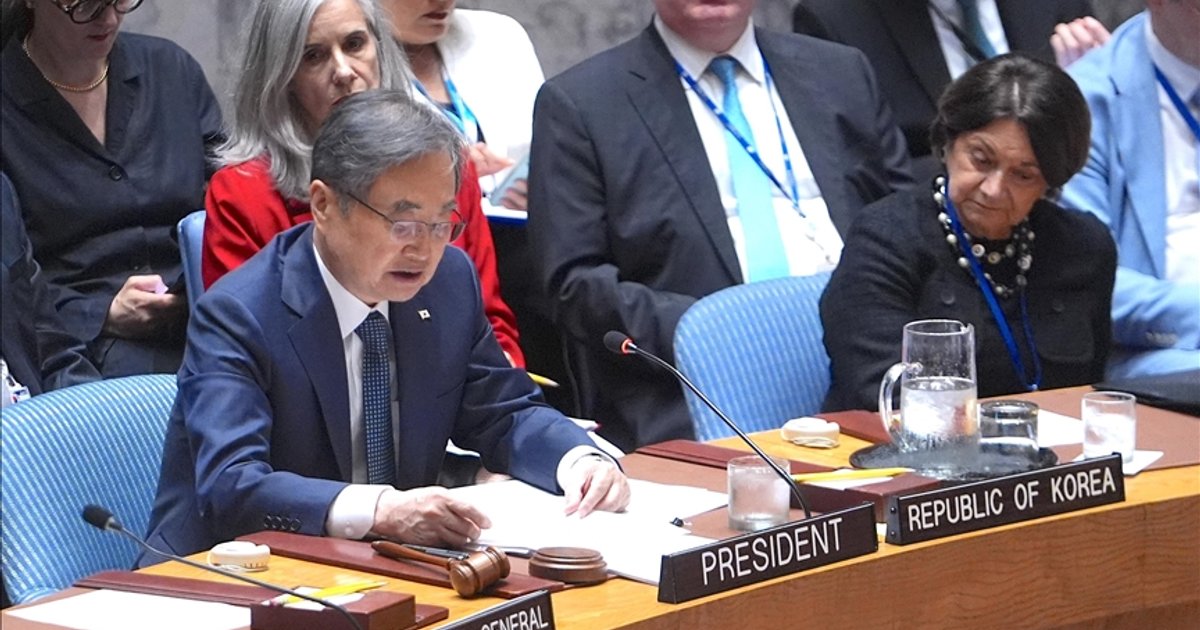
South Korea, represented by its chief diplomat Choo Hyun, has denied any intention to acquire nuclear weapons amid rising speculation regarding updates to its nuclear fuel cycle and nuclear submarines. These remarks were made during a time of escalating tensions in the region, raising concerns within the international community about Seoul's intentions.
Choo Hyun emphasized that his country is focused on developing its defense capabilities in a peaceful manner, indicating that any updates to the nuclear program are aimed at enhancing national security rather than pursuing nuclear weapons. These statements were prompted by questions regarding South Korea's intentions following its announcement of plans to update its nuclear fuel cycle, which some viewed as a potential indicator of developing nuclear capabilities.
Details of the Event
Speculation about South Korea's intentions intensified after the government announced plans to develop nuclear-powered submarines. These plans raised fears that Seoul might seek to develop nuclear capabilities, especially given the increasing tensions with its northern neighbor, North Korea, which continues to advance its nuclear program.
Choo Hyun pointed out that South Korea is committed to the Treaty on the Non-Proliferation of Nuclear Weapons, and any updates to the nuclear program are framed within the context of enhancing defensive capabilities to address regional threats. He also affirmed that his country seeks to strengthen cooperation with allies, particularly the United States, to ensure regional security.
Background & Context
Historically, the Korean Peninsula has experienced ongoing tensions since the end of the Korean War in 1953. North Korea, which possesses nuclear weapons, remains a constant threat to its southern neighbor, prompting Seoul to bolster its military capabilities. In recent years, concerns have grown over escalating tensions between the two Koreas, making it imperative for South Korea to consider updating its defense capabilities.
In this context, Choo Hyun's statements underscore South Korea's commitment to peace and stability in the region, despite increasing pressures from North Korea. These remarks also reflect Seoul's desire to maintain good relations with the international community, especially with the United States, which is a key ally of South Korea.
Impact & Consequences
Choo Hyun's statements are significant as they reflect South Korea's desire to avoid a nuclear arms race in the region. If speculation regarding Seoul's intentions continues, it could lead to heightened tensions in the area, impacting both regional and international security.
Moreover, any move towards developing nuclear weapons could provoke strong reactions from the international community, potentially resulting in sanctions or diplomatic pressures on South Korea. Therefore, Choo Hyun's reassurances aim to reassure allies and the international community that South Korea is committed to peace and stability.
Regional Significance
Although the situation on the Korean Peninsula may seem distant from the Arab region, events in South Korea could indirectly impact regional security. Any escalation of tensions in Asia could lead to a reassessment of security strategies in the Arab region, especially in light of increasing threats from certain countries.
Additionally, relations between South Korea and Arab nations could be affected, as Seoul seeks to enhance economic and trade cooperation with Arab countries. Thus, maintaining stability on the Korean Peninsula is crucial not only for South Korea but also for Arab nations looking to strengthen their ties with Asia.