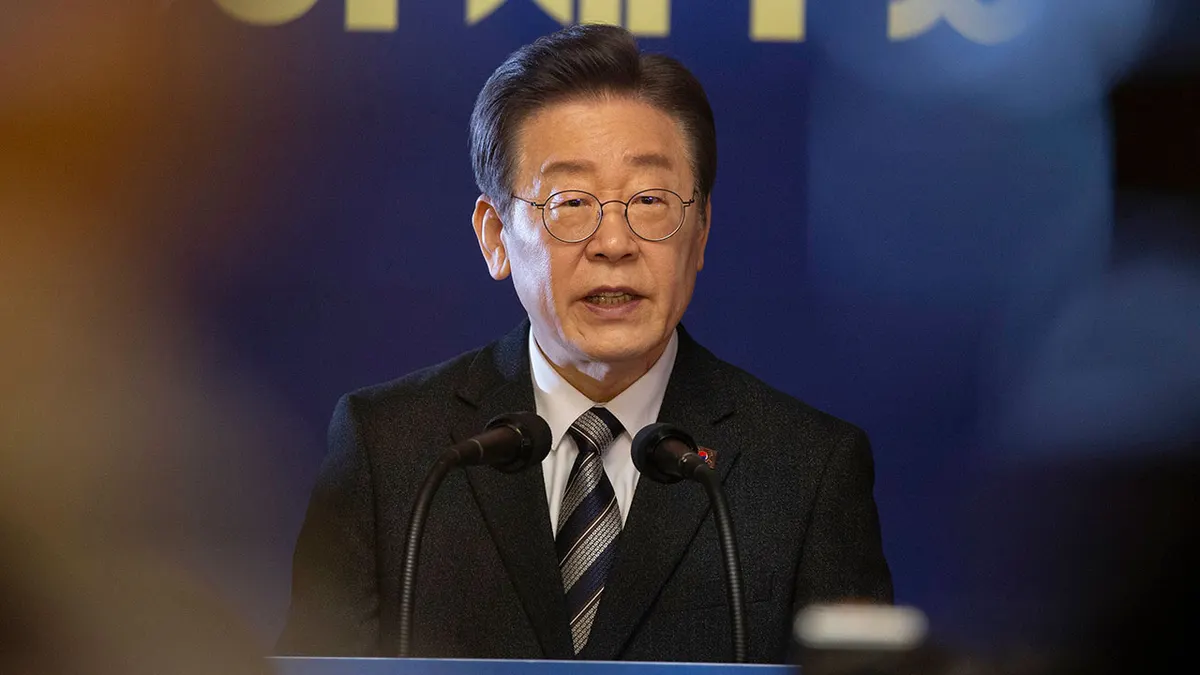
In an unprecedented move, South Korean President Lee Jae-myung declared that the South Korean economy is in a state of 'war' due to the repercussions of the ongoing war in Iran. This announcement was made during a budget speech delivered before the National Assembly, where the government proposed an additional budget of $17.2 billion to tackle the increasing economic crises.
This step comes at a time when oil prices are significantly rising due to the ongoing conflict between the United States and Israel on one side and Iran on the other, increasing the risks related to growth and inflation in South Korea, which relies on crude oil from the Middle East for up to 70% of its total imports.
Details of the Announcement
During his speech, Lee Jae-myung emphasized that the government is treating the economic situation as an emergency, noting that the current crisis is not merely temporary but resembles a massive storm that could last for an indefinite period. He urged lawmakers to swiftly approve the additional budget to confront the economic challenges.
The proposed budget includes allocating 4.8 trillion won (approximately $3.1 billion) as cash payments ranging from 100,000 to 600,000 won for individuals in low-income brackets, in addition to 2.8 trillion won to support youth and low-income individuals, and 2.6 trillion won for companies affected by the crisis in the Middle East.
Background & Context
South Korea is considered one of the Asian countries that heavily depend on energy imports, including through the Strait of Hormuz, which has recently faced threats of closure, leading to rising energy prices and destabilizing the global economy. These circumstances have prompted the South Korean government to take unprecedented measures, such as imposing a cap on fuel prices, the first of its kind since 1997.
In light of these conditions, the South Korean Ministry of Energy issued guidelines urging the public to conserve energy, including reducing shower times and charging mobile phones during daylight hours. President Lee called on citizens to actively participate in energy-saving practices.
Impact & Consequences
The South Korean government expects this crisis to significantly affect economic growth, necessitating extraordinary measures to confront the challenges. This situation reflects the growing concern over the impact of the war in Iran on the global economy, as rising oil prices could lead to increased inflation in many other countries, negatively affecting economic stability.
Moreover, this crisis could exacerbate economic conditions in countries that rely on oil imports, increasing pressure on governments to provide support to affected citizens and businesses.
Regional Significance
Arab oil-producing countries are part of the global economic equation, as any rise in oil prices due to conflicts in the region could directly impact their economies. At the same time, some countries may benefit from rising prices, but they face challenges in effectively managing the revenues.
It is important for Arab countries to monitor developments in South Korea, as the South Korean government's response to the crisis may offer valuable lessons on how to handle economic crises resulting from regional conflicts.