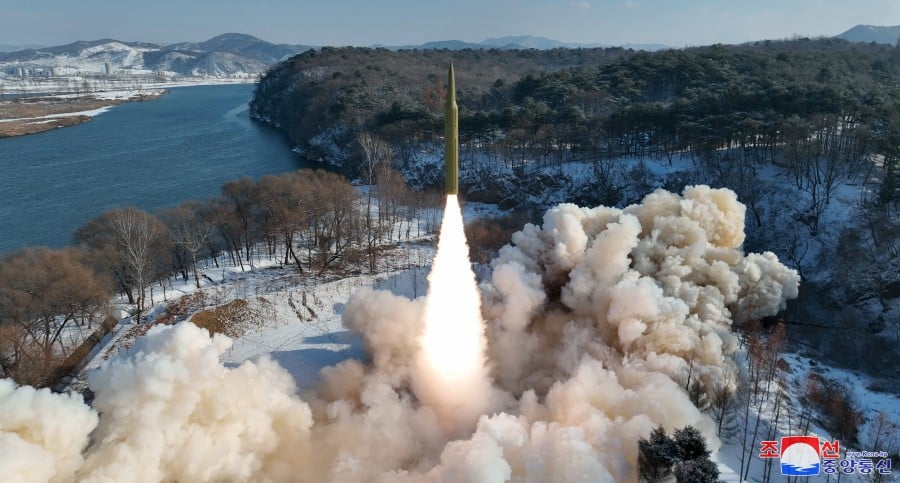
On April 8, South Korea convened an emergency meeting to assess the security situation following North Korea's launch of several ballistic missiles towards the Sea of Japan. This escalation occurs at a sensitive time, as officials in Seoul view it as a clear provocation and a violation of United Nations Security Council resolutions.
The Chairman of the Joint Chiefs of Staff in South Korea reported that North Korea launched several ballistic missiles, along with two unidentified projectiles, heightening tensions on the Korean Peninsula. The ballistic missiles were determined to have traveled approximately 240 kilometers before falling into the sea.
Details of the Incident
This incident marks the fourth confirmed by South Korea this year, indicating North Korea's continued development of its military capabilities despite international pressures. Officials noted that these actions represent a clear challenge to the international community, especially amid the multiple crises facing the region.
Simultaneously, Japan's Defense Minister stated that his country did not detect any North Korean missiles crossing its airspace, alleviating some concerns in Tokyo, but it does not diminish the general anxiety regarding repeated provocations from Pyongyang.
Background & Context
Historically, the Korean Peninsula has experienced ongoing tensions between the two Koreas, with North Korea seeking to enhance its military capabilities as a means of exerting pressure on the international community. Since 2017, North Korea has increased its missile testing, leading to the imposition of severe international sanctions.
These tests are part of North Korea's strategy to assert its military strength while seeking international recognition as a nuclear power. Such actions have escalated tensions in the region, negatively impacting regional security.
Impact & Consequences
The continued missile launches by North Korea may lead to heightened tensions between the two Koreas and could exacerbate the security situation in the region. Additionally, these actions could affect nuclear disarmament talks that had begun in previous years, complicating the situation further.
International reactions to these provocations are crucial, as they may lead to new measures by the United Nations Security Council or even the formation of new alliances in the region to counter the increasing threats.
Regional Significance
Although events on the Korean Peninsula may seem distant from the Arab world, rising tensions in any region can impact global stability, including oil prices and international trade. Furthermore, any military escalation could have humanitarian repercussions that reach far beyond the immediate area.
The situation in North Korea reminds us of the importance of international cooperation in addressing security challenges, which should be a focal point for Arab nations in their foreign policy.