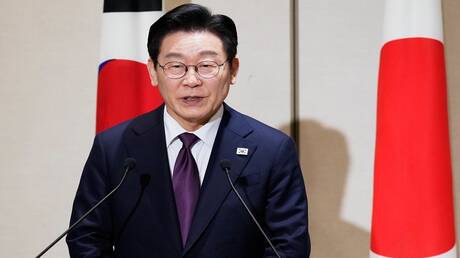
South Korean President Lee Jae-myung expressed regret on Monday regarding the sending of drones over North Korean territory, stating that such behavior has caused unnecessary military tensions.
This statement comes at a sensitive time when relations between the two Koreas are experiencing increased tensions, as North Korea has shown discontent with South Korea's military activities, exacerbating the situation in the region.
Details of the Incident
In his remarks, Lee Jae-myung emphasized that sending drones over North Korean territory was not necessary, and he expressed hope for improving relations between the two countries. This step reflects the South Korean government's desire to ease military tensions, which could lead to an escalation of situations on the Korean Peninsula.
The South Korean president also pointed to the importance of dialogue and communication between the two sides, considering that provocative actions do not serve the interests of either party. This statement follows a series of military drills conducted by South Korea and the United States, which Pyongyang viewed as a threat to its national security.
Background & Context
Historically, relations between the two Koreas have experienced numerous fluctuations, with periods of intense tension and others of détente. Since the end of the Korean War in 1953, the two Koreas have remained in a state of instability, with both nations continuously exchanging accusations.
In recent years, successive South Korean governments have attempted to improve relations with the North, but these efforts often face obstacles, such as North Korea's nuclear tests. Recent statements from Lee Jae-myung may reflect a shift in South Korean policy towards greater diplomacy.
Impact & Consequences
Lee Jae-myung's statements could open new channels for dialogue between the two Koreas, potentially contributing to the alleviation of military tensions. However, reactions from North Korea will be crucial in determining the future trajectory of their relations.
If Pyongyang responds positively, we may witness steps towards resuming discussions on nuclear disarmament, which is a primary objective for many countries concerned about security in the region. However, if tensions continue to escalate, the situation could become more complicated.
Regional Significance
The relations between the two Koreas are a topic of global interest, with Arab countries closely monitoring developments. Any improvement in relations between the two Koreas could impact regional stability, which may reflect on security situations in other parts of the world.
Furthermore, developments on the Korean Peninsula may influence relations between major powers such as the United States and China, which is of concern to Arab nations seeking to maintain their stability amid global tensions.