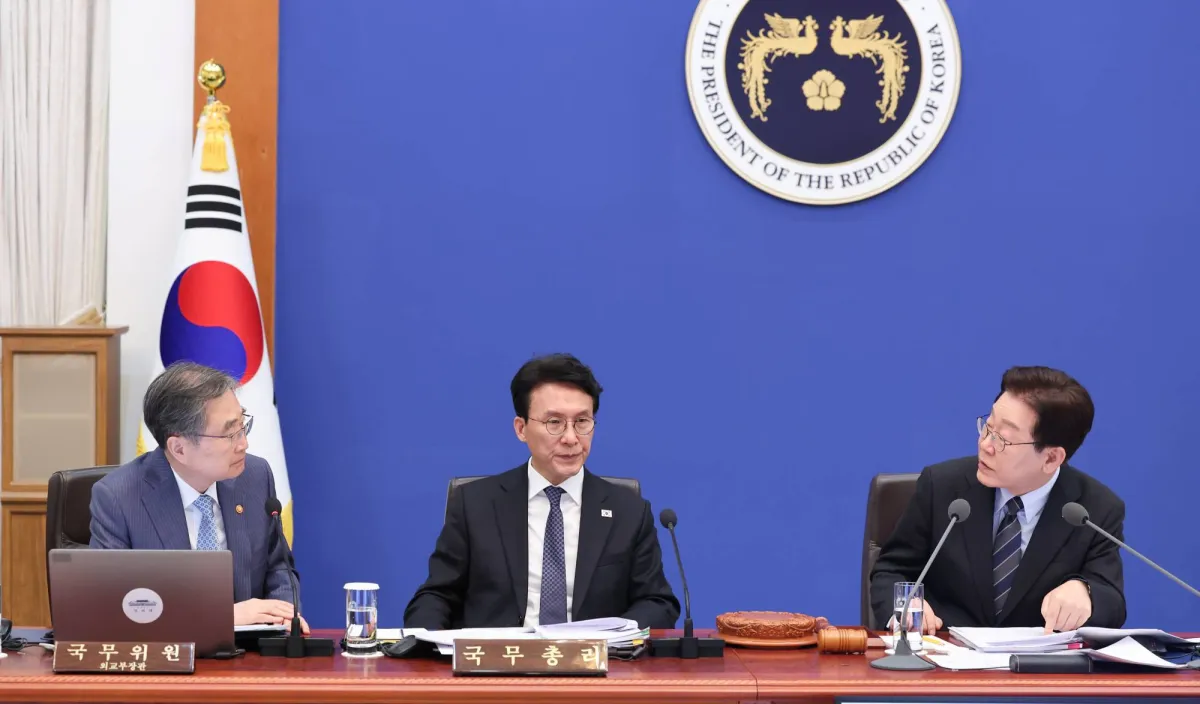
South Korea has declared that it will accept a degree of risk in importing crude oil from the Middle East, as the closure of the Strait of Hormuz continues. This statement was made by South Korean President Lee Jae-myung during a cabinet meeting, where he pointed out that disruptions in shipments could significantly impact the country's oil supply.
Lee added that alternative options for oil imports are limited, necessitating the acceptance of risks associated with shipments coming from the region. He stressed the importance of achieving a balance between securing supplies and protecting public health.
Details of the Situation
In this context, Democratic Party lawmaker An Do-gul reported that South Korean authorities are consulting with oil-producing countries such as Saudi Arabia, Oman, and Algeria to secure alternative routes. He explained that diplomatic efforts include the possibility of sending special envoys to support this process.
He also noted that the Ministry of Industry is working on a plan to deploy five vessels flying the South Korean flag in the Red Sea, focusing on supplying refineries with government oil reserves first.
Background & Context
South Korea heavily relies on energy imports, with the Strait of Hormuz serving as a vital passage for approximately 20% of the world's oil. As military tensions escalate between the United States, Israel, and Iran, Iran has closed the waterway, leading to rising energy prices and increased fears of a global economic recession.
In this context, the South Korean government aims to achieve a target of providing 100 gigawatts of renewable energy by 2030, increasing the share of power generation from renewable sources to over 20%. Goals have also been set for producing steel using hydrogen reduction technology.
Impact & Consequences
Concerns are mounting about the impact of the closure of the Strait of Hormuz on global oil supplies, as South Korea seeks to secure alternative sources. The Iraqi Oil Marketing Company (SOMO) has urged its international clients to submit crude oil loading plans to ensure continuity of exports.
However, the biggest challenge remains how ship owners and insurance companies will respond to sending their tankers to the Gulf region amid military tensions. Oil prices have risen significantly as a result of these developments, negatively impacting the global economy.
Regional Significance
These developments are of great importance to the Arab region, where many countries rely on oil exports. The continued closure of the Strait of Hormuz could affect global oil prices, impacting the economies of both producing and consuming countries.
In conclusion, the situation in the region remains tense, requiring concerned countries to take urgent steps to ensure the stability of energy supplies and protect their economic interests.