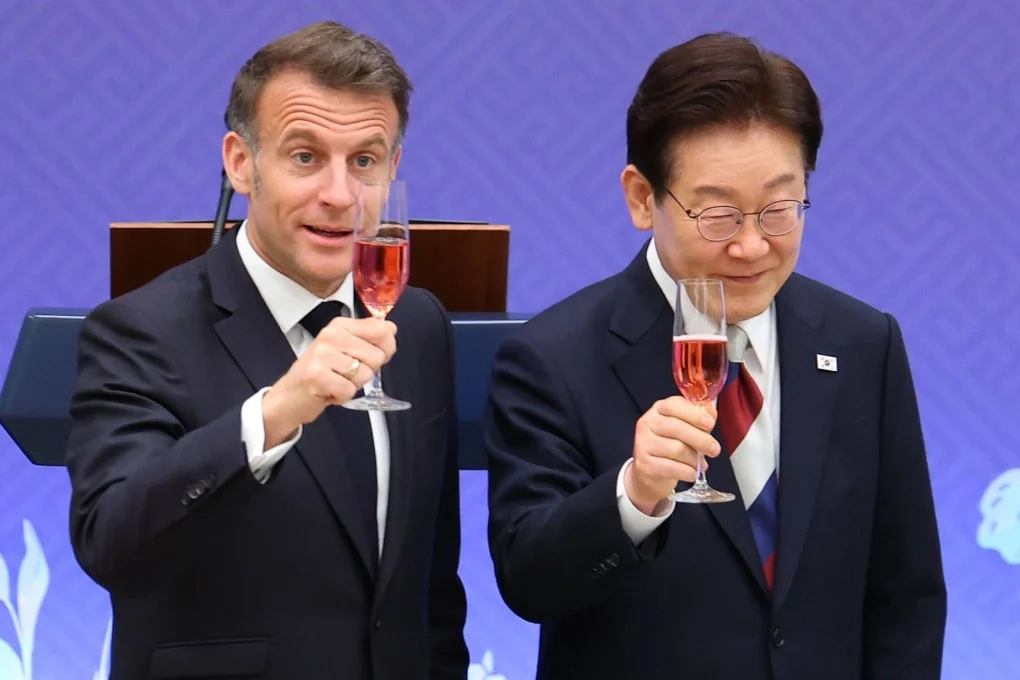
South Korea and France have announced the commencement of a joint collaboration to enhance security in the Hormuz Strait, which is considered one of the most important maritime passages in the world. This announcement was made by South Korean President Yoon Suk-yeol during a meeting with French President Emmanuel Macron, where both sides agreed to take joint steps to ensure the safety of vessels transiting this vital strait.
This move comes at a sensitive time, as tensions in the Middle East are escalating, making it essential for both countries to work on securing their economic interests and avoiding any escalation that could negatively impact regional stability. Analysts have pointed out that both countries are cautious about engaging in the ongoing conflicts in the Middle East, especially amid rising tensions with Iran.
Details of the Initiative
During the press conference following the meeting, the South Korean president emphasized the significance of the Hormuz Strait as a key passage for oil exports, through which a large percentage of global oil supplies flow. He explained that the cooperation with France is part of a multilateral effort involving other countries to ensure maritime navigation safety.
For his part, Macron noted that France and South Korea will work on forming a joint defense force aimed at protecting commercial vessels from potential threats. He stressed the importance of diplomatic efforts as a means to avoid military escalation in the region.
Background & Context
The Hormuz Strait is a vital transit point for oil, with approximately 20% of global oil supplies passing through it. Historically, the strait has witnessed numerous conflicts and tensions, particularly between Iran and Western nations. In recent years, tensions have notably escalated, prompting many countries to reassess their security strategies in the region.
It is worth noting that South Korea heavily relies on oil imports from the Middle East, making the security of the Hormuz Strait critical for its economic interests. Additionally, France, which has economic and security interests in the region, seeks to enhance its diplomatic and military presence in the Middle East.
Impact & Consequences
Analyses suggest that cooperation between South Korea and France could contribute to enhancing maritime security in the Hormuz Strait, potentially reducing risks to commercial vessels. However, this collaboration may provoke reactions from Iran, which might perceive it as a threat to its interests in the region.
Furthermore, this cooperation could encourage other countries to join efforts to secure the strait, potentially leading to the formation of new alliances in the region. Nonetheless, the question remains about how Iran will respond to these developments and whether it will take escalatory steps.
Regional Significance
The Middle East, particularly Arab countries, is significantly affected by developments in the Hormuz Strait. Any escalation in tensions could impact oil prices and destabilize global markets. Additionally, the cooperation between South Korea and France may encourage Arab nations to bolster their security cooperation in facing common challenges.
In conclusion, the collaboration between South Korea and France represents an important step towards enhancing security in the Hormuz Strait and reflects the significance of diplomacy as a means to avoid escalation in a region plagued by ongoing tensions.