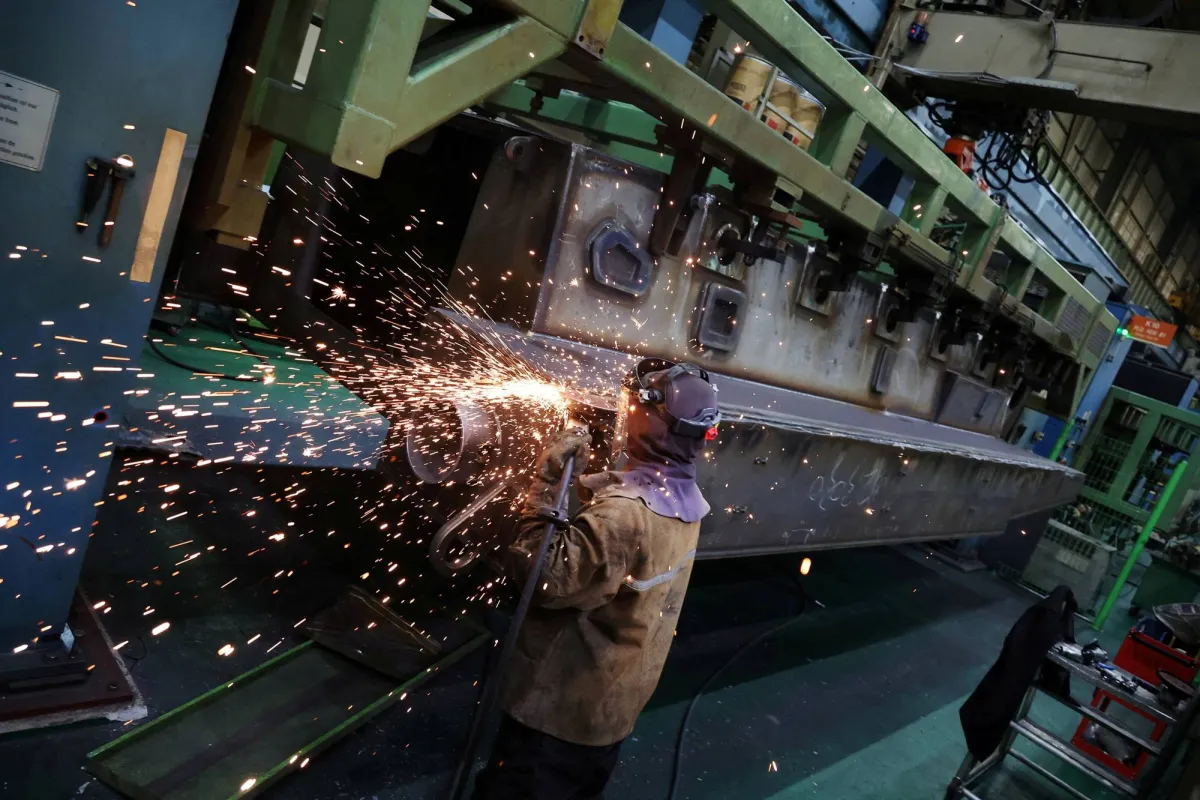
A private sector survey published on Wednesday indicated that industrial activity in South Korea expanded at its strongest pace in over four years during March 2023. This expansion was fueled by robust demand for semiconductors and the launch of new products, despite negative impacts from the war in the Middle East on external orders.
According to the survey conducted by Standard & Poor's Global, the Purchasing Managers' Index (PMI) reached 52.6 points, up from 51.1 points in February, marking its highest level since February 2022. Additionally, production recorded its largest increase since August 2024, supported by new products and semiconductors.
Event Details
Osama Bati, an economist at Standard & Poor's Global Market Intelligence, explained that "the recovery of the domestic economy and the launch of new products were behind the recent expansion in the manufacturing sector." However, new orders experienced slightly slower growth compared to the previous month, as the war in the Middle East led to a decline in export order growth to its lowest level in four months, despite continued strong demand from the United States and Asia.
Input prices also rose at their fastest pace since June 2022, influenced by rising oil prices and a weakening Korean currency. The survey noted that manufacturers in South Korea remain optimistic about the potential for increased production over the next year, although their confidence has declined for the second consecutive month.
Background & Context
South Korea is considered one of the largest economies in the world and plays a significant role in the global technology industry, particularly in the semiconductor sector. The country has been significantly affected by regional conflicts, including the war in the Middle East, which has impacted supply chains and global prices. At the same time, the South Korean government is striving to enhance innovation and increase productivity in the industrial sector to face global economic challenges.
Historically, South Korea has experienced periods of strong industrial growth but has also faced significant challenges due to economic and political crises. Nevertheless, the current expansion indicates the country's ability to recover and grow under difficult circumstances.
Impact & Consequences
This expansion in industrial activity is a positive indicator of the health of the South Korean economy and could significantly impact global markets. If this trend continues, it may lead to increased foreign investments and strengthened trade relations with other countries, especially amid rising demand for advanced technology.
However, the challenges posed by regional crises may affect the sustainability of this growth. If conflicts in the Middle East persist, supply chains may be disrupted, leading to price volatility and reduced demand for Korean products in global markets.
Regional Significance
The trade relations between South Korea and Arab countries are important, as many Arab nations import technology and products from Korea. If industrial expansion in South Korea continues, it could lead to increased economic cooperation between the two sides, benefiting both parties.
At the same time, Arab countries must be cautious of the impact of regional crises on trade and investments. Strengthening trade relations with South Korea can help diversify Arab economies and reduce reliance on traditional energy sources.
In conclusion, the industrial expansion in South Korea represents a significant opportunity for growth and development, but all stakeholders must closely monitor regional conditions to ensure the sustainability of this growth.