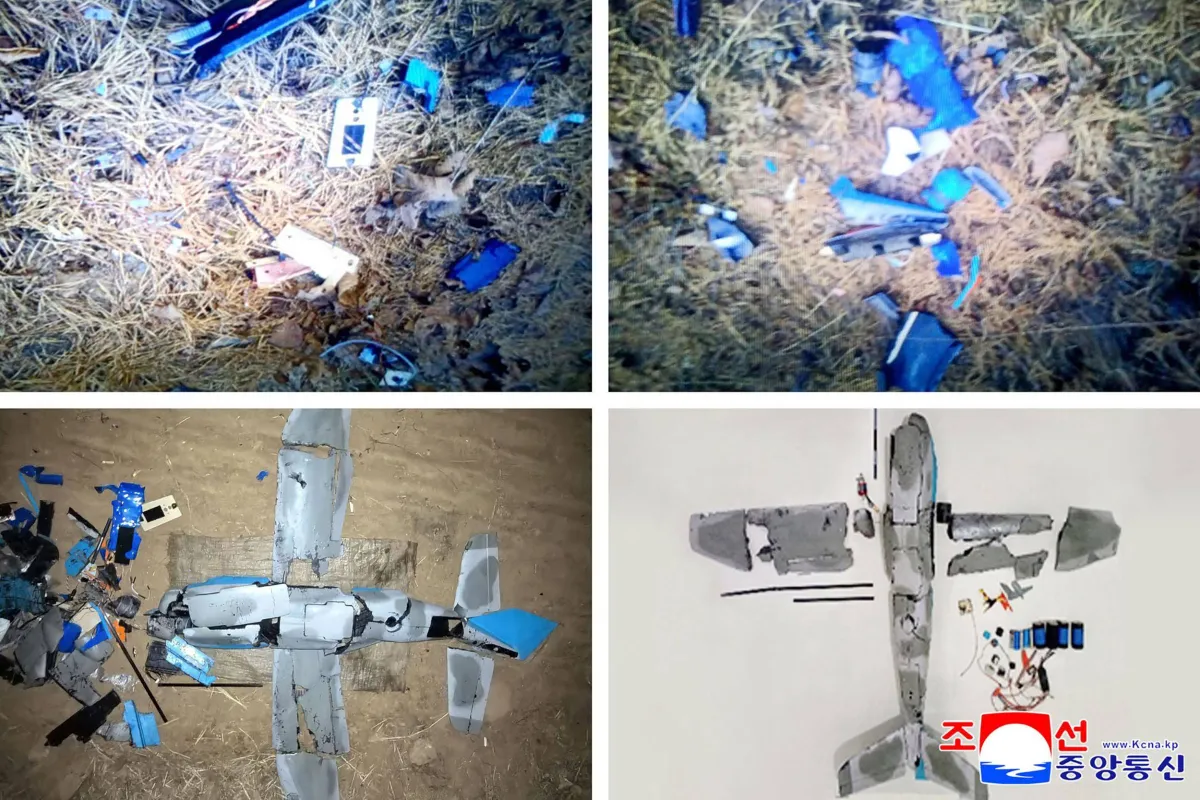
In an unusual move, South Korean President Lee Jae-myung described the drone incursion into North Korea as a "rebellion" on Monday, expressing his regret to Pyongyang. North Korea considered this apology a sign of "good fortune and profound wisdom," indicating a willingness to improve the tense relations between the two sides.
These statements come after official investigations in South Korea confirmed the involvement of government officials in the incident, despite the South Korean government initially denying any role. Lee pointed out that the irresponsible actions of certain individuals led to unnecessary military tensions.
Details of the Incident
Earlier this year, drones flew over North Korean airspace, provoking strong reactions from Pyongyang. North Korea shot down one of these drones, claiming it was carrying surveillance equipment. In this context, North Korea warned of a "violent response" if such incidents were to occur again.
During a cabinet meeting, Lee stated that investigations revealed the involvement of an employee from the National Intelligence Service and an active-duty soldier, reflecting a lack of coordination among government agencies. He emphasized that the government expresses its regret to North Korea regarding these actions.
Background & Context
The history of relations between the two Koreas is fraught with tensions, as the countries have remained hostile since the end of the armed conflict between 1950 and 1953, which concluded with an armistice rather than a peace treaty. Relations between Seoul and Pyongyang have significantly deteriorated in recent years, particularly during the presidency of Yoon Suk-yeol.
Since taking office, Lee Jae-myung has sought to improve relations with North Korea, criticizing his predecessor for provocative actions. However, his offers for dialogue have received no response from the North, complicating the situation further.
Impact & Consequences
These remarks by the South Korean president are seen as a positive step towards easing tensions, but challenges remain. North Korea maintains a substantial nuclear arsenal, complicating any future talks.
The military tensions between the two Koreas also affect regional security, as the area remains under constant threat of conflict. These events could impact stability in East Asia as a whole, drawing the attention of the international community.
Regional Significance
Although events on the Korean Peninsula may seem distant from the Arab region, tensions among major powers affect global security. Any escalation in conflict could influence oil prices and financial markets, reflecting on the economies of Arab countries.
In conclusion, hope remains for the possibility of improving relations between the two Koreas, but the path ahead is long and fraught with challenges.