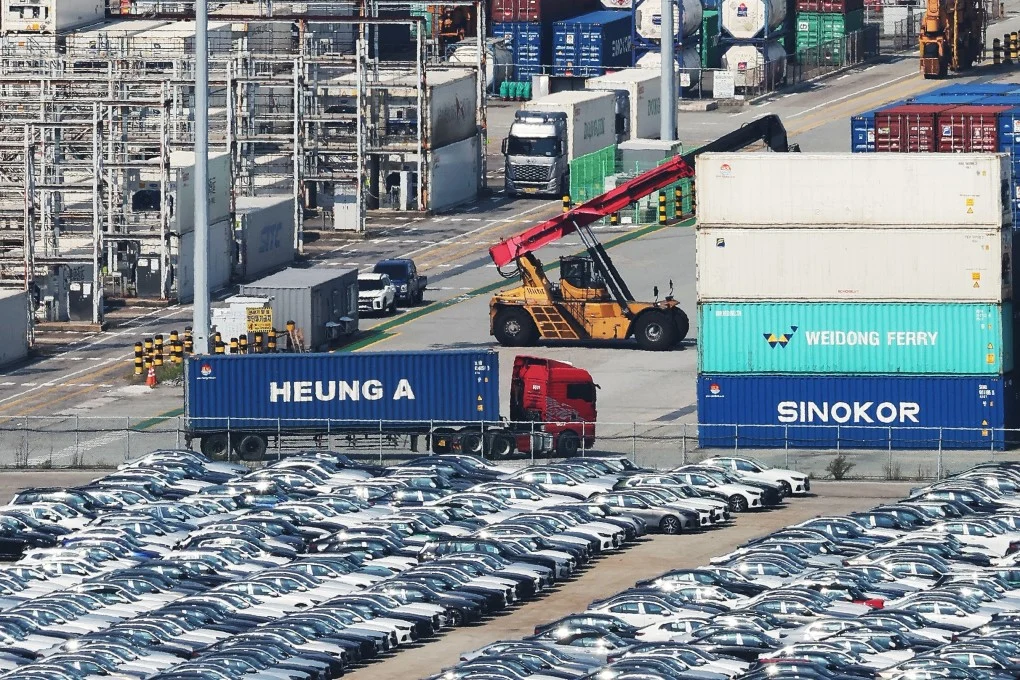
South Korea has released optimistic economic forecasts for 2023, revising the expected growth rate to 2.6%, an increase of 0.6 percentage points from previous estimates. This announcement was made by the Bank of Korea, which indicated that the growth is driven by an increase in exports due to rising demand for semiconductors, along with additional government spending aimed at mitigating the impact of global economic shocks.
Despite these positive forecasts, the South Korean economy faces a range of challenges. Inflation rates have risen, raising concerns about citizens' purchasing power. Additionally, the South Korean currency, the won, has seen a significant decline, putting further pressure on the domestic economy.
Details of the Announcement
In its latest report, the central bank clarified that economic growth reflects the strong performance of the export sector, particularly in semiconductors, which are a cornerstone of the Korean economy. Government policies have contributed to bolstering this sector through financial support and encouragement of innovation.
However, the uneven performance among various economic sectors presents a significant challenge. While the technology sector is experiencing notable growth, other sectors such as tourism and services are suffering from a slowdown, creating a gap in overall economic performance.
Background & Context
Historically, South Korea has been one of the fastest-growing economies in the world, relying heavily on the export of technological products. However, global economic challenges, including the impacts of the COVID-19 pandemic, have affected growth. In recent years, the government has sought to diversify the economy and reduce reliance on traditional sectors.
Geopolitical tensions in the region, particularly with its northern neighbor, remain a significant factor in economic stability. Nevertheless, investments in advanced technology and innovation may contribute to sustainable growth.
Impact & Consequences
The positive growth forecasts for the South Korean economy are indicative of the country's ability to recover from economic crises. Nonetheless, ongoing challenges such as inflation and currency weakness could impact long-term economic stability. Effective strategies are required to address these issues, including strengthening monetary and fiscal policies.
The robust performance of the technology sector may also attract foreign investments, enhancing South Korea's position as a global hub for technology and innovation. At the same time, the government must work to support other sectors to ensure balanced economic growth.
Regional Significance
South Korea is an important trading partner for many Arab countries, importing various oil products and essential goods. Economic growth in South Korea could open new avenues for trade and investment cooperation between both sides. Additionally, the increasing demand for technology may provide opportunities for Arab countries to leverage Korean expertise in innovation and development.
In conclusion, challenges remain, but the positive growth forecasts for the South Korean economy reflect the country's ability to adapt to changing conditions. Strengthening cooperation with Arab countries could contribute to mutual benefits for both parties.