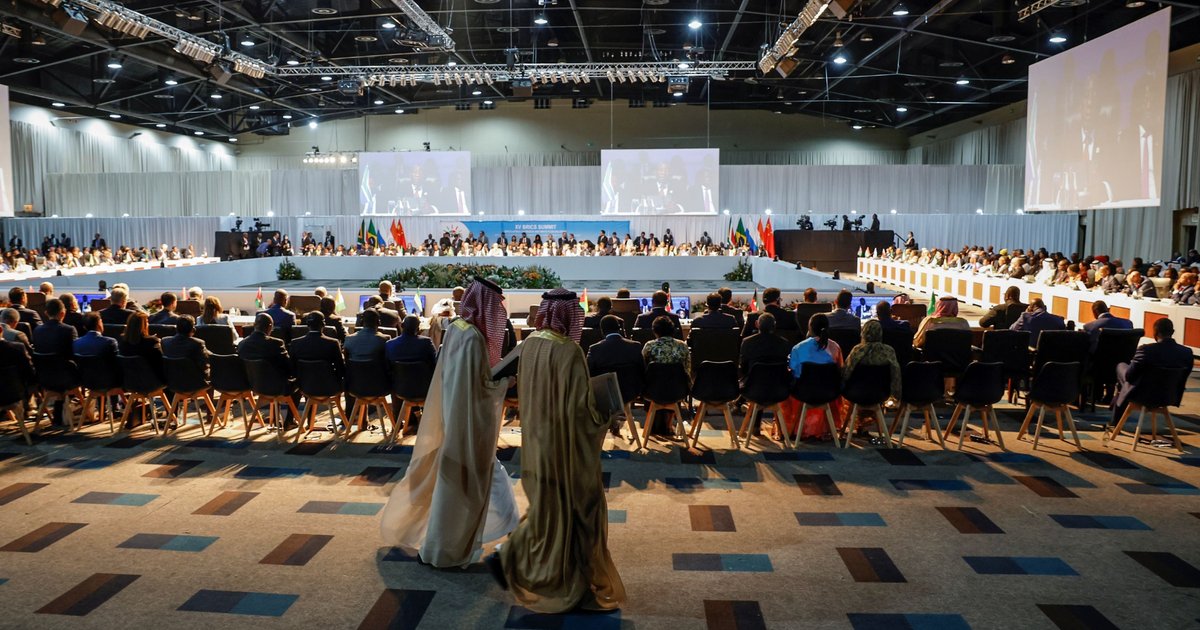
Countries in the Global South are increasingly focusing on enhancing their independence and protecting their interests amid global crises instigated by major powers, giving rise to a new phenomenon known as the 'Great Isolation'. This phenomenon reflects these nations' desire not to remain mere recipients adversely affected by foreign policies but to construct a defensive wall encompassing various economic and political domains.
In an article published in the 'South China Morning Post', researcher Zhang Jibing discussed this phenomenon, noting that Southern nations are no longer willing to be mere arenas for inflation export or theaters for proxy wars. Instead, these countries are beginning to formulate new strategies aimed at bolstering their sovereignty over natural resources.
Details of the Event
These strategies include enhancing defensive and economic independence, as nations seek to close gaps that allow major powers to influence their economies. The author pointed out that the international system led by the United States resembles an air conditioning unit that cools its center by expelling heat to the peripheries, resulting in inflation being exported to emerging markets.
In this context, Chinese President Xi Jinping made statements calling for reform of the global financial system, emphasizing that the current system increases the vulnerability of developing countries to fluctuations in monetary policies of developed nations. He also highlighted the importance of establishing alternative financial systems that transcend Western dominance.
Background & Context
This phenomenon coincides with significant shifts in international relations, as countries like Chile, Indonesia, and Ecuador are taking practical steps to regain control over their natural wealth. Additionally, Southeast Asian nations are moving towards financial self-sufficiency, reflecting a change in their approach to Western financing.
Moreover, the region has witnessed movements to enhance regional cooperation, such as the 'Embridge' project, which includes countries like China, Thailand, the UAE, and Saudi Arabia. These initiatives reflect the desire of Southern nations to transcend the traditional financial system dominated by major powers.
Impact & Consequences
Southern countries are moving towards building alternative networks in finance, energy, and media, reflecting a shift from being affected by external decisions to becoming active players. This trend could change the international game rules, as these nations seek to reshape relationships to serve their interests.
However, the greatest challenge remains these countries' ability to address their internal issues, such as corruption and social gaps, to avoid becoming pressure tools that threaten their internal stability. Political and economic challenges persist, necessitating continuous efforts to achieve stability.
Regional Significance
This phenomenon presents an opportunity for Arab countries to consider new strategies to enhance their economic and political independence. With increasing pressures from major powers, Arab nations can learn from the experiences of other Southern countries in building economic and political protective walls.
In conclusion, the 'Great Isolation' is not merely a reaction to foreign policies but a strategic movement aimed at reshaping international relations to serve the interests of Southern nations. These transformations require major powers to reassess their strategies in a multipolar world.