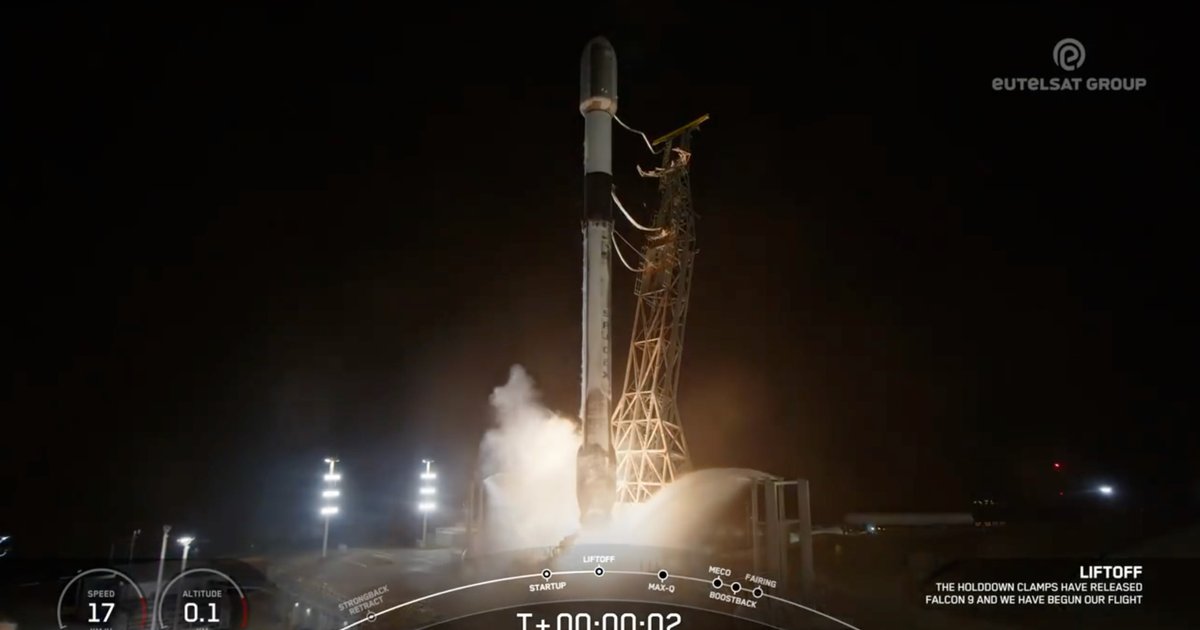
Amid increasing geopolitical tensions, Jean-François Fallacher, the CEO of Eutelsat, stated that the demand for alternative satellite services from American companies and the US Department of Defense remains robust, despite SpaceX's request to US regulators to restrict access for European competitors to the American market.
In a letter addressed to the Federal Communications Commission on April 16, SpaceX called for limiting access for foreign satellite operators whose governments hinder or harm the interests of American operators, citing SES as an example of a European operator benefiting from the US market.
Details of SpaceX's Request
During an interview with Reuters, Fallacher noted that the current geopolitical situation necessitates more coordination in space, emphasizing that American companies are pushing for reduced regulations. He also added that European space laws are moving in the right direction, highlighting the need to protect space and ensure its safety.
Eutelsat, backed by the governments of France and Britain, is the main competitor to SpaceX in the satellite services sector. Fallacher pointed out that the company experienced a slowdown in renewing some contracts with the US Department of Defense last year, amid reduced government spending by the administration of former President Donald Trump.
Background & Context
Founded in 1977, Eutelsat is one of the leading satellite service providers in Europe, offering services to a diverse range of clients, including commercial, governmental, and military customers. In recent years, the space industry has seen increasing competition, with American companies like SpaceX seeking to expand their influence in global markets.
SpaceX, founded by Elon Musk, is striving to strengthen its position in the US market by pressuring regulators to limit competition from European firms, at a time when geopolitical tensions between the United States and Europe are rising, complicating commercial relations in the space sector.
Impact & Consequences
Fallacher's statements indicate that the American demand for satellite services has not been affected by current tensions. Eutelsat has confirmed that it continues to seek to meet the needs of the US market, where the US Department of Defense has shown interest in alternative solutions to ensure reliability and redundancy. Attention is focused on how these developments will impact trade relations between the United States and Europe, especially given the challenges facing European companies in entering the US market.
Regional Significance
These developments highlight the increasing tensions between American and European companies in the space sector and their impact on the global market. As SpaceX pushes for regulatory changes, the landscape of satellite services may see significant shifts, affecting not only competition but also international collaborations in space exploration.
In conclusion, the ongoing dynamics between SpaceX and Eutelsat reflect broader geopolitical trends that could reshape the future of the space industry, emphasizing the need for strategic cooperation and regulatory balance.