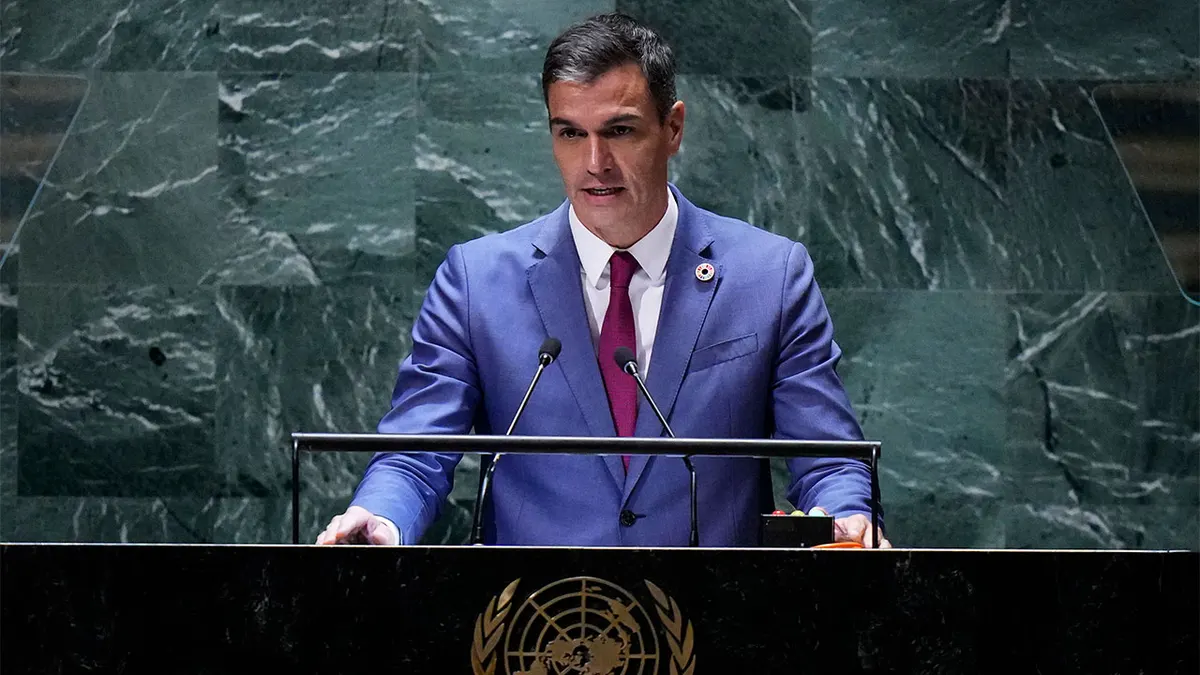
In controversial remarks, Spanish Prime Minister Pedro Sánchez described the current war as 'worse' than the 2003 Iraq invasion. Sánchez pointed out that Iran has been preparing for this conflict for nearly forty years, reflecting the deep regional tensions that the area is experiencing.
These statements come at a sensitive time, as fears grow over escalating conflict in the Middle East, particularly following recent events in Gaza and increasing pressure on European countries to intervene or take clear positions.
Details of the Statement
During a press conference, Sánchez emphasized that the current situation requires the international community to take serious steps to reduce escalation. He noted that the Iraq invasion had serious repercussions for regional and international security, indicating that the current war could lead to even more catastrophic outcomes.
He also mentioned that Iran, regarded as a key player in the conflict, has been preparing for such scenarios for decades, reflecting its long-term strategy in the region. These remarks come at a time when calls for peace and dialogue among the concerned parties are increasing.
Background & Context
The tensions in the Middle East date back decades, with the region witnessing numerous conflicts and wars. The 2003 Iraq invasion was a pivotal turning point, leading to destabilization in the area and significantly impacting international relations.
Since then, Iran has continued to bolster its influence in the region, exacerbating tensions with both Western and Arab nations. The current situation is seen as a direct result of these complex dynamics.
Impact & Consequences
Sánchez's statements could influence European policies towards the Middle East, potentially prompting European nations to reassess their strategies in dealing with Iran and regional conflicts.
Moreover, these remarks may increase pressure on European governments to take a more active role in peace efforts, especially amidst growing concerns over worsening humanitarian conditions in conflict-affected areas.
Regional Significance
The comments made by the Spanish Prime Minister indicate that crises in the Middle East continue to impact security and stability in the Arab region. Many Arab countries are closely monitoring developments, as any escalation could directly affect their interests and national security.
Under these circumstances, there is an urgent need for dialogue and cooperation among Arab nations and the international community to achieve peace and stability in the region.