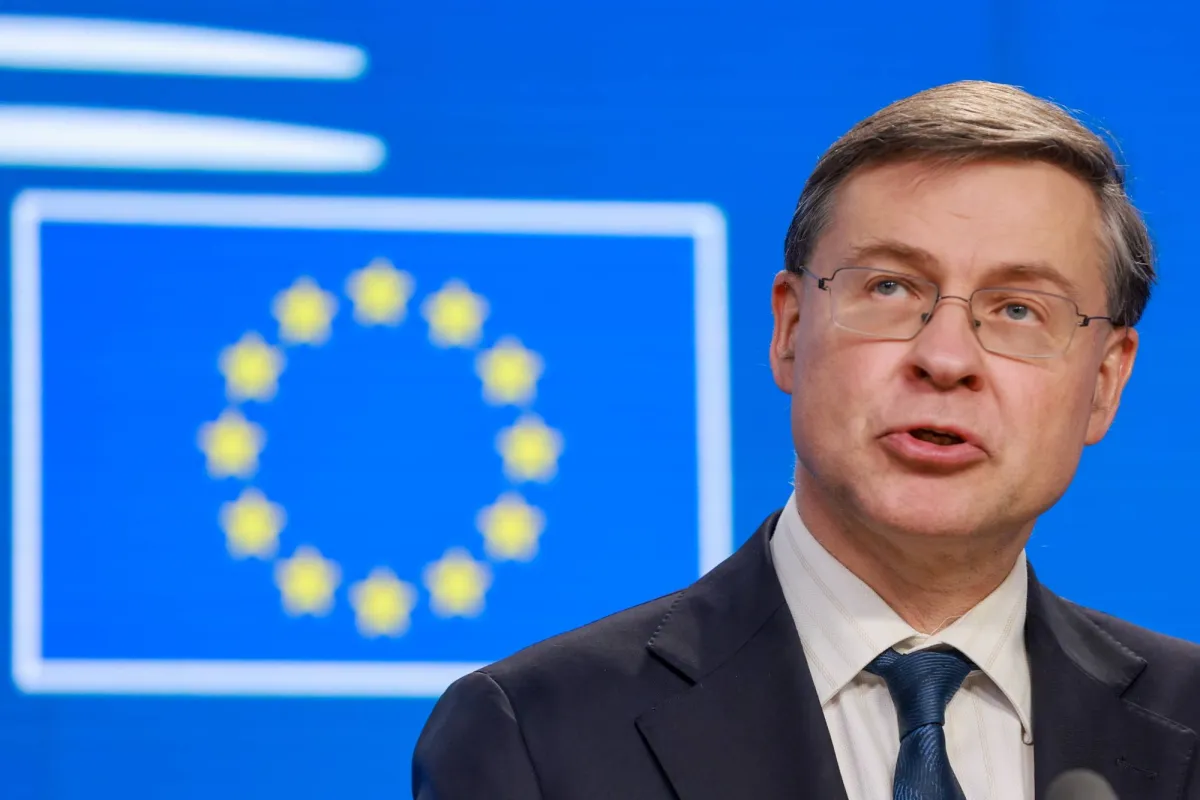
European Economic Commissioner Valdis Dombrovskis has warned that the EU economy faces a risk of stagflation due to rising energy prices resulting from the conflict in the Middle East. Dombrovskis stated in a press conference following a meeting of EU finance ministers that economic forecasts are surrounded by uncertainty, heightening concerns about the future of the European economy.
Dombrovskis explained that disruptions in energy supplies, even if short-term, could lead to a growth decline in the EU of up to 0.4 percentage points by 2026, with inflation potentially rising by one percentage point. He added that if disruptions are deeper and longer-lasting, the negative consequences for growth could be greater, with growth potentially declining by up to 0.6 percentage points in 2026 and 2027.
Event Details
Dombrovskis confirmed that the scope and intensity of the war and its impact have increased since the last meeting of EU finance ministers, adding to the uncertainty surrounding economic forecasts. He noted that the British government and the Bank of England believe it is too early to assess the economic impact of the Iran war, but early signs of pressure are beginning to emerge, which could sound alarm bells for policymakers.
In this context, the OECD has lowered its growth forecasts for the UK for 2026 more than any other major economy and raised its inflation forecasts, reflecting economic weakness that threatens the government's commitment to fiscal reform. Surveys have shown the largest monthly increases in inflation expectations among the British public, reflecting a deterioration in consumer confidence.
Context and Background
These warnings come at a sensitive time, as gas prices have surged significantly, nearly doubling this month. Gas is a key component in determining electricity prices in the UK, increasing pressure on households and businesses. Retailers have warned that the war will increase their costs and selling prices, negatively impacting demand.
The UK's Chief Economist, Russ Walker, warned that the government faces limited capacity to address a prolonged energy crisis, as it cannot borrow heavily to assist households without unsettling investors. With rising mortgage rates, pressure on households is expected to continue.
Implications and Effects
Forecasts indicate that the UK will be the most vulnerable among major Western economies, with food prices expected to rise significantly. The clothing chain Next has warned that the ongoing conflict could raise selling prices by 2 percent in June, with increases potentially reaching 10 percent later in the year.
At the same time, the Bank of England has confirmed its readiness to act to prevent rising energy prices from becoming a long-term inflation issue, as occurred after the Russian invasion of Ukraine. However, policymakers warn against assuming they will follow the same previous approach, as forecasts suggest that inflation risks may be lower this time due to the weakness of the British economy.
Impact on the Arab Region
The war in the Middle East directly affects global energy prices, negatively impacting the economies of Arab countries that heavily rely on energy imports. Rising energy prices may also lead to increased living costs, placing additional pressure on Arab governments striving for economic stability.
In conclusion, the economic situation in the EU and the UK remains under scrutiny, as concerns about stagflation grow under current conditions. A swift and effective response from policymakers is required to avoid exacerbating the crisis.