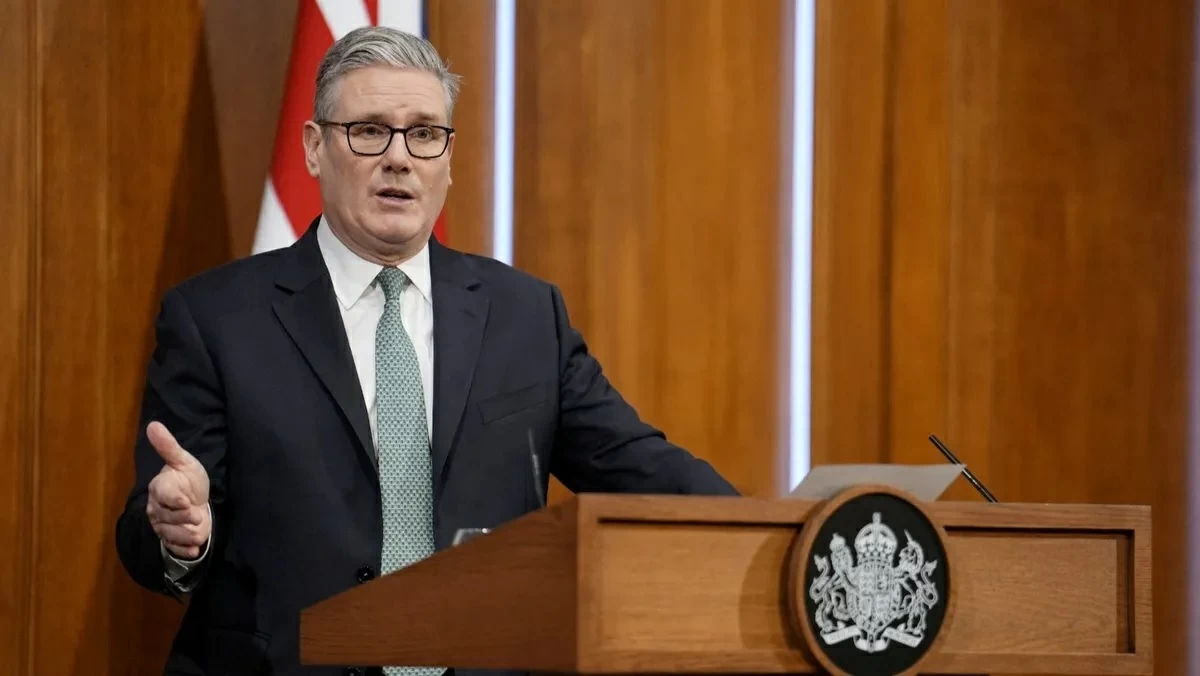
British Prime Minister Keir Starmer confirmed that his country will not be drawn into the ongoing war in the Middle East, stressing that Britain "will not yield to pressure." This statement was made during a speech today (Wednesday) in response to criticisms directed at him by US President Donald Trump.
Starmer stated, "This war is not our war, and we will not be drawn into it," noting that the most important issue currently is to de-escalate tensions and open the Strait of Hormuz. He expressed Britain's readiness to take a leading role in this vital matter.
Details of the Event
In his remarks, Starmer clarified that the British government has reached out to 35 countries to convene a meeting regarding the issue of the Strait of Hormuz, emphasizing the need for an international coalition to secure this passage through which one-fifth of the world's oil and gas shipments pass. He pointed out that "the Middle East war is not our war, but it affects us," considering that opening the Strait of Hormuz is a crucial factor in stabilizing energy prices.
Starmer also announced that the British Foreign Secretary will host an international meeting this week to explore the best diplomatic and political means to restore freedom of navigation. He reassured his citizens that Britain is "in a good position to face the repercussions of this war," adding that "engaging in the war is not in the national interest of the country."
Context and Background
Starmer's statements come at a sensitive time, as the Strait of Hormuz faces increasing threats from Iran, impacting navigation in the region. In recent days, President Donald Trump has criticized Britain and other European countries for their lack of enthusiasm in sending military forces to secure the strait, which has heightened tensions among allies.
Trump also described NATO as a "paper tiger," indicating that his country does not need it, which has raised concerns in European political circles about the future of security cooperation among member states.
Implications and Effects
Starmer's statements indicate a clear British stance against engaging in military conflicts in the Middle East, reflecting the British government's desire to maintain its national interests away from external pressures. This position also highlights the challenges faced by European countries in dealing with regional crises.
The UK's non-involvement in the war could affect its military alliances, especially amid increasing tensions in the region. This may lead to a reassessment of defense and security strategies in Europe, potentially altering the dynamics of international relations.
Impact on the Arab Region
Starmer's remarks are particularly significant for Arab countries, as they reflect a European stance that could influence stability in the region. The lack of British military involvement may leave the door open for other regional interventions, complicating the situation in the Middle East.
Under these circumstances, Arab nations must consider how to enhance their security and economic cooperation to address the growing challenges, especially in light of the ongoing tensions in the Strait of Hormuz.