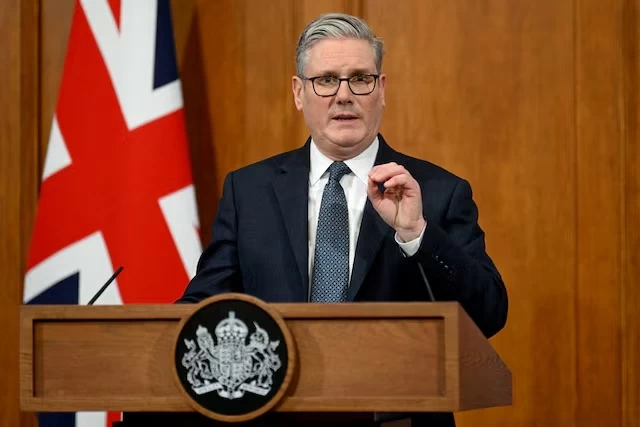
British Prime Minister Keir Starmer is traveling to the Gulf today (Wednesday) for discussions with regional leaders, as part of diplomatic efforts to ensure the permanent reopening of the Hormuz Strait following a ceasefire agreement between the United States and Iran.
In an official statement, Starmer welcomed the ceasefire that was reached, considering it a "moment of relief" for the region and the world. He emphasized the need to work with international partners to maintain this agreement and transform it into a long-term settlement, alongside reopening the vital strait for maritime traffic.
Details of the Event
These moves come at a time when Starmer is facing criticism from U.S. President Donald Trump for not supporting American and Israeli strikes against Iran. Starmer had previously hosted multilateral meetings to discuss ways to support the reopening of the Hormuz Strait, which is considered a crucial artery for global oil and gas trade.
The statement clarified that Starmer will discuss with regional leaders the diplomatic efforts aimed at supporting and maintaining the ceasefire, contributing to a lasting resolution of the conflict, and protecting the British and global economies from any additional threats.
Background & Context
The visit was scheduled prior to the announcement of the ceasefire agreement. In a related context, British Home Secretary Yvette Cooper held a phone call with her American counterpart Marco Rubio, during which they discussed ways to enhance diplomatic efforts to reopen the strait, including the results of a meeting led by the UK last week, which included over 40 countries to address this vital issue.
Earlier today (Wednesday), Trump announced a two-week suspension of military operations against Iran, in response to a request from Pakistan, conditional on the full and safe reopening of the Hormuz Strait. Trump considered this step a precursor to a long-term peace agreement in the Middle East.
Impact & Consequences
Trump clarified that based on discussions with Pakistani Prime Minister Shahbaz Sharif and Army Chief Asim Munir, he agreed to postpone the "devastating" military strike that was planned against Iran. These developments indicate a shift in regional dynamics, as all parties seek greater stability in the area.
These actions underscore the importance of the Hormuz Strait as one of the world's most significant maritime passages, through which approximately 20% of the world's total oil passes. Therefore, any tensions in this area directly affect oil prices and global economies.
Regional Significance
These events highlight the importance of regional and international cooperation to maintain security and stability in the Gulf region. The success of these discussions could contribute to improving relations among the concerned countries and enhance the prospects for peace in the Middle East.
In conclusion, all eyes remain on the outcomes of Starmer's visit and what practical steps may arise to ensure the opening of the Hormuz Strait, which is considered the lifeblood of the global economy.