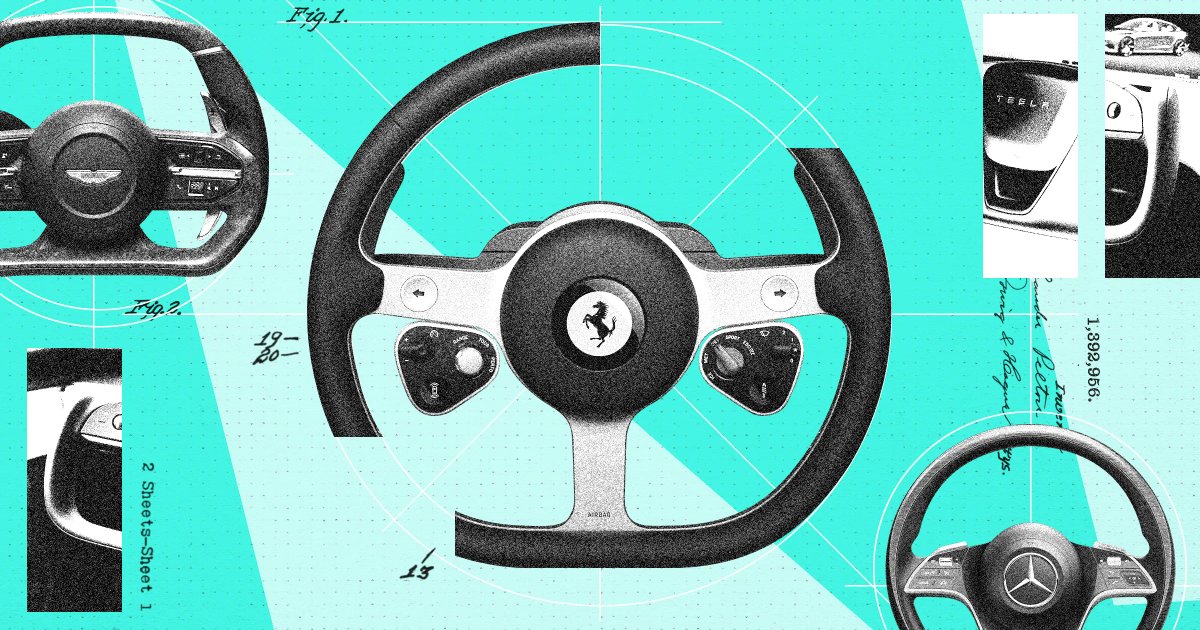
The steering wheel is a fundamental element in automotive design, representing the first touchpoint for drivers when entering a vehicle. Despite its seemingly simple appearance, designing a steering wheel is one of the most challenging tasks faced by automotive designers. Achieving a balance between beauty and functionality requires considerable effort and innovation, often necessitating over 20 different prototypes over several years before arriving at the final design.
Recently, steering wheels have garnered increased attention, both for positive and negative reasons. China announced a ban on the use of aircraft-style steering wheels, such as those found in the Tesla Model S, starting from January 2027, due to concerns about a heightened risk of injury in the event of an accident. Additionally, Gerhard Dollner, the CEO of Audi, emphasized the need to reduce the number of available steering wheel models, arguing that having over 100 models is excessive.
Event Details
In early February, renowned designer Jony Ive unveiled his design for the steering wheel of Ferrari's first electric car, known as the “Lucid”. The steering wheel features an attractive design that revives the classic wooden steering wheel aesthetics from the 1950s and 1960s, while focusing on practical functionality. Ive highlighted the importance of integrating controls in a way that is easily accessible without needing to look at them, reflecting the modern trend towards simpler and more effective designs.
Historically, cars were not always equipped with steering wheels. The first car model, the “Benz Patent Motorwagen”, invented by Carl Benz in 1885, utilized a steering system based on a steering lever. It was not until nine years later that the first known steering wheel was installed in a vehicle by French engineer Alfred Vacheron.
Background & Context
Over the years, steering wheels have evolved significantly, representing more than just a tool for vehicle control. They also reflect the brand identity and attention to design details. As technology advances, it has become essential to incorporate new elements such as safety and comfort systems, further complicating the design process. Automotive designers have noted that the steering wheel presents a real challenge, as it must be comfortable and easy to use while also incorporating advanced technologies like voice control systems.
Designers like Hans-Peter Wunderlich from Mercedes consider steering wheel design a true test of designers' skills, using it as a benchmark to assess their capabilities. Wunderlich points out that designing a steering wheel requires a delicate balance between form and function, making it one of the most challenging elements in car design.
Impact & Consequences
Recent developments in steering wheel design illustrate how the industry is rethinking traditional control elements. Experiments with touch buttons have revealed that these solutions are not as effective as anticipated, prompting companies like Ferrari and Audi to revert to physical buttons that provide tangible feedback to the driver. This new trend reflects companies' desire to enhance the driving experience, which may influence how cars are designed in the future.
Moreover, innovations such as the foldable steering wheel introduced by Autoliv suggest that the future of steering wheels may lean towards greater adaptability with autonomous driving systems, raising questions about how drivers will interact with their vehicles in the future.
Regional Significance
In the Arab region, where the automotive industry is witnessing notable growth, these developments in steering wheel design could impact the local market. With the increasing demand for modern cars and advanced technology, manufacturers may adopt these innovations to meet consumer needs. Furthermore, the focus on safety and comfort may enhance consumer confidence in new vehicles, contributing to the strengthening of the regional market.
In conclusion, the design of the steering wheel demonstrates how art and function can unite in the automotive world, reflecting the challenges and opportunities faced by the industry amid rapid technological advancements.