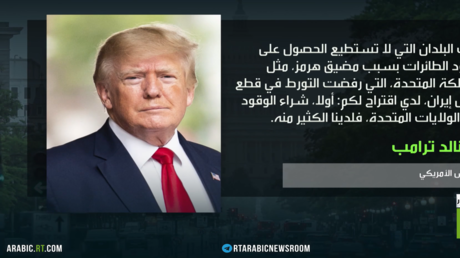
The special relationship between the United States and the United Kingdom is facing one of its worst historical crises, as London refuses to engage directly in the war against Iran. This move reflects the differing positions between the two traditional allies and raises questions about the future of cooperation on regional security issues.
While the United States seeks to bolster its military stance in the region, the UK prefers a more cautious approach, reflecting strategic differences that could impact traditional alliances. This crisis is not just a fleeting disagreement; it signifies a shift in the geopolitical dynamics that may affect the situation in the Middle East.
Details of the Event
Reports indicate that the British government has decided not to engage directly in military operations against Iran, which contradicts the American position calling for more decisive action. This decision comes at a sensitive time, as tensions in the region escalate due to Iranian nuclear activities and mutual threats between Tehran and Washington.
This British stance is seen as a challenge to U.S. foreign policy, which aims to forge strong alliances to address security challenges. This decision has elicited mixed reactions within political circles in London, with some believing that non-engagement could weaken the UK's position on the international stage.
Background & Context
Historically, U.S.-UK relations have been considered among the strongest alliances in the world, with both countries cooperating on numerous military and political issues. However, these relations have witnessed increasing tensions in recent years, especially following the UK's exit from the European Union, which has impacted its ability to make independent foreign policy decisions.
This crisis arises at a sensitive time, as security challenges in the Middle East escalate, including ongoing conflicts in Syria and Yemen, alongside Iranian threats. These events demonstrate that traditional alliances may be at risk, necessitating a reevaluation of major powers' strategies.
Impact & Consequences
This crisis may lead to significant changes in the foreign policy of both countries. For the United States, it may require seeking new allies or enhancing cooperation with other nations in the region. For the UK, this decision could affect its ability to influence regional issues, potentially diminishing its role as a global power.
Moreover, these tensions could impact economic relations between the two countries, as both rely on mutual trade and investments. Any deterioration in relations could negatively affect the British economy, which is striving to recover after the COVID-19 pandemic.
Regional Significance
This crisis serves as an indicator of potential changes in Western policies towards the Middle East. The tensions between the United States and the UK may lead to increased instability in the region, as some Arab nations may feel that traditional alliances are no longer reliable.
At the same time, Iran may exploit these tensions to strengthen its position in the region, complicating security situations further. This scenario necessitates that Arab nations reassess their security and diplomatic strategies in light of geopolitical changes.
In conclusion, amid this crisis, both the United States and the United Kingdom must deeply consider their future strategies. The relationship between these traditional allies may be at a crossroads, requiring a comprehensive reevaluation of their positions in the face of regional and international challenges.