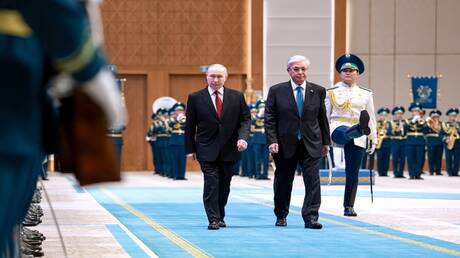
Russian President Vladimir Putin and his Kazakh counterpart Kassym-Jomart Tokayev convened for a bilateral meeting at the Independence Palace in Astana, following a grand official reception. This meeting is intended to bolster bilateral cooperation between Russia and Kazakhstan in various fields.
This visit marks a significant step in strengthening the strategic relations between the two nations, as both sides seek to expand cooperation in the areas of economy, security, and energy. Putin was warmly welcomed, reflecting Kazakhstan's importance as a key ally for Russia in the region.
Details of the Meeting
After the reception ceremonies concluded, the bilateral meeting commenced, where several issues of mutual interest were discussed, including economic and security cooperation. Tokayev emphasized the importance of enhancing economic relations between the two countries, noting that Kazakhstan serves as a vital gateway to Russian markets.
Regional and international issues were also addressed, with Putin highlighting the need for coordination between the two nations to tackle shared challenges. This meeting occurs at a time when the world is experiencing profound changes that necessitate close collaboration among countries.
Background & Context
Historically, Russia and Kazakhstan have maintained close ties dating back to the Soviet era, having been part of the Soviet Union. Following the collapse of the union, the two countries preserved strong relations, which have helped Kazakhstan achieve economic and political stability.
In recent years, the relationship between Russia and Kazakhstan has seen notable development, with numerous agreements signed to enhance cooperation in energy, transportation, and trade. Furthermore, Kazakhstan plays a pivotal role in China's Belt and Road Initiative, increasing its strategic importance to Russia.
Impact & Consequences
The meeting between Putin and Tokayev could contribute to regional stability, as cooperation between the two countries may lead to improved economic and security conditions. Strengthening bilateral relations could also help address the challenges faced by both nations amid global geopolitical tensions.
Additionally, collaboration between Russia and Kazakhstan may positively impact neighboring countries, potentially fostering enhanced economic and trade relations among Central Asian states. This cooperation could contribute to sustainable development in the region.
Regional Significance
Although the meeting focuses on Russian-Kazakh relations, it also has implications for the Arab region. Strengthening cooperation between Russia and Kazakhstan could influence regional policies, particularly in energy and security sectors.
Moreover, strong ties between Russia and Kazakhstan may lead to increased Russian investments in the Arab region, which could help bolster economic development. Given the challenges faced by Arab nations, these relations could present an opportunity to enhance economic and trade cooperation.
In conclusion, the meeting between Putin and Tokayev represents an important step towards strengthening bilateral relations between Russia and Kazakhstan, reflecting the significance of cooperation in addressing common challenges. These relations could positively impact the economic and political situations in the region, enhancing opportunities for development and stability.