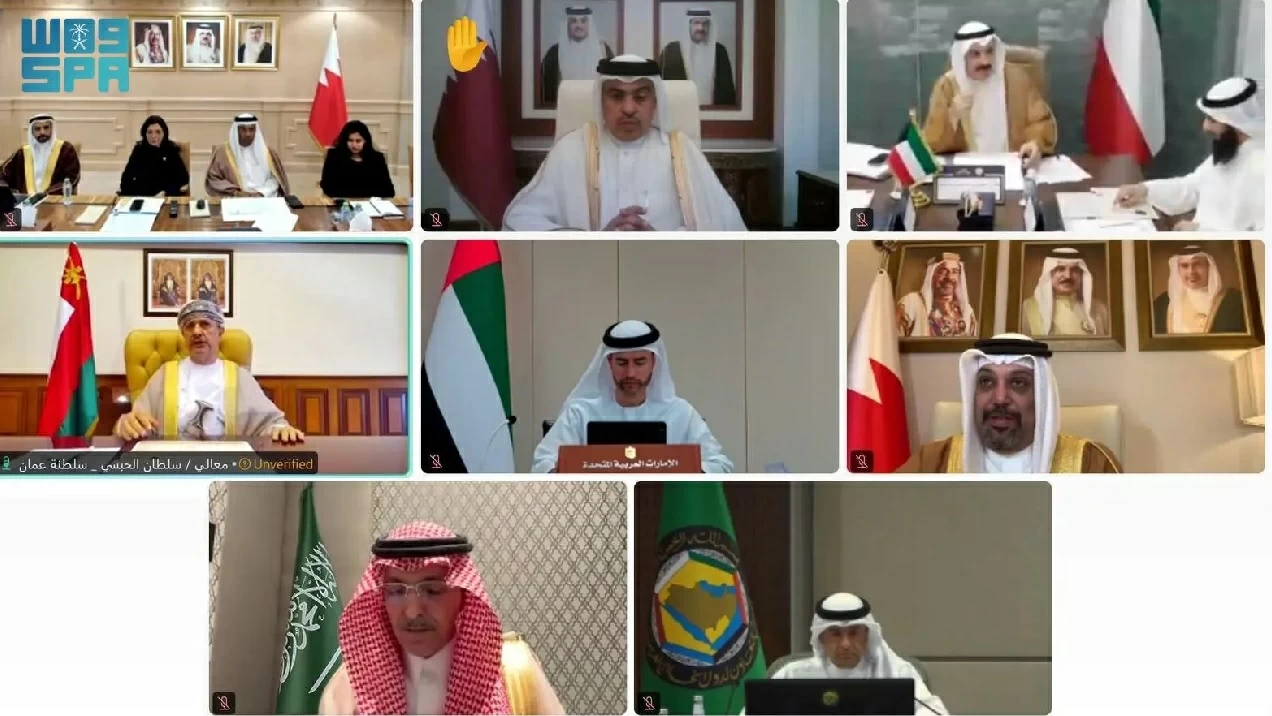
Today, Saudi Finance Minister Mohammed bin Abdullah Al-Jadaan led the Kingdom's delegation at the 125th meeting of the Financial and Economic Cooperation Committee of the Gulf Cooperation Council (GCC). The virtual meeting saw participation from finance ministers of member states and the Secretary-General of the Council, where vital issues related to financial and economic cooperation were discussed.
At the beginning of the meeting, Sheikh Salman Al-Khalifa, Minister of Finance and National Economy of the Kingdom of Bahrain and current chair, emphasized the importance of enhancing cooperation among member states to address current economic challenges. Several topics of interest to the Council's countries were reviewed, including updates on financial and economic cooperation.
Event Details
The meeting included discussions on the progress in completing the requirements for establishing a customs union among the member states, a project aimed at facilitating trade movement between member countries. Additionally, the action plan for the Joint Gulf Market Committee for the period from 2026 to 2028 was approved, aimed at enhancing economic integration among member states.
Furthermore, the guidelines for the participation of GCC countries in significant international events were addressed, reflecting the member states' commitment to enhancing their presence in the global economic arena. Recent developments in the region and their impact on the Council's countries were also discussed, necessitating enhanced joint coordination to face challenges.
Background & Context
These meetings are part of the ongoing efforts by GCC countries to strengthen economic and financial cooperation, especially in light of global economic challenges. Since the establishment of the Council in 1981, member states have sought to achieve economic integration through a series of initiatives and agreements.
Historically, the Council's countries have witnessed numerous economic changes, prompting them to enhance cooperation among themselves. The customs union is one of the most prominent projects that member states aim to achieve, as it seeks to facilitate trade and reduce customs barriers.
Impact & Consequences
The outcomes of this meeting underscore the importance of financial and economic cooperation in enhancing regional stability. By exchanging information and experiences, the Council's countries can improve their ability to tackle economic challenges.
Moreover, the adoption of the action plan for the Joint Gulf Market Committee reflects the member states' commitment to achieving sustainable development goals and enhancing intra-regional trade, contributing to sustainable economic growth.
Regional Significance
These meetings highlight the importance of cooperation among Arab countries in facing global economic challenges. Under current circumstances, unity and collaboration among Arab nations are urgent necessities to enhance stability and development.
In conclusion, the 125th meeting of the Financial and Economic Cooperation Committee represents an important step towards strengthening cooperation among GCC countries, contributing to the achievement of shared economic goals.