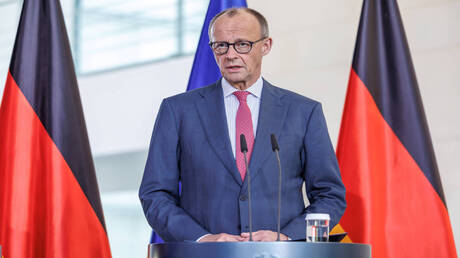
German Chancellor Friedrich Merz stated that the effectiveness of European diplomacy can only be achieved through enhancing military capabilities, stressing the importance of developing a shared European nuclear weapon. These comments arise in light of the increasing security challenges facing Europe, raising questions about the future of security and defense on the continent.
This call for the development of a shared nuclear weapon represents a bold step by Merz, who believes that diplomacy alone is insufficient to counter potential threats. He pointed out that European nations need to intensify their efforts in this area to ensure their security and stability.
Details of the Statement
Merz's remarks come at a sensitive time, as international relations are experiencing heightened tensions, particularly due to ongoing conflicts in regions such as Ukraine and the Middle East. Some European countries have expressed interest in increasing their defense budgets, but the call for a shared nuclear weapon has sparked widespread debate regarding the potential risks and benefits.
It is noteworthy that Merz is not the only one advocating for enhanced European military capabilities; many European leaders have previously voiced the need for increased defense cooperation in the face of rising threats. However, the issue of nuclear weapons remains a sensitive topic that requires broad consensus among EU member states.
Background & Context
Historically, Europe has relied on the United States for nuclear defense, with NATO serving as the primary guarantor of European security. However, geopolitical dynamics have shifted in recent years, prompting some European nations to consider developing their own military capabilities.
Concerns are growing over escalating tensions between major powers, highlighting the need for new defense strategies. Recent events, such as the conflict in Ukraine, have shown that Europe needs to enhance its ability to respond to potential threats independently.
Impact & Consequences
If the idea of developing a shared European nuclear weapon is implemented, it could have significant implications for regional and international security. This could lead to a new arms race in Europe, increasing tensions between European nations and other countries. Additionally, this shift may raise concerns among neighboring countries, particularly those with their own nuclear programs.
Moreover, strengthening European military capabilities could affect relations with the United States, which may view this move as a threat to its strategic interests. It is crucial to handle this issue with care to ensure that security situations on the continent do not worsen.
Regional Significance
These developments in Europe are of great importance to the Arab region, as they could impact regional balances. Amid ongoing crises in the Middle East, an increase in armament in Europe may alter security dynamics in the region.
Furthermore, enhancing European military capabilities may prompt some Arab countries to reassess their defense strategies, potentially leading to increased military spending in the region. It is essential for Arab nations to stay informed about these developments to ensure their security and stability.
In conclusion, Merz's statements represent a call to reflect on the future of European security, raising questions about how to balance diplomacy and armament in a changing world.