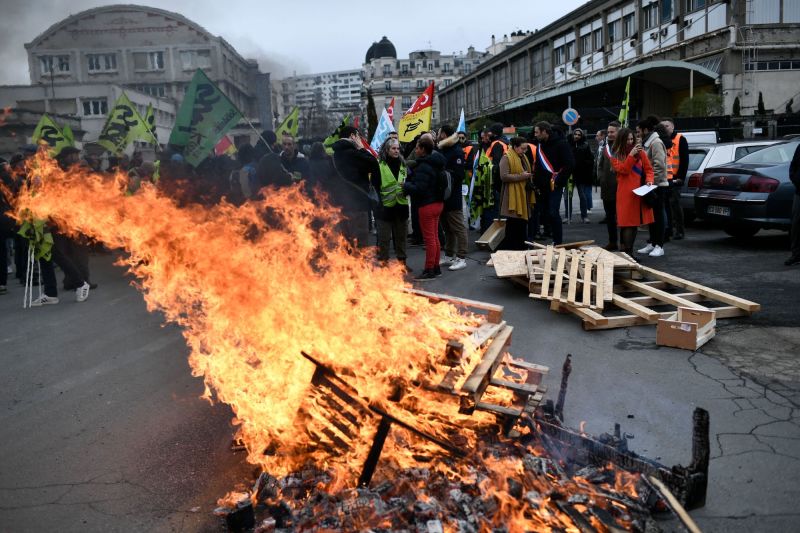
The French government announced that the percentage of striking teachers in primary schools (educational institutions for children) reached 13.2%, while the percentage of strikers in secondary schools recorded 7.18%. This strike occurs at a sensitive time for the French educational system, as teachers express their dissatisfaction with working conditions and salaries.
These figures are controversial, as unions indicate that the actual percentage of strikers ranges between 25% and 30%, reflecting widespread discontent among teachers. This strike has been announced as part of a series of protest movements aimed at improving working conditions in schools.
Details of the Strike
The strike witnessed in French schools comes in the context of increasing pressures on teachers, who are demanding better wages and increased support for schools. This strike was organized by several educational unions, which confirmed that teachers feel overwhelmed due to the rising number of students in classrooms and a lack of resources.
The unions aim to draw the government's attention to the challenges facing the educational system, as they believe that improving working conditions is essential to ensure the quality of education. Numerous events and protests have been organized in various French cities, where teachers and parents gathered to support their cause.
Background & Context
Historically, France has witnessed many strikes in the educational sector, as unions have always sought to defend teachers' rights and improve working conditions. In recent years, pressures on the educational system have increased due to political and economic changes, exacerbating the situation.
France is considered one of the countries facing significant challenges in the field of education, as the number of students in classrooms increases while available resources decrease. This situation has led to feelings of frustration among teachers, prompting them to take protest actions.
Impact & Consequences
This strike could have a significant impact on the educational system in France, potentially disrupting the educational process and delaying academic programs. Additionally, the continuation of strikes may affect the reputation of the French educational system on an international level.
These protest movements serve as a call for the French government to seriously consider educational issues. If teachers' demands are not met, the educational system may witness further disruptions in the future.
Regional Significance
Issues of education and teachers' rights are also significant in many Arab countries. Many educational systems in the region suffer from similar problems, such as a lack of resources and an increasing number of students in classrooms.
The strikes in France may influence protest movements in Arab countries, as they could inspire teachers in the region to advocate for their rights and improve working conditions. These events also highlight the importance of education as a fundamental right that everyone should enjoy.
In conclusion, education and teachers' rights remain at the core of social and political discussions, and there must be an effective response from governments to ensure a better future for upcoming generations.